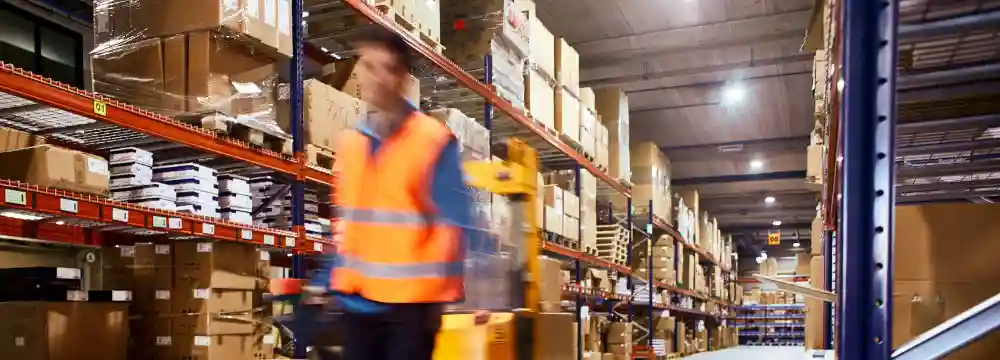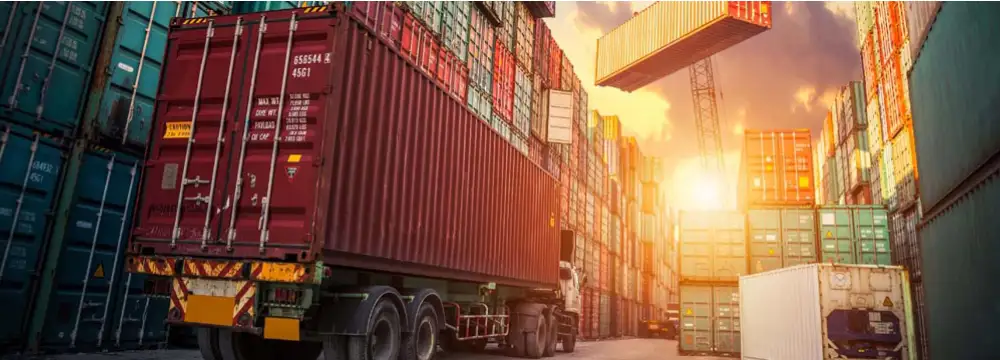

Channels of trade, or distribution channels, are the steps between a producer and a consumer, and marketing in China runs through a different set of them than in the West. The familiar Western model is supplier to wholesaler to retailer to consumer, with a handful of large retail chains controlling access to the shelf. China has more channels, more of them digital, and far less retail concentration, which changes both how a foreign brand sells into China and how a foreign buyer reaches a Chinese factory.
Three broad channels operate: supplier to consumer (direct), supplier to retailer (retail), and supplier to wholesaler (wholesale). The reason all three remain viable is structural. Chinese factories range from ten-person workshops to plants employing tens of thousands, and Chinese retail, unlike American retail, is not dominated by a few big-box chains but spread across a very large number of medium and small retailers alongside the online platforms.
A shopping street in Shanghai is only one of several routes a product takes to the customer.
Types of Marketing Channels in China
Direct Marketing in China
Direct marketing in China means a factory or brand selling straight to the consumer with no fixed retail location in between, and it is overwhelmingly the dominant channel. Online retail sales reached 15.97 trillion yuan in 2025, of which 13.09 trillion yuan was physical goods, equal to 26.1% of all retail sales in China (National Bureau of Statistics). Tmall and JD.com are the established platforms, Pinduoduo grew to rival them from a standing start, and Douyin and Kuaishou turned short video and live-streaming into major sales channels. Live-streaming commerce alone now moves trillions of yuan a year.
The trade-off with direct marketing in China is service and trust: there is no retailer standing behind the product, which is why platform guarantees, reviews, and live-streaming hosts matter so much. For a foreign brand selling into China, direct is usually the first channel to try, because it needs no physical distribution network; for a foreign buyer, the same platforms are where you discover what Chinese factories are making and at what price.
Retail Marketing in China
The retail channel puts a fixed store between producer and consumer. In the United States and Europe a few large chains dominate; in China retail is far more fragmented, with a large number of small and medium retailers alongside the international chains and the domestic supermarket groups. That fragmentation has narrowed as e-commerce has taken share and as convenience-store chains and community group-buying have consolidated parts of the market, but reaching Chinese consumers through physical retail still means dealing with many parties rather than a few.
What has grown instead in marketing in China is omnichannel retail, in which the same operator sells online and offline with shared inventory and delivery, Alibaba’s Freshippo and JD’s stores being the visible examples. For a brand, the practical consequence is that physical retail in China is expensive to enter and is usually a second step after online has proven demand.
Wholesale Marketing Channel
The third channel of marketing in China sells from producer to wholesaler, who resells to retailers or exporters. It remains large in China, and it is the channel most foreign buyers actually encounter: the trading companies on Alibaba.com, the wholesale markets in Yiwu and Guangzhou, and the domestic B2B platform 1688.com are all wholesale channels. Yiwu’s market alone lists millions of products from tens of thousands of suppliers and is where a large share of the world’s small consumer goods are sourced.
For a buyer, the wholesale channel is fast and convenient and puts an intermediary between you and the factory. That is useful for small orders and mixed containers, and a disadvantage for custom production, where the intermediary’s margin and communication layer both cost you. Knowing whether you are talking to a factory or a trading company is one of the first things to establish, and the supplier selection article covers how.
Wholesale markets like Yiwu remain a major channel alongside the online platforms.
The Future of Marketing in China
Three shifts define where marketing in China is heading now. The first is that discovery has moved to content: Chinese consumers increasingly find products through short video, live-streaming, and social platforms such as Xiaohongshu rather than through search or shelf browsing, which means a brand’s content strategy is its distribution strategy.
The second is that channels have converged: the distinction between a platform, a retailer, and a media company has largely collapsed, and the same company often is all three. The third is that factories sell directly. A Chinese manufacturer with a live-streaming operation reaches consumers at home and abroad without a wholesaler or a foreign brand in between, which is the model behind Shein, Temu, and a long list of factory-direct brands.
For a foreign company, that last shift in marketing in China cuts both ways. It means the factory you buy from may also be your competitor’s supplier and, increasingly, its own brand. It also means Chinese factories are more commercially sophisticated than they were, better at communicating, and more interested in partnerships that add value beyond volume. Understanding which channel a supplier sits in, and what that means for price, capability, and exclusivity, is part of what our product sourcing service works out before an order is placed.