Countries change as they develop, and the Chinese economic reform that began in 1978 is the largest and fastest such change in modern history. Liberalisation, in China’s case, has meant relaxing government restrictions on economic life while keeping political control intact.
The country has been ruled by the same party since 1949, and there is little reason to expect political liberalisation soon. That distinction matters: liberalisation and democratisation are often assumed to arrive together, and China is the clearest evidence that they do not. Chinese economic reform has transformed how goods are made, priced, and traded without changing who governs.
Only a few decades ago there was almost nothing to buy in China with money, and what there was came through ration coupons. Today China is the world’s largest manufacturer, its largest exporter, and among its largest consumer markets. This article traces how Chinese economic reform got from one to the other, and where it stands now.
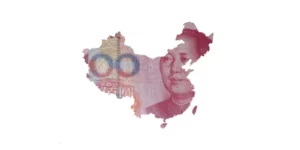
Forty years of reform turned a closed planned economy into the world’s manufacturing base.
China’s Economic Reforms
Chinese economic reform began in December 1978 under Deng Xiaoping, and the first reforms addressed agriculture, because that was where most people worked and where failure had been catastrophic. The household responsibility system let farmers keep and sell a share of their output rather than surrender all of it to the collective, and production rose immediately. The same decade brought freer pricing, the first special economic zones in 1980, and the opening of the country to foreign investment for the first time since 1949.
From the mid-1980s to the mid-1990s, Chinese economic reform moved into industry. Controls on private business loosened, price controls were dismantled in stages, and, importantly, authority was devolved to provincial and municipal leaders, who were allowed and encouraged to experiment with ways of generating growth. Township and village enterprises grew explosively. Deng’s southern tour in 1992 settled the question of whether reform would continue, and the following years brought the restructuring of state-owned enterprises, the creation of stock exchanges, and the beginnings of a private sector at scale.
The decisive external step was accession to the World Trade Organization in December 2001, which gave Chinese goods permanent access to every major market and committed China to open its own. Exports grew fivefold in the decade that followed, foreign investment poured in, and the manufacturing base that the world now depends on was built in that period. By 2010 China had overtaken Germany as the largest exporter and Japan as the second-largest economy.
Chinese Economic Reform Since 2013
The reform agenda changed character after 2013. The Third Plenum of that year promised the market a “decisive role” in resource allocation, and some of what followed delivered on it: the Shanghai Pilot Free Trade Zone in 2013 trialled the Negative List approach to foreign investment, which was later applied nationally; interest rate controls were largely lifted by 2015; and the Foreign Investment Law of 2020 replaced three older statutes with a single regime granting foreign companies national treatment.
The most consequential recent step for anyone manufacturing in China is the 2024 edition of the Negative List, effective 1 November 2024, which removed the last restrictions on foreign investment in manufacturing. A foreign company can now own a Chinese factory outright in any manufacturing sector, without a joint venture partner, an equity cap, or a technology-transfer condition. The list of restricted sectors is down to 29 items, all in services.
At the same time, other parts of Chinese economic reform have run the other way. The state’s role in the economy has grown since 2015 through industrial policy, Made in China 2025 and its successors, state-directed investment funds, and consolidation of state-owned enterprises in strategic sectors. Regulatory campaigns since 2020 have reshaped the technology, education, and property sectors. The direction is not a simple retreat from the market; it is a state that has become more open on foreign access to manufacturing and more directive about which industries grow.

Reform has opened foreign access to manufacturing while industrial policy has grown more directive.
The Future of Chinese Economic Reform
The unfinished business of Chinese economic reform is the one identified decades ago: rebalancing from investment and exports toward household consumption. Consumption’s share of GDP has risen but remains low by international standards, the property sector that absorbed household savings has contracted since 2021, and the social safety net that would let families save less is still thin. Reform of the hukou household registration system, which limits migrants’ access to services in the cities where they work, and of rural land rights, where the three-rights separation has given farmers transferable use rights, are the two areas where further liberalisation would most directly raise consumption.
For a company sourcing from China, the practical results of Chinese economic reform are the ones that matter. Manufacturing is fully open to foreign ownership. Prices are set by the market in nearly every input a factory buys. Contracts are enforceable, imperfectly, through a legal system that did not exist in commercial form forty years ago. And the supply-chain depth that reform created is the reason China remains the default place to have a product made. Working within that system, and knowing which parts of it are opening and which are tightening, is part of what our product sourcing service does.