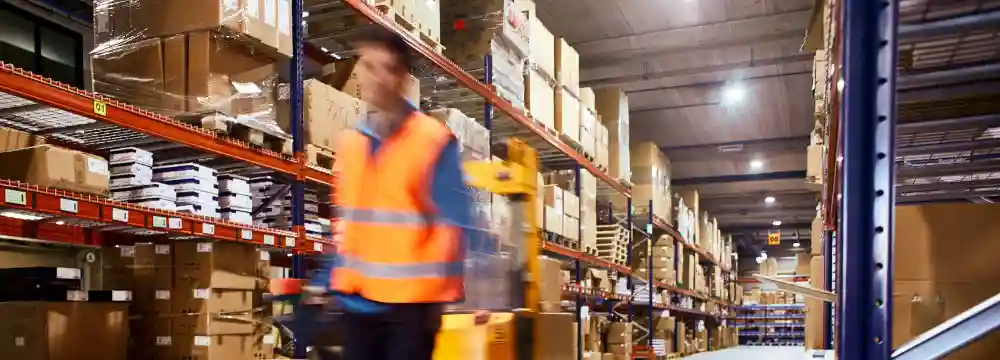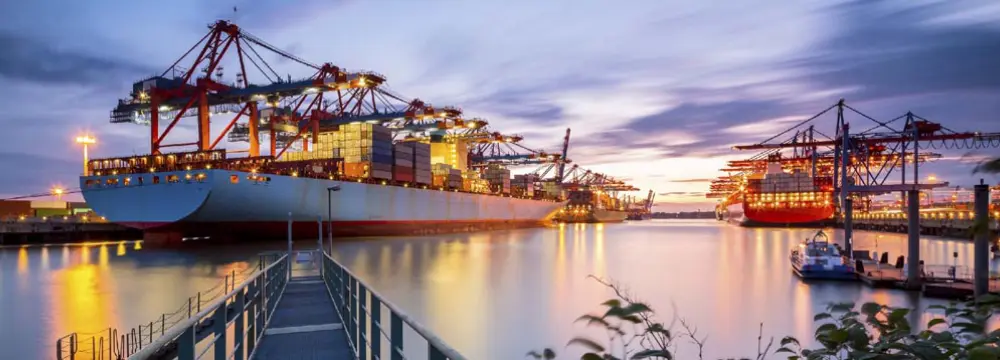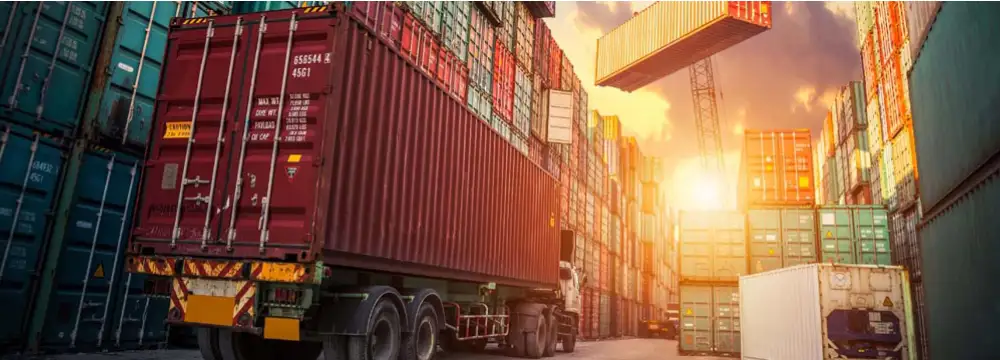

A few decades ago the trade partners of China were few, and China was not a major trading partner for anyone. The United States was the partner most countries wanted, on the strength of its economy and its international position. At the turn of the millennium only five countries counted China as their largest trading partner; by the mid-2010s that number had passed forty, and China is now the largest trading partner of more than 120 countries, more than the United States. The shift in the trade partners of China shows up in its trade agreements as well as in its trade figures, and, particularly between China and the United States, trade has become inseparable from geopolitics.
Imports and Exports with the Trade Partners of China
Trade value with a partner is the sum of imports and exports. For China the exports side dominates: China’s total goods trade reached a record US$6.36 trillion in 2025, of which exports were US$3.77 trillion and imports US$2.58 trillion, leaving a trade surplus of US$1.19 trillion, the largest any country has recorded. China runs a surplus with most of the countries it trades with, and the reasons that matters are covered in the balance of trade article.
The long-expected rebalancing toward imports has not arrived. China’s shift to a consumption-led economy has been slower than forecast, and the export sector has kept growing, particularly in vehicles, batteries, machinery, and semiconductors. What has changed is where the exports go.
The United States remains China’s largest single export market, and the most contested.
Current Top Trade Partners of China
By total trade in goods, the largest trade partners of China in 2025 were:
- ASEAN (the ten Southeast Asian nations): over US$1.02 trillion, China’s largest trading partner since 2020. The Regional Comprehensive Economic Partnership, in force since 2022, has turned China and Southeast Asia into a single integrated production region, with Vietnam, Malaysia, and Thailand as the largest individual partners.
- European Union: China’s second-largest partner, with total trade around US$780 billion. The EU is a large export market and China’s biggest source of machinery and vehicle imports.
- United States: still China’s largest single export destination at 11.1% of exports, but bilateral trade fell sharply in 2025 as US-bound exports dropped 18.9% under new tariffs.
- Hong Kong: 8.9% of China’s exports on paper, almost entirely re-exports and transshipment.
- Japan, South Korea, and Taiwan: each around 4% of trade, and each a major supplier of the semiconductors, components, and precision equipment that China’s electronics industry depends on.
Beyond those, India, Germany, Russia, Australia, and Brazil are the largest bilateral trade partners of China. Trade with Belt and Road partner countries passed half of China’s total trade in 2025, at US$3.39 trillion, which is the clearest measure of how far China’s trade has diversified away from the West.
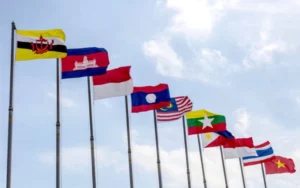
ASEAN overtook the EU and the US to become China’s largest trading partner in 2020.
Difficulties for the Trade Partners of China
The concerns raised about China’s growth a decade ago, rising wages, excess capacity, and falling investment as a share of GDP, have partly come true. Growth has slowed to around 5% and the labour-cost advantage in simple manufacturing has gone to Vietnam, Bangladesh, and India. What did not happen is a decline in exports. China moved up the value chain instead, and its export growth since 2020 has come from products, electric vehicles, batteries, solar, ships, and chips, that the low-cost competitors do not make.
The larger difficulty now is political. US tariffs, EU countervailing duties, and export controls in both directions have made China’s trade with the West more expensive and less predictable, and the response has been to redirect trade toward Asia, Africa, Latin America, and the Middle East. That works for China in aggregate but leaves individual exporters exposed to sudden changes in access to their largest markets, which a buyer sourcing from China feels as price and lead-time volatility.
Outlook for the Trade Partners of China
The direction is set. ASEAN’s share will keep growing as production chains integrate across the region, and the “China plus one” strategy of Western brands, keeping Chinese supply while adding a Southeast Asian or Indian site, reinforces it, because the plus-one factory usually imports its components from China. Trade with the United States will remain large and remain contested; the volume of US-China trade depends on tariff policy that changes year to year. Trade settled in yuan rather than dollars passed 30% of China’s total in 2025, from around 2% a decade earlier, which reduces China’s exposure to the dollar system and is worth knowing when a supplier asks to be paid in yuan.
For a buyer, the practical reading of the trade partners of China is that China’s supply base is not shrinking but the routes out of it are multiplying. A product can be made in China and shipped direct, made in Vietnam from Chinese components, or made in China and assembled in Mexico, and which route is cheapest depends on tariffs in your market at the time you order. Working out that route is part of what our product sourcing service does.