
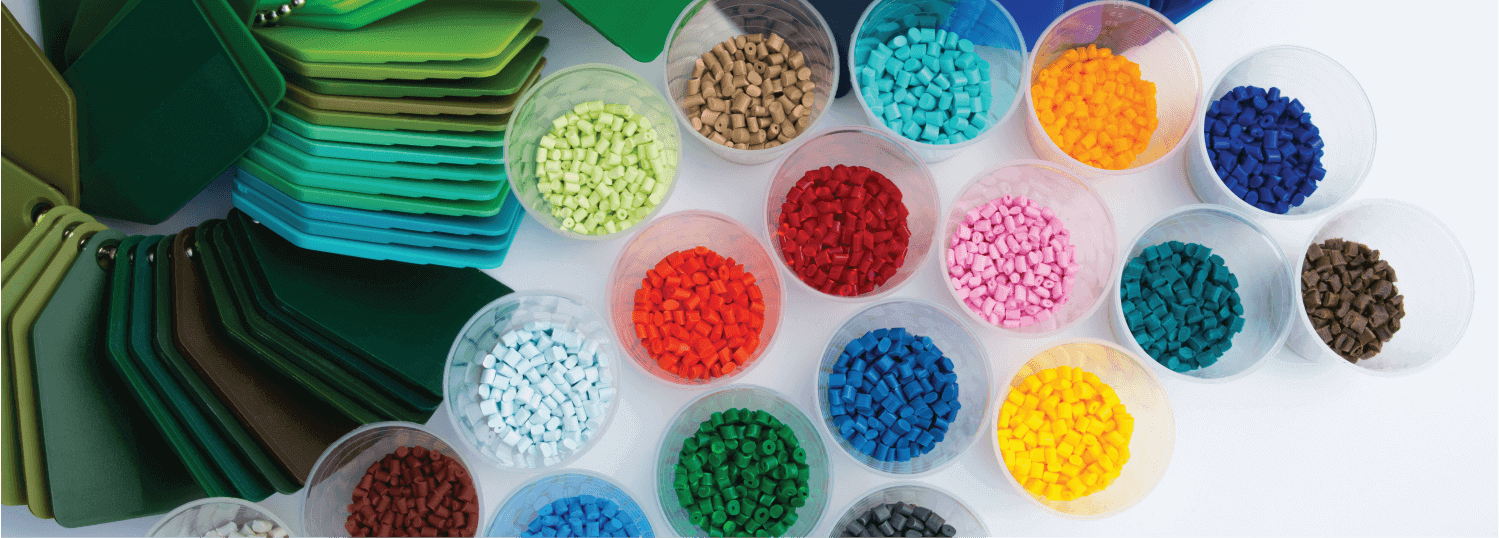
China has always been a major force in the plastics industry, and as a manufacturer operating in the country we track it closely. This report covers the plastics industry in China as it stands in 2026: the market, the reasons China remains the production base, the problems a brand will meet setting up plastic production there, and how to work around them.
Plastics Industry Overview & Key Statistics
a. Plastics industry description
Plastics are synthetic or semi-synthetic materials, malleable enough to be moulded into solid objects and durable enough to keep their shape. Their mechanical and thermal properties, durability, corrosion resistance, low weight, and formability, make them the default material for a huge share of manufactured parts. When used as components in OEM manufacturing, the higher-performance grades are called engineering plastics.
The engineering plastics that do most of the work in the plastics industry are ABS, used in monitors, printers, and keyboard housings; polyurethane, in rigid electronic parts and automotive suspension components; polycarbonate, in phone cases, optical discs, and headlamps; polyethylene, in cable insulation and moulded cases; and polypropylene, in consumer electronics, car bumpers, and pressure pipe. Between them they have displaced metal and wood across most consumer and industrial products, because they are lighter, cheaper, better insulators, and easier to form.
China is the world’s largest producer in the plastics industry by a wide margin, accounting for 34.5% of global plastics production in 2024 (Plastics Europe, The Fast Facts 2025), against 12% for the whole of Europe. Global plastics production reached 430.9 million tonnes that year, up 4.1%, and Asia produced 57.2% of it. China’s own output runs between six and seven million tonnes of plastic products a month, and its plastics industry is supported by more than 17,000 plastic manufacturing companies concentrated in the eastern and central-southern provinces.
b. Global plastics production: China vs. other regions of the world
China’s position rests on feedstock, capacity, and demand at once. It has built enormous petrochemical capacity since 2015, including naphtha crackers, propane dehydrogenation plants, and coal-to-olefins facilities, giving the plastics industry there a feedstock route no other producer uses at scale. It has conversion capacity in every province. And it has the world’s largest manufacturing sector consuming the output.
Europe has gone the other way. European plastics production was 54.6 million tonnes in 2024, barely recovered after a sharp contraction, and its share of world output has fallen from 22% in 2006 to 12%, with industry turnover down from around €457 billion in 2022 to €398 billion in 2024. Europe has been a net importer of plastic materials for three consecutive years. North America holds a middle position on cheap shale-gas feedstock. For a buyer, that means the plastics industry’s centre of gravity has moved decisively to Asia, and the choice of where to have plastic parts made is increasingly a choice among Asian countries rather than between Asia and the West.
c. Commonly produced plastic products in China
- Injection-moulded parts and housings for consumer and industrial products
- Blow-moulded bottles, containers, and tanks
- Extruded pipe, profile, sheet, and film
- Thermoformed trays, packaging, and large panels
- Plastic homeware, storage, and kitchenware
- Automotive interior and exterior components
- Electronic enclosures and connectors
- Toys and children’s products
- Moulds and tooling for all of the above
d. Year-on-year plastics industry growth
Chinese output in the plastics industry grew strongly through 2020 and 2021 on packaging and medical demand, dipped as construction demand softened, and has since settled at a higher plateau rather than continuing to accelerate. Growth has moved from commodity single-use products, which the government’s plastic-waste rules have slowed, toward engineering plastics for vehicles and electronics, and toward recycled and bio-based resins. Global circular plastics production passed 43.9 million tonnes in 2024, over 10% of total output for the first time, and it is the fastest-growing segment of the plastics industry worldwide.
Why China is the Right Choice for Plastics Production
a. Plastics production capacity
China has more than 17,000 plastic factories, concentrated in Guangdong, Zhejiang, and Jiangsu. The scale of that base means it can produce any type of plastic product at any complexity, and the supplier density means resin, tooling, moulding, finishing, and packaging are all within reach of each other. Chinese mould makers are the other half of the advantage: tooling costs a fraction of Western equivalents and is produced in weeks rather than months, which is what makes it economic to develop a new plastic product at all for most brands.
The factories are linked into a domestic supply chain with immediate access to raw materials, from commodity grades such as ABS, PU, PE, PC, and PP through to speciality resins and engineered compounds. That access is why a Chinese factory can quote a material change in days where a Western one quotes in weeks.
b. Technological advantages and automation in the plastics industry
Chinese plastics factories have automated substantially. China installed 295,000 industrial robots in 2024, 54% of all installations worldwide, and its operational stock passed 2 million units, the largest of any country (International Federation of Robotics, World Robotics 2025). In moulding, that shows up as automated part removal, in-line inspection, robotic finishing, and lights-out operation on high-volume lines. The result is better consistency at flat prices, which is why quality in the Chinese plastics industry has improved even as labour costs have risen.
c. Modern logistics infrastructure
Plastic products are often bulky relative to their value, so freight is a large share of landed cost and logistics reliability matters. China’s plastics clusters sit close to Ningbo, Shanghai, Shenzhen, and Qingdao, among the busiest container ports in the world, and the consolidation and forwarding services around them are built for exactly this kind of shipment. Several Asian countries have lower labour costs; none matches China’s logistics performance, which is a large part of why the plastics industry has stayed put.
Potential Problems in China’s Plastics Industry
a. Time problems in the plastics industry
Tooling is the long pole in any plastics project. A mould takes four to ten weeks to build, plus sample rounds and adjustments, and a design change after steel is cut costs weeks and money. Clients who skip prototyping discover geometry problems at the tooling stage, which is the most expensive place to find them. Without a presence in China, a client cannot see whether a mould is on schedule until the sample date passes.
b. Quality problems in the plastics industry
The recurring quality failures in the plastics industry are material substitution, a cheaper or recycled resin supplied instead of the grade specified, which changes strength, colour, and compliance; short shots, sink marks, and warping from moulding parameters set for speed rather than quality; and colour drift between production runs. All of them are invisible on a first sample and appear at volume. Products with regulatory requirements, food contact, toy safety, RoHS and REACH, add a compliance dimension: a resin that fails migration testing makes the product unsellable regardless of how it looks.
c. Cost problems in the plastics industry
Resin is the largest recurring cost and resin prices track oil and gas, so a quote given at one resin price is not valid indefinitely. Tooling is the largest upfront cost, and the question of who owns the mould you paid for is the one clients most often fail to settle; the article on tooling costs and ownership covers why that matters. Cycle time, cavity count, and part design all affect unit cost more than the headline resin price does, which is why a cheaper quote on the same part often means a slower tool or a thinner wall.
d. Planning problems in the plastics industry
A plastics programme runs design, prototyping, tooling, sampling, testing, and production in sequence, and each stage depends on the one before. Compressing it rarely works: a tool built before the design is proven produces parts that need a tool change. Material selection has to be settled before tooling, because shrinkage differs by resin and the mould is cut to compensate for a specific one.
e. General risks in the plastics industry
The general risks of contracting with a Chinese factory without local presence apply: limited visibility, limited enforcement, and exposure to a supplier that cannot deliver. The plastics-specific risk is the mould. A mould you paid for but do not control, physically or contractually, ties you to that supplier, and recovering a mould from an uncooperative factory is difficult and slow. Settle ownership, storage, and access in the contract before paying for tooling.
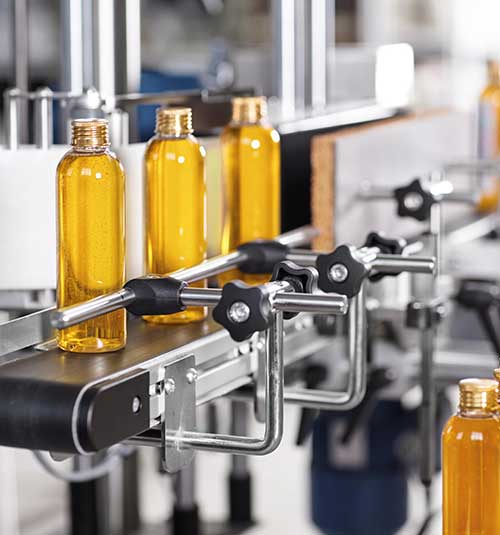
In the plastics industry, the mould is the asset. Who owns it decides who controls the product.
Our Recommendations for China’s Plastics Industry
a. For reducing time required in the plastics industry
Intrepid Sourcing plans a plastics programme from tooling lead time backward, with prototyping, sampling, and testing scheduled to meet the production date and the Chinese New Year shutdown built in. We prototype before tooling so that geometry problems surface when they are cheap to fix, and we work with mould makers and moulders that have produced comparable parts.
b. For ensuring quality in the plastics industry
We specify resin grade, colour standard, tolerances, and finish in writing, and we inspect against them: first-article inspection on the first parts off a new mould, in-process inspection during production, and pre-shipment inspection to an agreed AQL. Where the product is regulated, we arrange food-contact, RoHS, REACH, or toy-safety testing at an accredited laboratory. Our quality assurance service covers each of these steps.
c. For reducing costs in the plastics industry
We quote with tooling, resin, cycle time, and finishing broken out, so you can see where cost sits and judge a re-quote when resin prices move. We review part design for manufacturability before tooling, because wall thickness, draft, and cavity count affect unit cost more than resin price does, and we establish mould ownership in writing before tooling is paid for.
d. For planning in the plastics industry
We run the sequence as one project: design and CAD, prototyping, tooling, sampling, production, and packaging, with one point of contact and a schedule you can see.
e. For minimizing risk in the plastics industry
Our in-house engineers review the design and requirements before anything is committed, we verify factories before placing work, and we contract under Chinese law with terms covering mould ownership, quality standards, and delivery. If you are developing a plastic product, the place to start is our plastics production package, and the plastics manufacturing process guide covers how each production method works.