
Consumer spending during COVID-19 changed sharply and then changed back, but not entirely. Six years on, the useful question is not what happened during the pandemic but which of those shifts turned out to be permanent, because those are the ones that still shape what sells and how.
What Happened to Consumer Spending During COVID-19
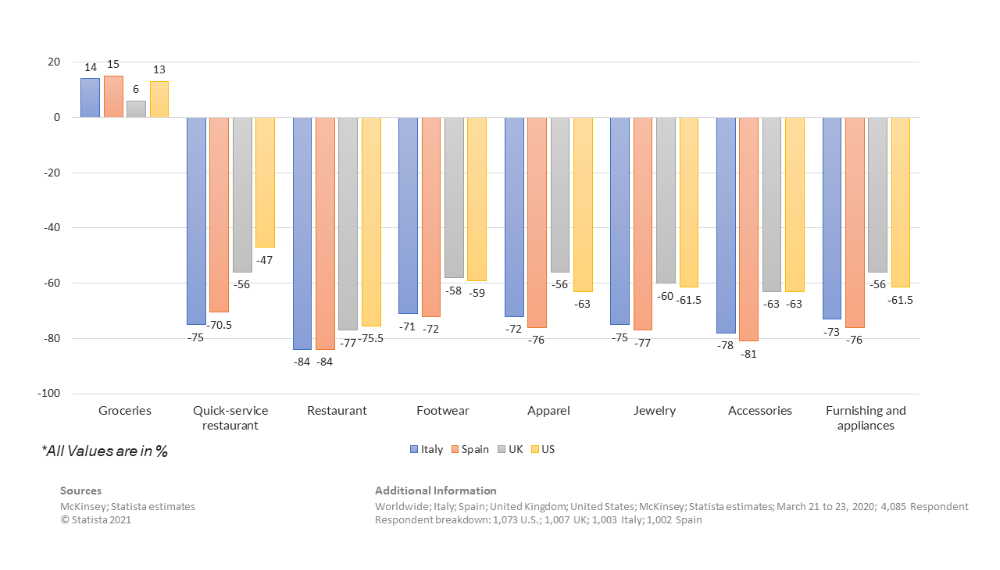
Consumer spending during COVID-19 moved sharply between categories. Spending on services collapsed while spending on goods rose. With travel, hospitality, and entertainment closed, households redirected money into the home: furniture, appliances, home improvement, fitness equipment, computing, and comfortable clothing. Savings rates reached historic highs in many countries because there was less to spend on.
Retail moved online at a pace that would otherwise have taken years, and older consumers in particular adopted e-commerce for the first time. Apparel fell overall, but the mix within it shifted violently: formalwear and occasion wear collapsed while loungewear, activewear, and casual clothing grew.
What Reversed in Consumer Spending During COVID-19
Most of it. Services spending recovered as travel and hospitality reopened. The goods boom unwound, and categories that had pulled demand forward, particularly computing and home fitness, saw weak years afterwards as everyone who wanted the product already had one. Savings rates normalised and then fell as inflation absorbed the accumulated buffer.
Anyone reading pandemic-era growth figures as a trend line was misreading a pull-forward as a permanent expansion, and several categories were built out on that assumption.
What Did Not Reverse in Consumer Spending During COVID-19
Three things stuck, and they are the reason this period still matters.
E-commerce penetration. Online share fell back from its peak but settled well above where it started. The consumers who learned to buy online during that period largely kept doing it.
Comfort over formality in clothing. Formalwear and tailoring have not returned to pre-2020 levels in most markets. Casual, knitted, and performance clothing took the space and kept it, which is the single largest structural change in apparel in a generation.
Supply chain caution. The shortages of that period taught manufacturers that single-sourcing is a business risk rather than an efficiency. Dual-sourcing and larger buffer stocks are now normal, and they have not been unwound.
What It Means Now
For a brand, the lesson from consumer spending during COVID-19 is about reading demand signals rather than about the pandemic. A sharp category spike is often demand pulled forward from later periods, and building capacity or inventory against it is how businesses get caught.
The durable changes, online buying and comfort-led clothing, are worth designing around. The temporary ones were temporary. Working out which is which is what makes the difference, and it is why our manufacturing analytics service looks at underlying demand rather than headline growth.