EU clothing imports are among the largest trade flows in the world, and understanding where they come from and on what terms matters to anyone selling clothing into Europe. The European Union is the second-largest importer of textiles and apparel globally after the United States, and the origin mix has shifted meaningfully over the past decade.
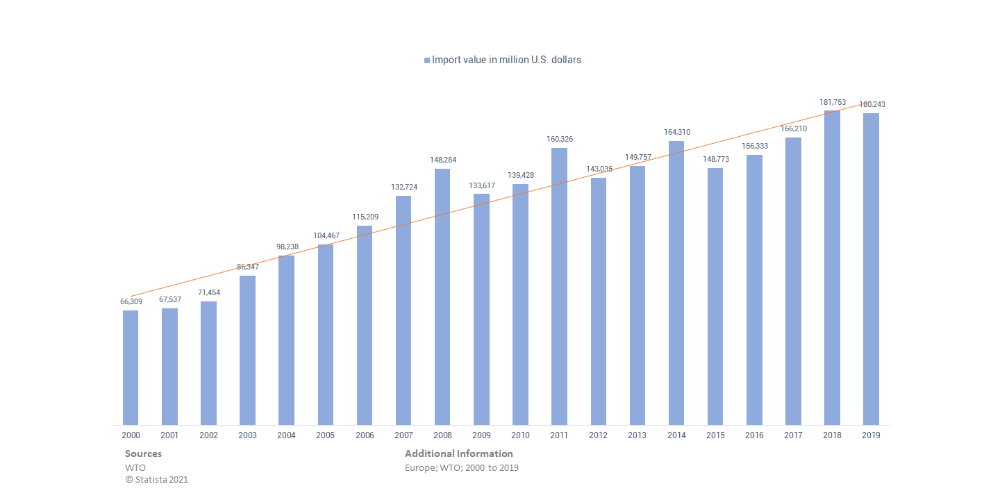
Where EU Clothing Imports Come From
China remains the largest single supplier, though its share has fallen steadily as production moved to lower-cost countries. It retains the technical, structured, and fabric-intensive work.
Bangladesh is the second-largest and the biggest beneficiary of EU trade preferences, supplying high volumes of basic garments duty-free.
Turkey is significant for its proximity: short lead times and a customs union with the EU make it the go-to for fast replenishment, which is worth more than unit price for fashion retailers.
Vietnam, India, Cambodia, and Pakistan make up most of the remainder, with Vietnam growing fastest since its trade agreement with the EU.
The Duty Position on EU Clothing Imports
This is what decides sourcing decisions more than labour cost does.
Everything But Arms gives least-developed countries, including Bangladesh and Cambodia, duty-free and quota-free access to the EU. That advantage is substantial on garments, where standard duties run around 12%.
The EU–Vietnam Free Trade Agreement, in force since August 2020, eliminates most tariffs on Vietnamese clothing, subject to rules of origin that generally require the fabric to be woven in Vietnam or a partner country. That fabric requirement is the catch, since Vietnam imports most of its fabric from China.
The customs union with Turkey means most Turkish goods enter duty-free.
China receives no preference and pays full most-favoured-nation duty, which is a meaningful disadvantage against Bangladesh on comparable garments.
What Is Changing in EU Clothing Imports
Two shifts matter for anyone planning around EU clothing imports. Bangladesh is scheduled to graduate from least-developed country status, which will phase out its duty-free access over a transition period; a long-term sourcing plan built on that advantage should account for it ending.
And the compliance burden has grown sharply. EU supply chain due diligence rules, the forced labour regulation adopted in 2024 and applying from 2027, and extended producer responsibility schemes for textiles all place obligations on the importer rather than the supplier. EU clothing imports now carry documentation requirements that did not exist a few years ago, and traceability past the first-tier factory is becoming a legal requirement rather than good practice.
What It Means for a Brand
If you sell clothing into the EU, origin decides your landed cost as much as unit price does, and the difference between duty-free Bangladeshi goods and full-duty Chinese ones can outweigh a considerable gap in factory quotes. But origin also decides your compliance exposure, and the rules now reach back through the supply chain.
Working out which origin gives the best landed cost for a specific garment, and building the traceability the regulations require, is part of what our clothing manufacturing service does across China and Vietnam.