
The smart clothing market is one of the most talked-about categories in apparel and one of the hardest to size honestly. Smart clothing, also called e-textiles, means garments with sensors, conductive fibres, or electronics built into the fabric rather than clipped onto it: shirts that track heart rate, socks that measure running gait, workwear that monitors heat stress, and compression garments used in rehabilitation.
Estimates of what the smart clothing market is worth in 2025 range from about US$2.4 billion to over US$22 billion, a tenfold spread. That is not a rounding difference; it reflects genuine disagreement about scope. The narrower figures count garments with integrated electronics. The wider ones include conductive yarns, performance fabrics with functional finishes, and sometimes wearables generally. Growth forecasts range from 9% to over 30% a year for the same reason. Most estimates focused specifically on smart clothing cluster around US$5 to US$6 billion for 2025, and that is the more defensible number to work from.
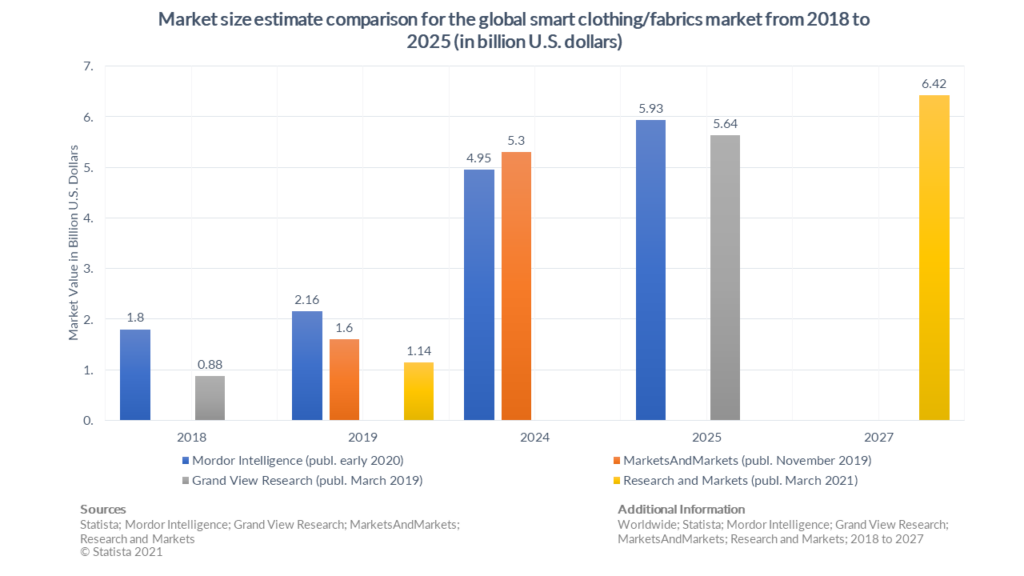
Smart clothing market estimates vary widely depending on what each researcher counts.
What the Smart Clothing Market Actually Sells
The smart clothing market divides by textile type into passive smart textiles, which sense but do not react, active smart, which sense and respond, and ultra smart, which sense, respond, and adapt. Passive holds the largest share because it is the cheapest to make and the easiest to wear and wash; active is where most of the interesting product development is.
By application, four segments account for nearly all of the smart clothing market:
- Sports and fitness is the largest, at roughly a third of the smart clothing market. Heart rate, breathing rate, cadence, and muscle activity, sold to athletes and increasingly to amateurs.
- Healthcare is the fastest-growing and probably the most durable. Remote patient monitoring, fall detection, and rehabilitation garments answer a real demographic problem, and they are reimbursable in a way consumer fitness products are not.
- Military and defence is a significant buyer, funding development that later reaches civilian products. Soldier monitoring, heat-stress detection, and protective smart fabrics.
- Industrial workwear is the fastest-growing segment by several estimates: heat, gas, and fatigue monitoring in mining, construction, and heavy industry, where a garment that prevents one incident pays for a lot of shirts.
Why the Smart Clothing Market Has Underdelivered
Being straight about this matters more than repeating a growth forecast. The smart clothing market has been forecast to break through for over a decade and has not. Google and Levi’s discontinued Project Jacquard, the connected jacket that was the category’s most visible consumer product. Several well-funded smart apparel startups have closed. Most consumers who want to track their heart rate buy a watch, because it costs less, works with every outfit, and does not need washing.
Four problems explain it, and any brand entering the smart clothing market has to solve them.
Washing. This is the hard one. Electronics and water do not mix, and a garment is washed hundreds of times over its life. Removable modules solve it but add friction; fully washable integrated electronics are difficult and expensive.
Price. A smart shirt costs several times a normal one and competes against a watch that does most of the same job. The value has to be something a watch cannot do — muscle-level EMG, breathing rate, pressure mapping, or full-body coverage — or the customer buys the watch.
Battery and charging. Another device to charge is a real barrier for consumers, less so for industrial and medical users where the garment is issued and managed.
Durability and comfort. Conductive threads degrade, connectors fail at flex points, and a garment that is stiff or scratchy will not be worn regardless of what it measures.
The pattern in what has worked is consistent: the smart clothing market succeeds where the wearer is not the buyer. Hospitals, armies, and employers buy on outcome, tolerate charging routines, and manage the garments centrally. Consumers do not.
Where the Smart Clothing Market Is Manufactured
The smart clothing market sits awkwardly between two industries, and that is a manufacturing problem before it is a market problem. A conventional garment factory can sew but cannot handle electronics; an electronics assembler can build a sensor module but cannot make a garment. Producing smart clothing means coordinating both, or finding one of the smaller number of factories that has done it before.
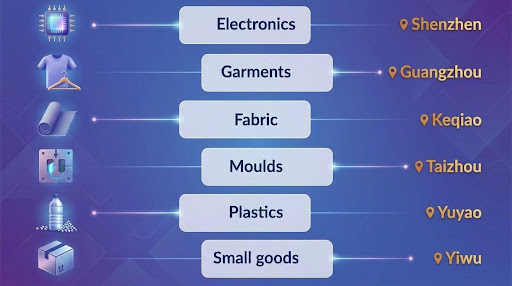
China is where both halves exist within reach of each other. The textile and garment base in Zhejiang, Jiangsu, and Guangdong sits alongside the electronics supply chain around Shenzhen that supplies sensors, flexible PCBs, batteries, and radio modules. For a brand developing a smart garment, that proximity is the practical reason to produce there: the conductive yarn supplier, the knitter, the module assembler, and the garment factory can all be visited in the same week.
What a Brand Entering the Smart Clothing Market Needs to Plan
The requirements are the union of two categories, which is what catches people out. On the garment side: fabric selection, fit, grading across sizes, and washing durability testing that goes well beyond normal apparel standards. On the electronics side: FCC and CE certification for anything with a radio, UN38.3 and IEC 62133 for batteries, and, if the product makes any health claim, medical device regulation in every market you sell in — which is a different and much longer road than consumer electronics.
Add the software: an app, a data platform, and, for anything health-related, data protection compliance. A smart garment is three products in one, and the schedule and budget have to reflect that.
Wrapping Up
The smart clothing market is real, growing, and smaller than the headline forecasts suggest, with the strongest opportunities in healthcare, industrial safety, and defence rather than consumer fitness. The categories that work are the ones where an organisation buys the garment for an outcome it can measure. For a brand, the practical requirements are a factory that can handle both textile and electronics work, a realistic view of washing and battery life, and a certification plan that accounts for whichever regulatory regime a health claim would pull you into.
Intrepid Sourcing produces both apparel and electronics, and a hybrid product like this is where that combination matters: sportswear manufacturing for the garment, electronics production for the sensing and connectivity, and quality assurance for the testing that decides whether it survives a year of washing.