
Every economy divides into three broad sectors, and industry classification is how those sectors are broken down into the categories that customs, statistics, and business licences actually use. The primary sector covers cultivation and extraction of raw materials: farming, fishing, mining, and oil. The secondary sector is manufacturing and assembly, where raw materials become components and finished goods. The tertiary sector is services: logistics, finance, retail, education, and everything else that is sold but not made. For anyone sourcing from China, the industry classification a supplier falls under, and the balance between these three sectors, explains a great deal about where the country’s manufacturing sits today and where it is going.
Primary Sector in China
China has the world’s largest primary sector by output and feeds roughly a fifth of the world’s population from under a tenth of its arable land. The sector’s share of the economy has fallen steadily as the country has industrialised: it now accounts for around 7% of GDP, down from 9% a decade ago, while still employing over a fifth of the workforce (National Bureau of Statistics, 2024). That gap between output share and employment share is the sector’s defining feature. Productivity per worker remains low, and mechanisation and consolidation of small farms are the government’s stated route to closing it.
Joining the World Trade Organization in 2001 reduced or removed many tariffs on China’s agricultural exports and opened international markets to the sector. Today China is both a major agricultural exporter and the world’s largest importer of soybeans, grains, and meat, with the balance managed through tariff-rate quotas on wheat, corn, rice, cotton, sugar, and wool.
Secondary Sector in China
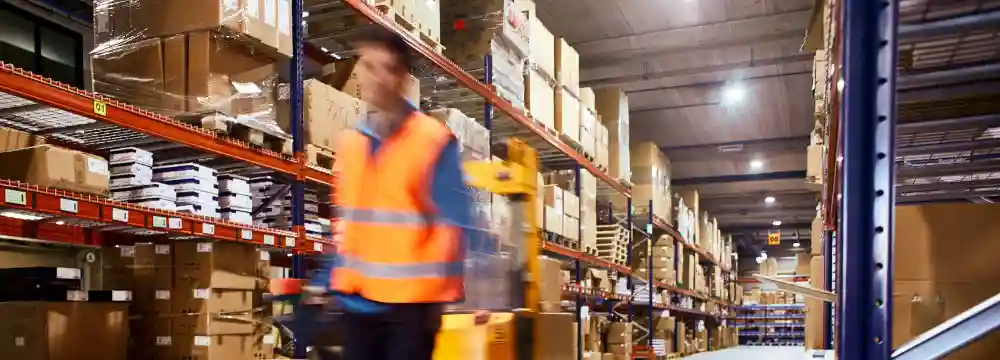
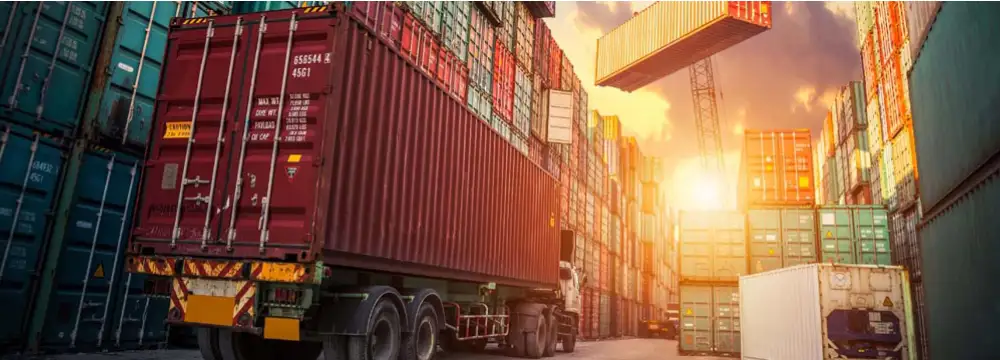
In the West, China is known for its secondary sector. Manufacturing and construction together produce around 37% of GDP and employ close to 30% of the workforce (National Bureau of Statistics, 2024). China is the world’s largest manufacturer by value added, and the availability of Chinese-made goods, particularly electronics, has shaped global trade for two decades. China capitalised on globalisation early, building the port, rail, and logistics infrastructure that makes procurement and export of goods straightforward.
Foreign investment in manufacturing is now entirely open. The 2024 edition of the national Negative List for foreign investment, effective 1 November 2024, removed the last remaining restrictions on foreign-owned manufacturing, so a foreign company can own a Chinese factory outright in any manufacturing sector.

Many Chinese cities are hubs for the trade and industrial sectors.
Tertiary Sector in China
Western economies rely heavily on services, and China is moving the same way as it shifts from export-led growth to a consumption-driven economy. As household purchasing power has grown, products once made only for export are increasingly sold at home, and the service industries that support domestic consumption have grown with them.
The service sector is now the largest of the three, at roughly 57% of GDP and close to half of all employment (National Bureau of Statistics, 2024). That is still below the 70% or more typical of advanced economies, which is why the government continues to treat service-sector growth as a policy priority. For a buyer, the practical effect is that the logistics, inspection, financial, and professional services around manufacturing are far deeper than they were a decade ago.
Industry Classification in China: The Systems in Use
The three sectors are a very broad view of economic activity. Within each, industry classification breaks activity down further, and several industry classification systems exist to do it. Together with the Incoterms, these classification codes are among the most common pieces of jargon in trade, and you will meet them in customs documents, statistics, and supplier databases.
All industries can be broken down further in several different ways.
China’s Own Industry Classification: GB/T 4754
China’s official industry classification is the Industrial Classification for National Economic Activities, GB/T 4754, maintained by the National Bureau of Statistics and last revised in 2017. It is what Chinese statistics, business registrations, and government reports actually use. It is organised into 20 lettered sections (C is manufacturing), then two-digit divisions, three-digit groups, and four-digit classes, and it is broadly aligned with the UN’s ISIC system so that Chinese data can be compared internationally. If a Chinese supplier’s business licence lists a scope of activity, it is described in GB/T 4754 terms.
Standard Industrial Classification (SIC)
The SIC is an industry classification of establishments rather than products and gives each industry a four-digit code. The first two digits identify the broad industry, the third the industry category, and the fourth the specific industry. For example, 2521 reads as furniture and fixtures (25), office furniture (2), wood office furniture (1). A full list is available here.
Developed in the United States in the 1930s, the SIC has been largely superseded there by NAICS but still appears in some databases and in financial filings. It reflects a manufacturing-era economy and updates slowly, which is one reason it was replaced. It does not describe the Chinese economy, but you will still see SIC codes in supplier directories and trade databases that classify Chinese companies for Western users.
North American Industry Classification System (NAICS)
Developed jointly by Mexico, Canada, and the United States in 1997, NAICS replaced the SIC as the standard industry classification in the United States for most purposes and is designed to be compatible with the UN’s ISIC. It uses a five- or six-digit code: the first two digits give the sector, the third the subsector, the fourth the industry group, the fifth the NAICS industry, and the sixth the national industry. It is revised every five years; the current edition is NAICS 2022. More information is available here.
International Standard Industrial Classification of All Economic Activities (ISIC)
ISIC is the United Nations’ industry classification, created to classify data on production, GDP, employment, and other statistics by economic activity, so that countries can be compared. It uses a four-digit code: the first two digits give the division, the third the group, and the fourth the class. Code 1393, for example, reads as manufacturing, then manufacture of textiles, then manufacture of carpets and rugs. ISIC Revision 5 was adopted in 2024 and is being phased in; Revision 4 remains the basis of most published data. The full classification is available here.
Global Industry Classification Standard (GICS)
GICS is the industry classification created for the financial industry and categorises publicly listed companies. It currently has 11 sectors, 25 industry groups, 74 industries, and 163 sub-industries. A full code is eight digits: two each for sector, industry group, industry, and sub-industry. Code 25301010, for example, reads as consumer discretionary, consumer services, hotels restaurants and leisure, casinos and gaming. It matters to a buyer mainly when researching listed Chinese suppliers or their parent companies. A full list is available here.
Statistical Classification of Economic Activities in the European Community (NACE)
NACE is the standard industry classification in Europe, maintained by Eurostat and derived from ISIC. It uses an alphanumeric code: a letter for the section, then numbers for division, group, and class. NACE Revision 2.1 was adopted in 2023 and takes effect for statistics from 2025. European importers, customs authorities, and trade databases classify Chinese suppliers and products in NACE terms, so it is worth recognising. The full classification is available here.
Why Industry Classification Matters When Sourcing
Industry classification codes decide how a product is taxed, how a supplier is registered, and which statistics describe your market. A Chinese factory’s business licence scope, in GB/T 4754 terms, tells you what it is legally registered to make; a mismatch between that scope and what a supplier claims to produce is an early warning sign in supplier selection. And the sector figures above are the reason China’s manufacturing base is not going anywhere: services are growing, but the secondary sector remains larger than most countries’ entire economies. If you want help reading a supplier’s registration or matching your product to the right classification for customs, that is part of our product sourcing service.