Choosing kids clothes by age is really about matching the garment to what a child at that stage actually does. A newborn is dressed and undressed constantly and cannot regulate temperature; a toddler is crawling and falling; a school-age child is dressing themselves. Each stage has different requirements, and understanding them is as useful for anyone producing children’s clothing as it is for anyone buying it.
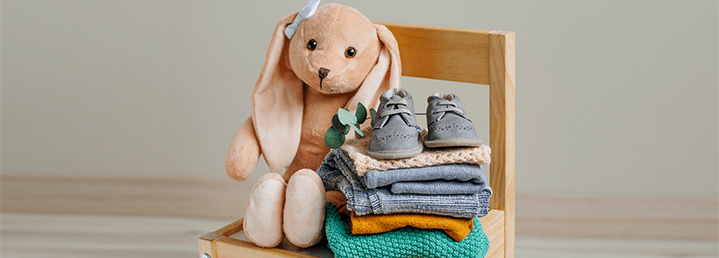
Kids Clothes by Age: Newborn to 3 Months
The priorities are access and softness. Kimono-style tops that fasten at the side avoid pulling anything over the head, which matters while the umbilical stump heals. Onesies with envelope shoulders can be removed downward. Poppers rather than buttons throughout. Fabrics should be the softest available, cotton, organic cotton, or bamboo-derived viscose, and seams flat or external.
3 to 12 Months
Movement begins and dressing becomes a wrestling match. Rompers and one-piece sleepsuits work well because there is nothing to ride up. Leg poppers matter enormously for nappy changes. Sizing generously is sensible: children move through sizes in weeks at this stage.
Kids Clothes by Age: Toddler, 1 to 3 Years
Durability becomes the dominant requirement. Knees take punishment, food and mud arrive daily, and everything is washed constantly. Reinforced knees, colourfastness, and shrink resistance are what separate garments that last from garments that do not. Elasticated waists rather than fastenings support potty training and early self-dressing.
Preschool, 3 to 5 Years
Children start dressing themselves, which changes the design brief entirely. Large poppers, easy zips with pull tabs, and clear front-and-back distinction all help. This is also where children develop opinions about what they wear, so a garment they dislike is a garment that stays in the drawer.
Kids Clothes by Age: School Age, 5 to 12
Fit stabilises and clothing lasts longer, so quality justifies itself more than at earlier stages. Layering matters for children moving between heated buildings and outdoors. Style preferences become decisive.
Sizing Kids Clothes by Age
Age-based sizing is a rough guide, not a measurement, and it varies enormously between brands and between markets: European sizes run by height in centimetres, US and UK sizes by age. Children of the same age differ by a wide margin.
For a brand, this means publishing measurements rather than relying on age labels, and grading properly across the range. A children’s range graded from a single fit sample will fit in the middle and fail at both ends, and returns follow.
Producing Kids Clothes by Age
The commercial consequence of selling kids clothes by age is that every style is produced across five or six sizes, which multiplies minimum quantities: a 1,000-piece order per style and colour is 150 to 200 per size. Clarify with a factory whether its MOQ is per style or per style per size, because the difference is substantial.
Safety requirements apply throughout and tighten for younger ages: no neck drawstrings, no small detachable parts, chemical limits under CPSIA and REACH, and flammability standards for sleepwear.
Producing children’s clothing with factories that understand those requirements is what our children’s clothing manufacturing service covers.