On this page
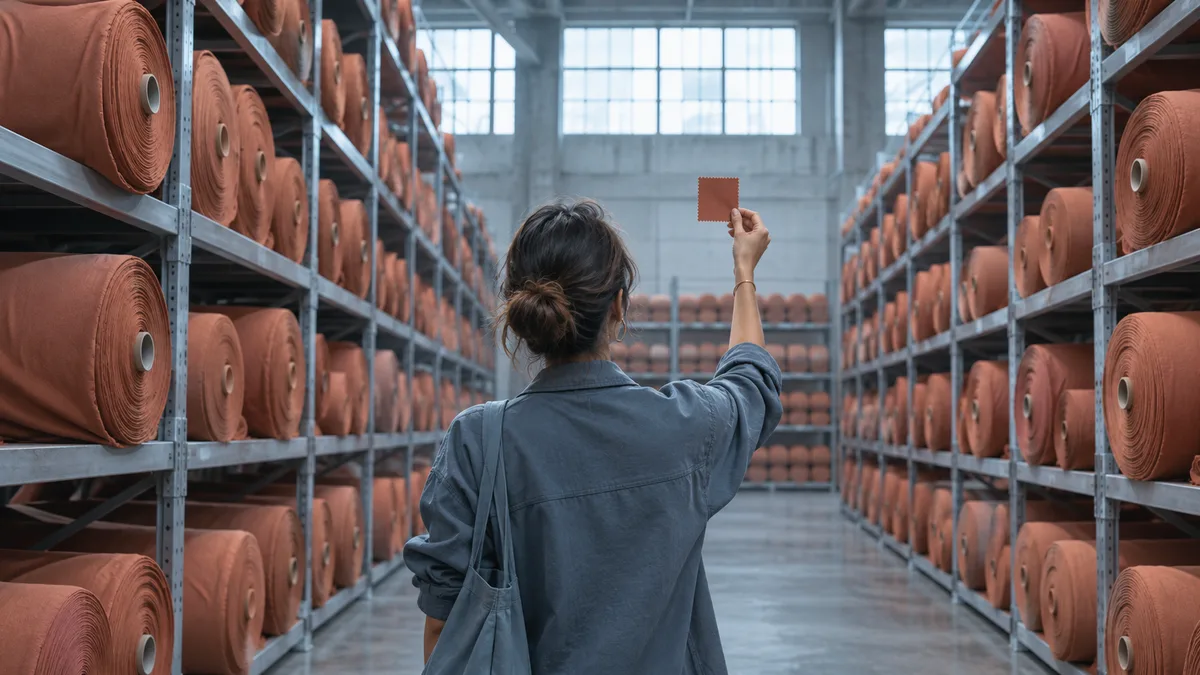
The minimum order quantity for clothing is usually set by the fabric mill, not the sewing factory. Mills knit, weave and dye fabric in fixed lots. If your style needs a custom fabric or color, you must buy at least one lot. The factory then works out how many pieces that fabric makes, and that becomes your minimum.
This guide explains where each part of an apparel minimum comes from. It covers fabric mills, dye lots, trims and sewing line efficiency. It also explains practical ways to reduce order quantities and the costs involved.
Why the Fabric Mill Sets the Minimum Order Quantity for Clothing
A mill has to set up its machines for every fabric it makes. Knitting and weaving machines need the right yarn, settings and test runs. Dyeing and finishing need their own set-up. That work costs roughly the same for a small lot as for a large one.
So mills set a minimum per fabric and per color. Below it, the set-up cost per meter gets too high. Some mills accept smaller lots for a surcharge. Others decline them.
Our article on why a low minimum order quantity can cost you more covers set-up costs for all product types. Clothing production adds its own requirements.
Dye Lots and Color Consistency
Fabric is dyed in batches called dye lots. Fabric from one lot should match closely. Fabric from two different lots can vary slightly in shade, even with the same recipe.
This matters inside a garment. If the front and sleeves come from different lots, the difference can show. So factories prefer to cut a style from a single lot. That pushes the minimum order quantity for clothing toward the size of one dye lot per color.
Buyers and mills can agree on a color tolerance in advance. ISO 105-J03 gives a method for calculating the color difference between two specimens of the same material and allows a maximum value to be specified.
Trims Have Minimums Too
Zips, buttons, woven labels, printed tapes and custom hangtags come from separate suppliers. Each sets its own minimum. Custom-color zips and branded labels can have minimums higher than a small first run needs. So trims can set the minimum order quantity for clothing too.
The highest minimum in your bill of materials usually sets the real limit.
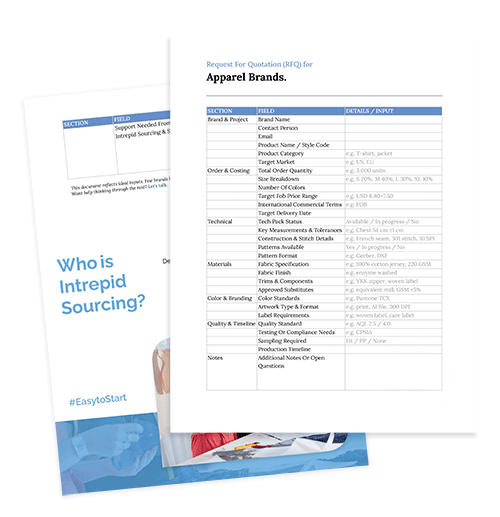
Ask the factory to list the minimum for every component, not only the fabric.
Sewing Line Efficiency
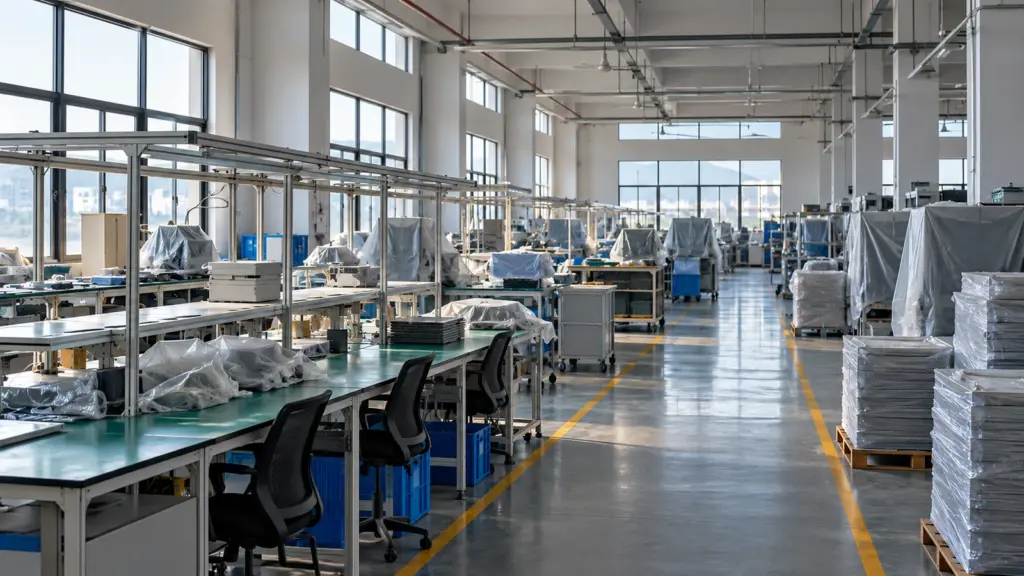
The sewing factory also influences the minimum order quantity for clothing. Each new style needs patterns, markers, cutting set-up and operator training. A sewing line also speeds up as operators repeat the same operations.
On a short run, the line stops before it reaches full speed. The set-up time is spread over fewer pieces, so the price per piece rises. That is why the factory minimum is often quoted per style and per color.
How a Minimum Order Quantity for Clothing Adds Up
For example, suppose a mill’s minimum for a custom color is 1,000 meters and each piece uses one meter including cutting waste. That color needs about 1,000 pieces, whatever the sewing factory’s own minimum.
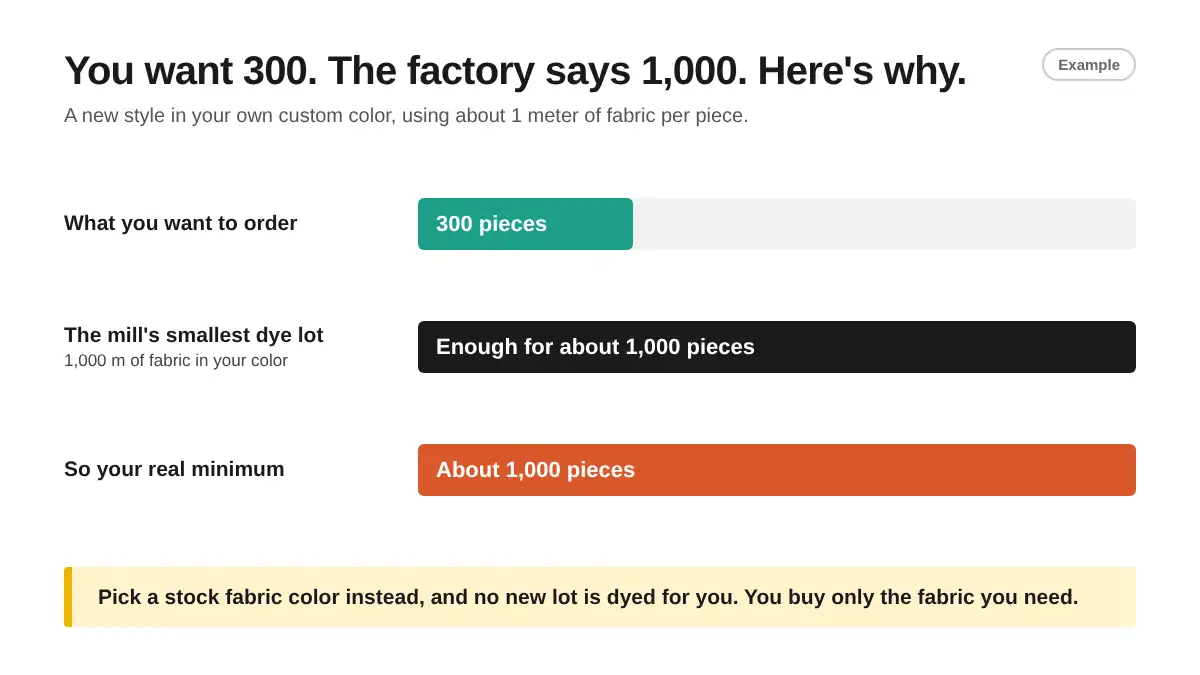
Add a second color and you need a second lot. Add a custom zip in each color and the zip supplier’s minimum applies twice. The minimum order quantity for clothing is the highest of these limits, color by color.
Ways to Lower the Minimum Order Quantity for Clothing
- Use stock fabrics. Many mills hold fabric in standard colors. You buy only what you need, because no new lot is made for you.
- Share colors across styles. One dye lot can cover a T-shirt, a hoodie and joggers in the same color.
- Cut colorways. Launch in fewer colors and add more once a style sells.
- Use standard trims. Stock zips and buttons avoid custom minimums. Keep branding to the labels.
- Pay a small-lot surcharge. Some mills and factories will run below the minimum at a higher price.
- Use a specialist. Our article on small quantity clothing manufacturers in China explains how they work.
The Cost Trade-Offs
| Option | What you gain | What it costs |
|---|---|---|
| Stock fabric | Smaller fabric buy | Limited colors and qualities |
| Shared colors | Fewer dye lots | Less variety in the range |
| Fewer colorways | Lower total order | Narrower launch |
| Small-lot surcharge | Custom fabric at low volume | Higher price per meter |
| Short sewing run | Less stock to hold | Higher price per piece |
A lower minimum usually means a higher unit price. Weigh that against the cash you tie up in stock. Before you request quotes, read our list of questions to ask clothing manufacturers.
Final Thoughts
The minimum order quantity for clothing comes from the whole supply chain. Fabric lots, dye lots, trims and line set-up each add a limit. Find out which one is highest for your style, then design around it.
Our clothing manufacturing service takes styles from tech pack to production in China, Vietnam, Indonesia and Bangladesh. Production starts at 1,000 pieces per style, and sizes can share that quantity.
Enjoying this guide?
Practical manufacturing guidance for product brands. Factory selection, costs, quality and protecting your designs.