Introduction
Every week, we speak with brand owners who ask us the same question:
“What’s the lowest Minimum Order Quantity (MOQ) you can get me?”
It’s an understandable question.
If you’re launching a new product, ordering fewer units feels like the safest way to reduce risk. But after years of working with manufacturers across multiple industries, we’ve noticed something interesting.
The brands that build stronger margins aren’t usually the ones chasing the lowest MOQ. They’re the ones thinking beyond their first production run.
That’s why, when commercially viable, we often encourage clients to explore production runs of around 2,000 units. Not because it’s a magic number but because it’s often where manufacturing starts working with you instead of against you.
Why Factories Have Minimum Order Quantity in the First Place
Factories don’t make money by saying no to smaller brands. They make money by keeping production lines running efficiently.
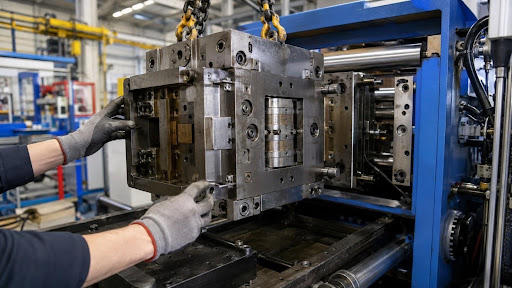
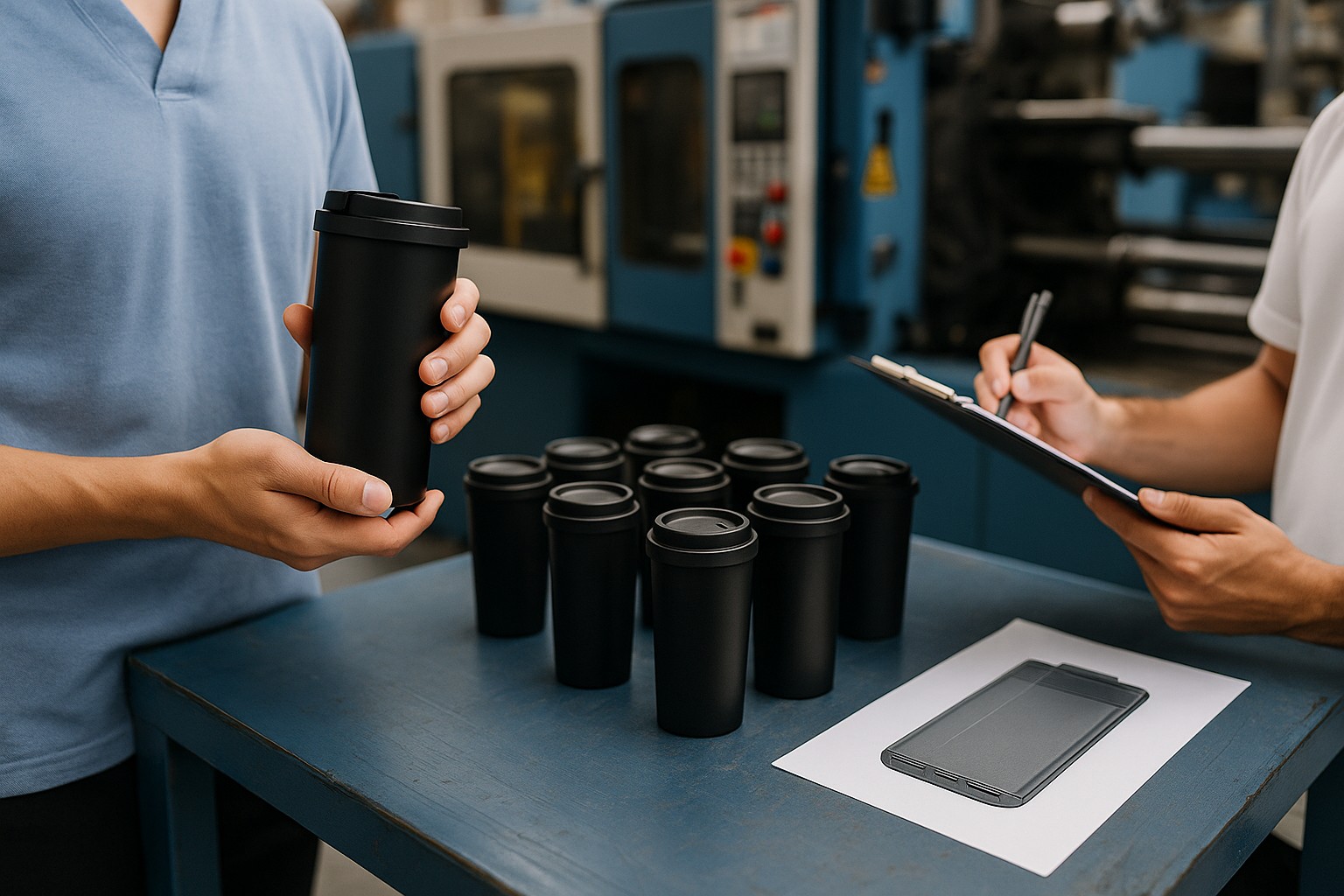
Imagine a factory producing injection-moulded plastic parts.
Before the first component is even made, technicians may spend hours installing tooling, calibrating machinery, testing dimensions and approving the first samples.
Whether that machine produces 300 parts or 3,000 parts, those setup hours are almost exactly the same. If those costs are spread across 300 units, every unit becomes expensive.
Spread across 3,000 units, the cost per unit drops dramatically. That’s one of the biggest reasons minimum order quantities exist. They’re not there to punish startups. They’re there to make production commercially viable.
MOQ Isn’t Just About Manufacturing
Sometimes your MOQ isn’t being driven by the factory at all. It’s being driven by your materials.
Imagine your product requires 1,200 metres of fabric. The textile mill supplying your factory may only sell full 1,500-metre rolls. Your factory can’t buy 1,200 metres. They buy 1,500. The cost of the remaining 300 metres has to go somewhere.
The same applies to printed packaging, labels, electronic components, hardware and custom finishes.
When you increase production volume, those purchasing inefficiencies become much smaller on a per-unit basis.
How Low MOQs Can Gets More Expensive
Imagine these two scenarios:
Option A
- 500 units
- $5.80 per unit
- Four production runs
- Four freight bookings
- Four customs clearances
Four quality inspections
VS
Option B
- 2,000 units
- $4.20 per unit
- One production run
- One shipment
- One customs clearance
- One inspection
Most founders immediately choose Option A because it feels less risky, but look beyond the factory quotation.
Every shipment comes with documentation fees, customs brokerage, origin charges, destination handling, quality checks and administration. Many of those costs barely change whether you’re shipping one pallet or four.
By the time you’ve completed four small production runs, the “cheaper” option may have cost significantly more overall.
Why We Often Recommend Exploring Around 2,000 Units
There isn’t a universal perfect MOQ. Every product, industry and manufacturer is different. However, for many consumer products, we’ve found that production runs of around 2,000 units often represent a practical balance between inventory risk and manufacturing efficiency.
Interestingly, 2,000 units usually sounds far more intimidating than it really is. For many apparel, accessories and consumer products, the MOQ may be spread across colours and sizes rather than one single SKU.
For example, a single T-shirt style could be produced as:
| Colour | S | M | L | XL | Total |
|---|---|---|---|---|---|
| Black | 125 | 125 | 125 | 125 | 500 |
| White | 125 | 125 | 125 | 125 | 500 |
| Navy | 125 | 125 | 125 | 125 | 500 |
| Olive | 125 | 125 | 125 | 125 | 500 |
| Total | 500 | 500 | 500 | 500 | 2,000 |
Suddenly, you’re not trying to sell 2,000 identical black T-shirts, you’re launching a balanced product range that’s easier to merchandise and sell.
Of course, every manufacturer calculates MOQ differently. Some apply it per SKU, while others calculate it across a style or production run. That’s why it’s always worth asking how a factory defines its MOQ before ruling them out.
Think Beyond the First Order
One of the biggest mindset shifts we encourage clients to make is this:
Don’t ask “What’s the lowest MOQ?”
Ask “How many units can I confidently sell before I need to manufacture again?”
Those are very different questions. The first focuses on reducing today’s commitment. The second focuses on building a healthier business.
Final Thoughts
At ISS, we don’t recommend ordering more inventory than your business can realistically sell, but we also don’t believe the lowest MOQ is automatically the smartest decision.
Sometimes a slightly larger production run unlocks better pricing, stronger supplier relationships, lower freight costs and fewer operational headaches.
The goal isn’t to chase the lowest MOQ, it’s to find the production volume where your manufacturing, inventory and growth strategy all start working together.
If You Must Work Around High MOQs
If you’ve read our guide on small-quantity clothing manufacturers, this article might seem to send a different message. While we generally encourage brands to consider larger production runs where commercially viable, we still believe low MOQ manufacturers have their place, particularly for product validation and budget-conscious launches. The key is not to choose a lower MOQ by default without considering the bigger commercial picture.
If a higher MOQ simply isn’t practical, consider working with manufacturers that specialise in smaller production runs, using standard materials vs custom options, simplifying your product range, or exploring a pilot production run. Just be careful not to compromise your product’s quality or long-term vision to reduce your upfront investment. In many cases, increasing your MOQ slightly can deliver better value and a stronger outcome overall.
If you’d like a second opinion on whether pushing for a slightly higher MOQ or starting smaller makes more sense, we’re always happy to talk it through.
Every better product starts here.
Starting a Production Run?
Free Production Readiness Checklist