Introduction
Before contacting an apparel manufacturer, it’s important to have the right information ready. Whether you’re starting your first clothing line or scaling an existing brand, knowing how to prepare an RFQ (request for quotation) can save weeks of back-and-forth and lead to faster, more accurate quotes.
While every apparel manufacturing project is different, there are several pieces of information that clothing manufacturers will typically request before the quoting and sampling process. The more clearly you can communicate your product and production requirements, the faster it is for manufacturers to provide accurate quotations and reduce unnecessary back-and-forth during the sourcing process.
This guide walks through eight key components of an Apparel Production Readiness Checklist you’ll need before requesting quotes from factories. However, knowing what to prepare and actually preparing it correctly are two different things.
1. Product Design
Why manufacturers need it
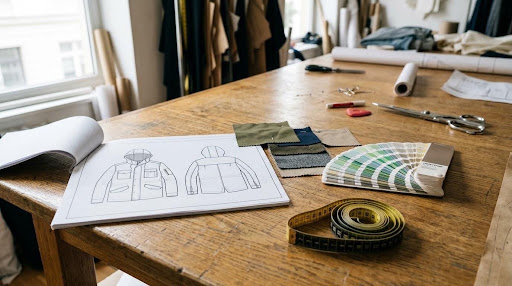
Your product design gives manufacturers the first impression of what you’re trying to create. It should clearly communicate your vision through apparel design files for manufacturers: whether flat sketches, Adobe Illustrator artwork, CAD drawings, or reference images.
What’s often missing
Clear clothing sketch requirements and flat pattern drawings for factories are essential to get right. But knowing how manufacturers want to receive these files, what detail level they expect, and which format works best for your factory is where most first-time sourcing teams stumble. Different factories have different preferences. One factory may need front-and-back sketches with construction details; another wants only 3D CAD files. Getting this wrong means revision cycles and delays before sampling even starts.
2. Tech Pack
Why it matters most
A tech pack is often the single most important document in apparel manufacturing. It becomes the primary reference throughout sampling and production, helping everyone work from the same specifications. Understanding what is a tech pack apparel and getting the tech pack requirements right from the start can make or break your production timeline.
What a tech pack includes
A typical tech pack may include garment construction details like stitching requirements (overlock, coverstitch, flatlock), artwork or label placement, and trim references. But here’s the catch: manufacturers in different regions have different expectations for tech pack format, level of detail, and technical specifications.
An apparel tech pack template might look right on the surface, but missing one critical measurement or stitching detail can trigger costly sampling revisions. One factory’s definition of “French seam” may differ from another’s; one may require thread color specifications while another considers it optional.
3. Material Specifications
Getting specific matters
Material selection affects everything from pricing and lead time to product quality and manufacturing feasibility. Rather than providing general descriptions, you need to be as specific as possible with your apparel fabric specifications. Understanding how to specify fabrics to manufacturers is especially important for fabric sourcing in Asia, where terminology and standards can vary significantly by supplier.
Examples that work
Instead of describing a fabric as simply “cotton” or a colour as “dark blue,” provide details such as:
- 240 GSM 100% combed cotton jersey
- 95% cotton / 5% elastane rib knit
- Pantone® colour codes for manufacturing (e.g., Pantone 19-1564 Navy)
- Silicone wash, enzyme wash, or brushed finish
4. Size Specifications
More than S, M, L
Sizing involves much more than selecting Small, Medium, or Large. Manufacturers typically require detailed garment measurements, along with grading information that explains how measurements change between sizes. This may include chest width, body length, sleeve length, shoulder width, and neck opening. Providing clear sizing information early helps reduce sampling revisions and improves fit consistency throughout production.
5. Branding & Packaging Requirements
An apparel product is more than just the garment itself. Manufacturers may also need to understand your branding and packaging requirements, which include apparel labelling requirements, woven label specifications, care label requirements for manufacturers, and overall packaging requirements clothing. This might involve printed care labels with specific care label requirements by country, embroidery or screen printing artwork, hangtags, and polybags or retail packaging. Not every project requires all of these elements, but considering them early helps avoid unnecessary changes later in development.
6. Production Expectations
Setting realistic goals
One of the most common challenges during sourcing is ensuring expectations are commercially realistic. Manufacturers will usually want to understand your estimated production quantity and apparel MOQ minimums, target budget or FOB pricing apparel, preferred production timeline, and launch date or delivery deadline. Understanding clothing manufacturing costs per unit and factory quotation requirements upfront helps suppliers determine whether the project is commercially viable and whether they’re the right manufacturing partner for your business. Intrepid Sourcing specializes in helping brands understand what’s realistic and matching them with the right factories for their goals and budget.
It’s worth remembering that a higher MOQ isn’t always the answer. Often, the better solution is finding a manufacturer whose capabilities, production model, and minimum order quantities align with your product, business goals, and stage of growth.
7. Production Timeline
Lead times vary significantly
Having an estimated timeline allows manufacturers to evaluate production capacity and material availability. Understanding apparel manufacturing lead times is critical: typical milestones might include your target sampling date, desired production start, required delivery date, and product launch window.
Planning your timeline
Lead time expectations vary significantly: knowing how long does clothing manufacturing take, planning your sampling timeline apparel, and coordinating the production schedule manufacturers require helps everyone stay aligned. Even if your schedule is flexible, providing an estimated timeline helps suppliers plan more effectively.
8. Compliance Requirements
Market-specific rules
Depending on where your products will be sold, you may need to consider apparel compliance requirements before production begins. Examples include CPSIA clothing requirements for the United States, REACH requirements for the European Union, fibre content labelling, country-of-origin labels, and care label requirements by country.
Why this is important to get right
Understanding textile testing requirements and restricted substances testing is essential. Discussing these requirements early helps prevent costly revisions once production is underway. Different markets have different rules, and getting this wrong can delay product launch or require rework.
Too Many Details to Track Alone?
That’s Why We Built This Checklist.
The sections above provide an overview of the information apparel manufacturers typically request before quoting or sampling a project. Reading through eight sections and trying to remember every detail manufacturers will ask for is overwhelming. Sourcing teams often miss critical information, leading to sampling revisions, cost overruns, and delayed launches.
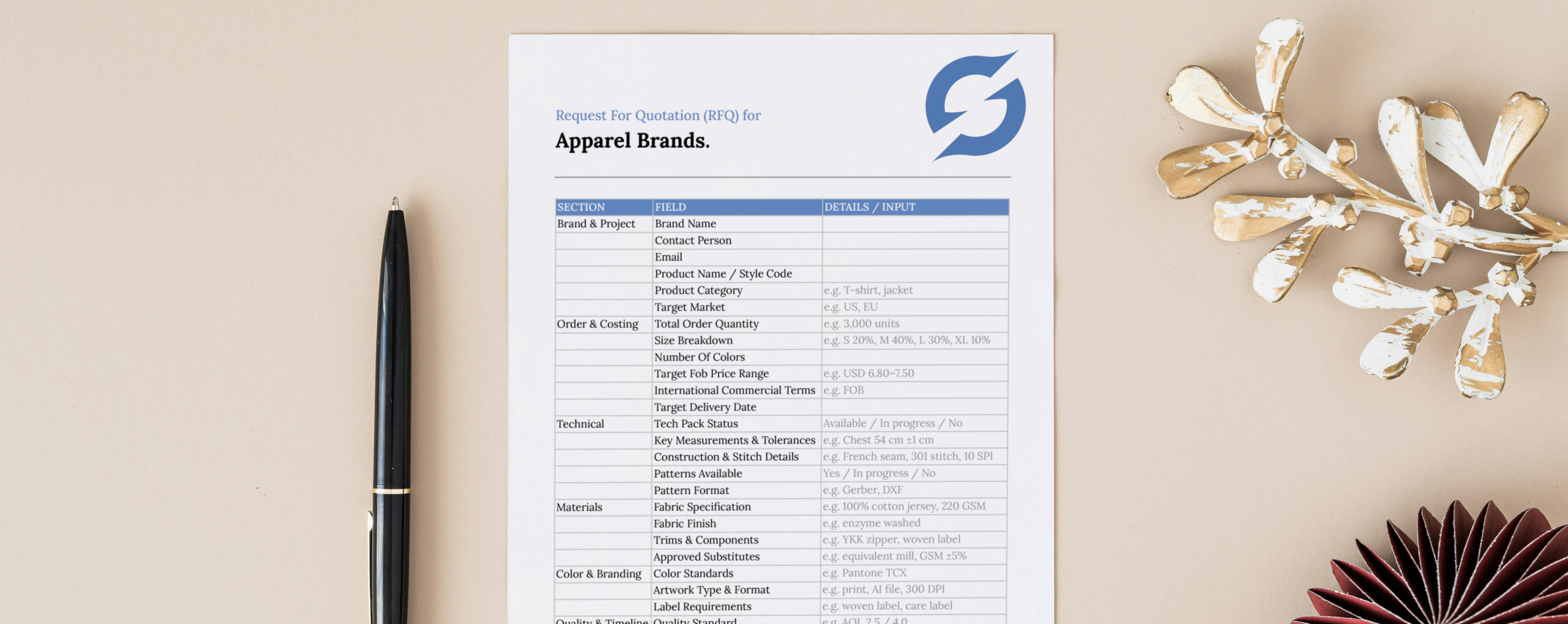
Our Apparel Production Readiness Checklist is more than just this article reformatted. It’s a guided, easy-to-use worksheet that helps you prepare everything you’ll need before submitting an RFQ (Request for Quotation). It includes practical prompts to help you answer key questions manufacturers are likely to ask, organize your project information, and approach supplier conversations with confidence.
Unlike this article, the checklist includes decision trees for different production models, regional-specific guidance, sequencing logic to show what you need to lock down first, and factory-specific notes that you won’t find here.
Enter your email below to receive your free copy.
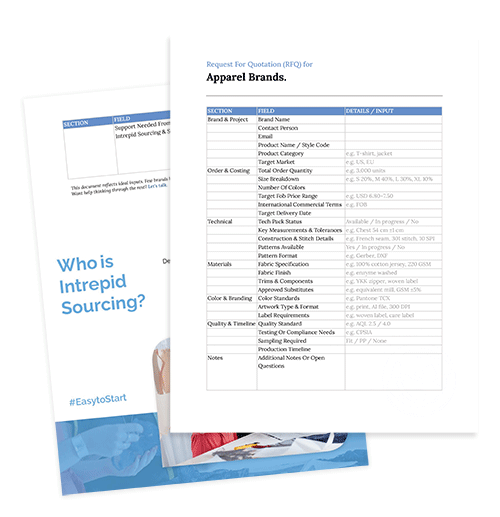
Every better product starts here.
Checklist Download Form
Delivered directly to your inbox.
Final Thoughts
Preparing for apparel manufacturing isn’t about having every answer before you contact a supplier. It’s about giving manufacturers enough clarity to evaluate your project accurately and move conversations forward.
Whether you’re launching your first apparel collection or scaling an existing brand, taking the time to organise your product information upfront can lead to faster quotations, smoother sampling, and more productive supplier relationships.
Our Apparel Production Readiness Checklist is a great place to start, helping you organise the information manufacturers typically need before quoting or sampling your product. And when you’re ready for expert guidance on supplier selection, manufacturing strategy, production management, or sourcing across apparel, Intrepid Sourcing is here to help every step of the way.