Introduction
It’s easy to think that once you’ve found a manufacturer, the hard part is over.
You send an enquiry, wait for a quotation, compare a few suppliers, and choose the best one.
In reality, manufacturers are evaluating you at the same time.
Every project represents production time, materials, machine capacity, and commercial risk. Before they commit, they want to know whether your project is organised, realistic, and something they can successfully produce.
The good news is that you don’t need to be a large brand to make a great first impression. In many cases, smaller brands stand out simply because they’re prepared.
Here are seven things manufacturers often look for before deciding whether to take on a project.
1. Clear Information Beats Perfect Information
Imagine two brands sending an enquiry to the same manufacturer.
The first email simply says:
“Hi, I’d like a quote for oversized hoodies.”
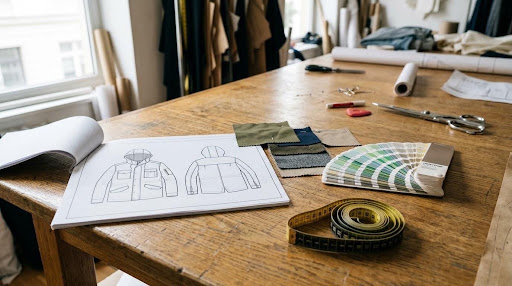
The second includes a rough sketch, a target quantity, preferred fabric, estimated delivery date, and a few reference images.
Neither brand has everything figured out.
But one project is immediately easier to understand.
Manufacturers don’t expect perfection. They simply need enough information to determine whether they’re the right factory for your product and provide an accurate quotation.
If you’re still gathering your project details, our Apparel Production Readiness Checklist can help you organise the information manufacturers typically ask for before quoting.
2. Realistic Expectations Build Better Conversations
Everyone hopes for competitive pricing, fast production, and low minimum order quantities.
The challenge is that manufacturing rarely works that way.
Imagine asking a supplier to produce 300 garments in two weeks using premium materials while expecting pricing that usually applies to orders of 10,000 units.
The factory probably isn’t refusing because they don’t want your business.
They’re refusing because the numbers simply don’t work.
Being transparent about your budget, expected quantities, and timeline allows manufacturers to suggest practical alternatives instead of rejecting the project altogether.
3. Good Communication Builds Confidence
One of the fastest ways to slow a project down is constantly changing the brief.
Monday the hoodie is black. Wednesday it’s navy. By Friday you’ve changed the fabric, moved the pocket, and doubled the quantity.
At that point, the manufacturer isn’t ignoring you. They’re trying to work out which version they’re actually quoting.
Projects naturally evolve, especially during development. The key is keeping changes organised so everyone is working from the same information.
Clear communication reduces mistakes, speeds up quotations, and makes sampling much smoother.
4. The Best Manufacturer Isn’t Always the Biggest One
Choosing a manufacturer is a bit like choosing a specialist.
You wouldn’t ask a wedding photographer to cover a Formula One race. Not because they’re a bad photographer, but because it’s simply not what they specialise in.
Manufacturing works the same way.
Some factories excel at sportswear. Others focus on premium fashion, knitwear, uniforms, or large production runs. If a supplier declines your project, it doesn’t necessarily mean it’s a bad idea. It may simply not match their capabilities.
Finding the right fit almost always produces better results than chasing the biggest factory you can find.
5. Manufacturers Think Beyond Your First Order
Most buyers are focused on today’s quotation. Manufacturers are often thinking about next year’s production schedule.
If you owned a factory, which customer would you prioritise:
One placing a single order with no clear plans beyond that
OR
one launching a small collection today while already planning future colourways and repeat production?
Even if your first order is modest, sharing your long-term goals helps suppliers see the bigger picture. Strong manufacturing relationships are built over time, not through a single purchase order.
6. Organisation Reduces Risk
Think of your project documentation as the instruction manual for your product: If half the pages are missing, someone will eventually start making assumptions.
That’s where expensive mistakes usually happen.
A well-prepared tech pack, clear specifications, and organised project information don’t just help manufacturers. They also protect your product by ensuring everyone is working from the same expectations.
7. Respect Goes Further Than Aggressive Negotiation
Imagine two buyers receiving exactly the same quotation.
The first replies:
“Your competitor is cheaper. Match the price.”
The second asks:
“Can you help me understand what’s driving the cost? Maybe there’s another way we could reduce it.”
Both buyers are trying to lower costs but only one is starting a conversation.
Manufacturers understand buyers have budgets. Buyers should also recognise that suppliers are balancing material costs, labour, production schedules, and quality standards.
The best negotiations aren’t about squeezing every last cent out of a quotation. They’re about finding solutions that work for both sides.
Final Thoughts
What Manufacturers Look for Before Quoting?
Manufacturers aren’t looking for perfect customers. They’re looking for customers who make production easier.
That means being organised, communicating clearly, setting realistic expectations, and approaching the relationship as a partnership rather than a transaction.
Ironically, those same habits also help you receive more accurate quotations, move through sampling faster, and avoid many of the problems that delay production.
If you’re still preparing to contact manufacturers, start with our Apparel Production Readiness Checklist. It walks you through the information suppliers typically need before providing a quotation.
And if you’d like an experienced sourcing partner to handle everything else like prepare your documentation, identify suitable manufacturers, or manage supplier communication, Intrepid Sourcing & Services is here to help you from A-Z.