

On this page
HS code classification starts with your product, not your supplier’s code. Before accepting an HS code from your supplier, check that it describes the product you are buying and belongs to the tariff used in your destination market. Ask what materials, function and product configuration support that choice. A code from your supplier is a starting point. It is not a ruling.
Base HS code classification on the product
We ask the factory for a product specification before reviewing its classification suggestion. A commercial name such as “travel kit” or “electronic accessory” rarely tells a broker enough. The description should explain what the item does, what it contains and how it will arrive.
Ask for the material breakdown, photographs and details of any electrical components. For a set, list every item and explain how the pieces are packaged together. If the factory changes a material or adds an accessory, send that change to the person checking classification.
A warning sign is a supplier choosing a code because another customer used it or because it carries a lower rate. Neither explanation establishes that it applies to your product. We resolve that question before using the duty estimate to approve an order.
Use the destination tariff
The World Customs Organization maintains the international six-digit structure. The first two digits identify the chapter, four identify the heading and six identify the subheading. National tariffs extend that structure, so a complete code supplied for one country may not be suitable for another.
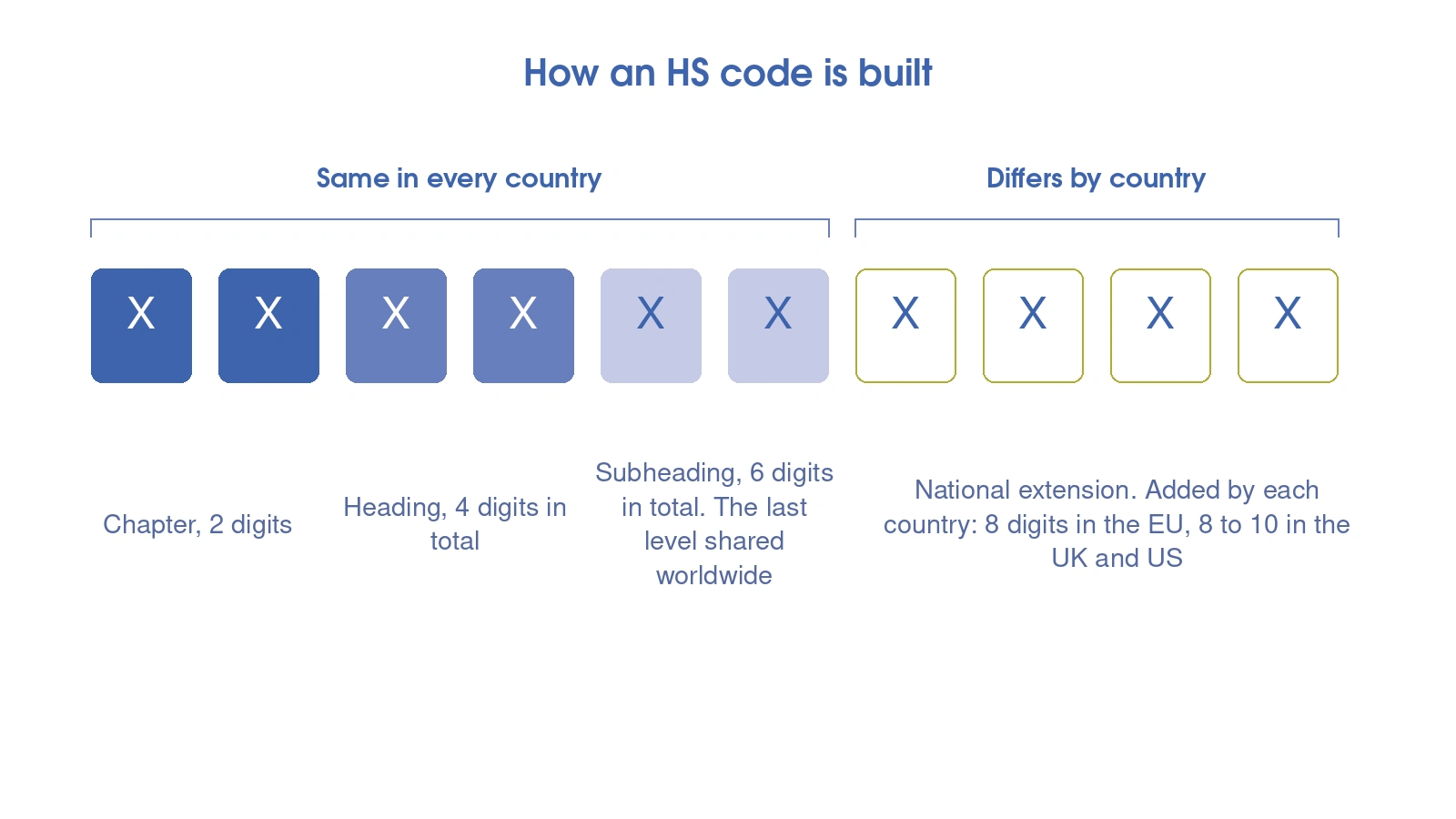
For US imports, the Harmonized Tariff Schedule uses eight-digit tariff lines and ten-digit statistical categories. The EU uses the eight-digit Combined Nomenclature with additional measures in TARIC. UK import declarations generally require ten digits.
Do not ask the factory simply to add digits to its export code. Give your broker the product evidence and ask for the applicable destination classification. Keep the answer with the specification version it covers.
Read the notes before comparing descriptions
A heading that sounds right is not enough. Section and chapter notes can include or exclude products in ways that are not obvious from the heading alone. The General Rules for Interpretation explain how those provisions apply.
Rule 1 starts with heading terms and the relevant legal notes. Other rules address unfinished goods, mixtures and products that could fall under more than one heading. Sets and products made from several materials may require an assessment of essential character.
We do not turn those rules into a shortcut based on the most expensive component. Ask the broker to explain which rule supports the choice and what product evidence matters.
Keep classification separate from the final duty calculation
The classification helps establish duty, but it is not the complete landed-cost calculation. Origin and applicable trade measures can also affect what you pay. Ask for the assumptions behind the estimate rather than recording a percentage without context.
Our article on reducing US import tariffs discusses the wider planning questions. Put the verified duty assumptions into your cost estimate before comparing factory quotes. A change in classification can alter an otherwise attractive purchase decision.
Know when an informal answer is not enough
Published rulings can help you understand how customs treated a similar item. Check whether the materials, function and presentation actually match. A similar photograph does not make another product’s ruling your own.
In the US, CBP issues binding advance rulings. The EU offers Binding Tariff Information, normally valid for three years, and Great Britain offers Advance Tariff Rulings.
We consider a formal ruling when competing classifications materially change the cost or import requirements. That is especially worth discussing before committing to repeat orders. Allow for the application process rather than waiting until cargo is ready.
We also ask what evidence is needed for an application before requesting samples from the factory. A ruling based on incomplete product information may not resolve the question you face. Keep proposed changes visible while the application is being prepared so the submission describes what you intend to import.
Release the order with a classification record
Before shipment, retain the specification, the selected destination code and the reasoning or ruling supporting it. Ask who will recheck the record if the product changes. In the US, using a broker does not remove the importer’s reasonable-care responsibilities.
HS 2022 is the current international edition and HS 2028 is scheduled to take effect on January 1, 2028. National tariffs can also change between editions.
If the factory description, broker’s classification and invoice disagree, we pause document approval until they are reconciled. We organize product specifications and costing with our factories before you commit to production. See how we find a manufacturer for your product.
Enjoying this guide?
Practical manufacturing guidance for product brands. Factory selection, costs, quality and protecting your designs.