On this page
A babywear collection can look straightforward on a mood board. The harder decisions appear when you choose the fabric, work out the size range, and decide how each piece will fasten, wash, and hold its shape. Children’s clothing manufacturing brings these decisions together with safety requirements that depend on the product and where it will be sold.
This guide to children’s clothing manufacturing is for brands developing their first kidswear line or expanding an existing collection. It covers fabrics, fit, compliance, factory selection, costs, and the steps from a tech pack to shipment. At ISS, minimums for children’s clothing depend on the fabric and style, and we confirm yours after reviewing your tech pack. Planning around them early helps keep the collection practical to produce and manageable to sell.
What Makes Children’s Clothing Manufacturing Different
Children’s proportions change as they grow. A pattern that works for a baby will not necessarily work for a toddler, even after adjusting its measurements. Diaper allowance, head openings, sleeve length, mobility, and the position of closures all need attention. Older children introduce different fit requirements again.
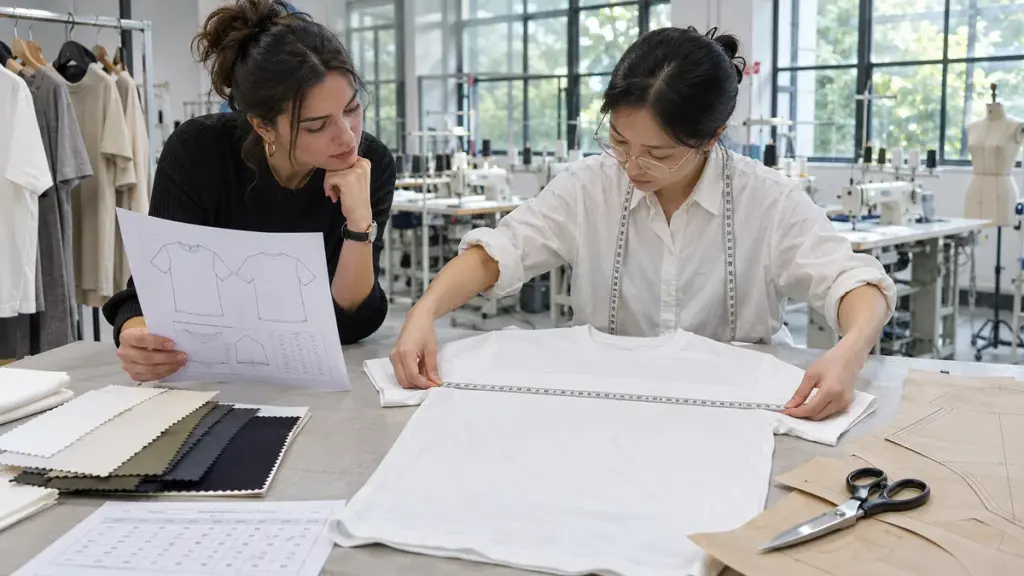
Start with a defined age band and a measurement chart rather than a broad promise to fit “all kids.” Decide which body measurements your sizes represent and how much room each style needs for movement. Our guide to children’s clothing by age can help frame those decisions.
In children’s clothing manufacturing, every piece must meet the requirements that apply to its category, materials, and destination market. A jacket, daytime romper, and pajama set should not automatically share the same testing plan. Details that seem decorative, such as a cord or coated snap, can affect that plan.
Frequent washing also changes the design brief. Evaluate shrinkage, color transfer, pilling, seam strength, and shape retention before approving the fabric. A soft sample is only useful if the finished piece remains comfortable after the care routine printed on its label.
Finally, the buyer and wearer have different priorities. Parents may value easy washing and changing; children notice scratchy labels, tight cuffs, and awkward fasteners. Good children’s clothing designs account for both, without adding unnecessary features.
Safety and Compliance for Children’s Clothing
Compliance shapes children’s clothing manufacturing from the start. Confirm the sales markets, intended age range, and product use before sampling. Use that information to build a written compliance plan with the factory and an appropriate testing laboratory. The following is a starting point, not a substitute for a product-specific review.
United States
The Consumer Product Safety Improvement Act, or CPSIA, is part of the framework for children’s products. Key considerations include:
Lead: Accessible components generally must not exceed 100 parts per million total lead. Paint and similar surface coatings have a separate 90 ppm limit. Certain materials qualify for testing exemptions or determinations, but those do not excuse noncompliance. Check trims, prints, and coatings as well as the base fabric. See the CPSC’s lead guidance.
Phthalates: The federal restrictions apply to children’s toys and child care articles, not automatically to every item of children’s clothing. Sleepwear for children three and younger can fall within the child care category. Applicable components must meet the limits for regulated phthalates, generally 0.1% each. The CPSC’s phthalates guidance explains the scope.
Traceability: Children’s products require permanent tracking information on the product and packaging, to the extent practicable. Plan manufacturer identification, production location and date, and batch details into the labeling system. See tracking-label guidance.
Certification: The responsible domestic manufacturer or importer issues a Children’s Product Certificate, or CPC, covering applicable rules. Required third-party testing must use a CPSC-accepted laboratory. A factory’s general assurance is not a replacement for the relevant evidence. See the CPSC’s clothing guidance.
Drawstrings need their own design review. Under 16 CFR 1120, certain children’s upper outerwear with noncompliant drawstrings presents a substantial product hazard. The requirements distinguish hood and neck cords from waist and bottom cords and apply to specified size ranges. Check the CPSC drawstring guidance before approving a style.
Sleepwear also needs careful classification. US standards under 16 CFR 1615 and 1616 apply to covered children’s sleepwear. Qualifying infant pieces and tight-fitting sleepwear follow different provisions and remain subject to general apparel flammability requirements. Calling a product “loungewear” does not, by itself, remove sleepwear obligations. Review the CPSC sleepwear guidance before selecting fabrics and fit.
European Union and physical safety
For EU sales, review EN 14682 for cords and drawstrings and the chemical restrictions under REACH. The requirements concern different risks, so one test report will not cover everything. Relevant starting points are Tukes’ cord-safety guidance and the European Commission’s REACH restrictions overview. This is not an exhaustive list of EU obligations.
Include attachment-strength checks for buttons, snaps, and decorations. Agree on the pull-test method, acceptance criteria, and sampling frequency before production. Do not describe every button test as a universal legal requirement: US clothing and certain accessories are exempt from the specific small-parts ban. Detachment risks still deserve a documented safety assessment.
Fabrics and Trims
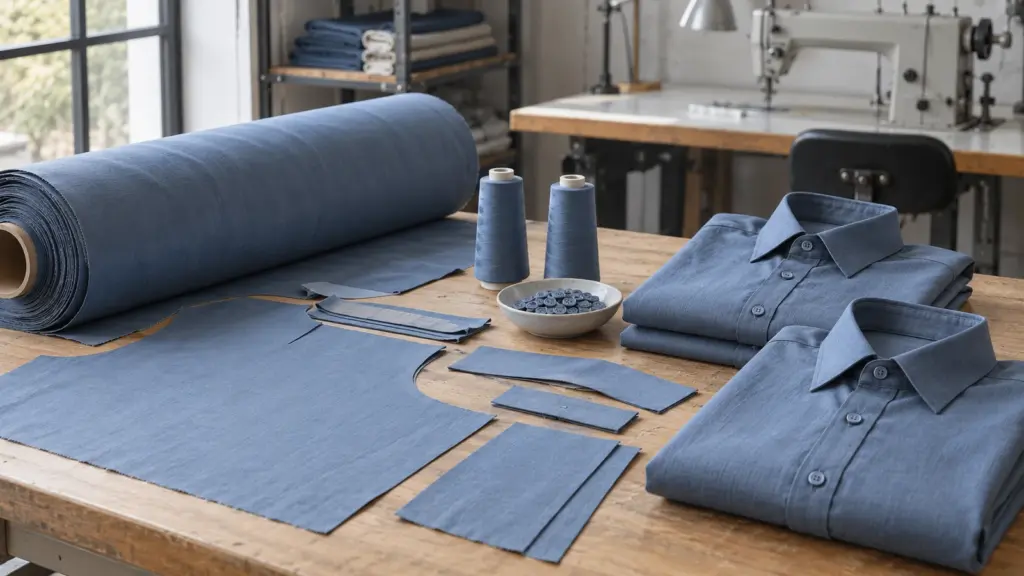
Fabric choice drives both cost and safety in children’s clothing manufacturing. Specify fabric by composition, construction, weight, finish, stretch, and expected performance. “Soft cotton” leaves too much open to interpretation when the sample becomes a bulk order.
Cotton is a familiar starting point for everyday pieces. Organic cotton may suit the brand’s positioning, but an organic claim needs appropriate supporting documentation. It does not establish that the finished product meets every safety or performance requirement.
Bamboo viscose can provide a soft, fluid hand feel. Evaluate the actual fabric for shrinkage, pilling, recovery, and wash durability rather than choosing it on the fiber name alone. Keep fiber descriptions and environmental claims accurate and supportable.
Jersey and interlock describe fabric constructions, not fibers. Jersey can work well for lighter tops and easy layers; interlock can provide a fuller feel for babywear and basics. Either needs testing in the proposed weight and finish. Compare options in our children’s clothing fabric guide and summer fabric guide.
OEKO-TEX STANDARD 100 concerns testing textiles for harmful substances. Product Class 1 covers products for babies and young children up to three years. Check that the certificate is valid and covers the material or finished article being supplied. A certified fabric does not automatically make every added trim or finished piece certified.
Snaps can simplify changing, while buttons may suit particular styles. Both need suitable placement, secure attachment, and repeated-use checks. For metal trims, document the specification behind any “nickel-free” claim and confirm applicable testing. Include thread, elastic, labels, and zipper components in the material review too.
Babywear and Infant Details
Babywear is the most demanding part of children’s clothing manufacturing. It needs to work during changing, feeding, carrying, and rest. An infant clothing manufacturer should be able to explain how the pattern and construction support those uses, not simply reproduce the appearance of a reference sample.
Envelope necks can make dressing easier without adding a separate fastener. Leg snaps provide diaper access, while kimono-style openings reduce the need to pull a piece over the head. Test each arrangement on the sample: a convenient opening on paper can become awkward if the overlap is too shallow or the snaps require excessive force.
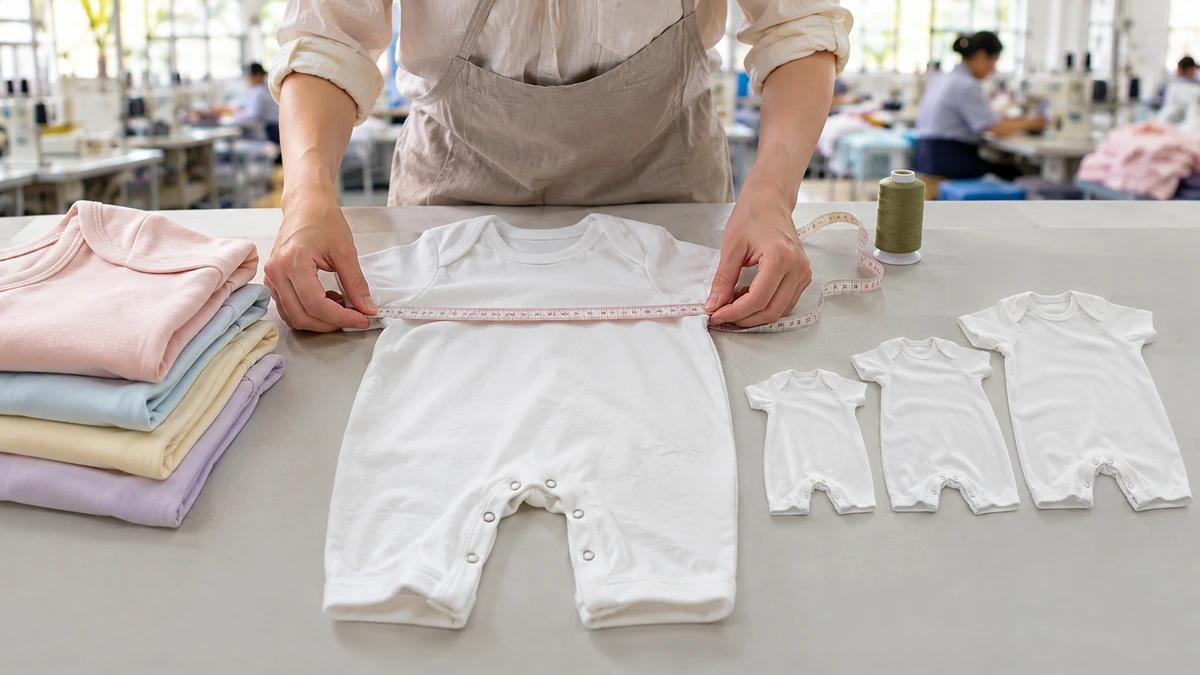
Define the size run within 0 to 24 months deliberately. Age labels alone are not a fit specification. Record body length, chest, sleeve, rise, and other relevant measurements, with diaper allowance where needed. Review representative sizes rather than assuming that approval of one size proves the entire range works.
Turn samples inside out. Check seam bulk, rough edges, label placement, and any fastener surface that could press against the skin. Then wash and recheck them. Comfort should be assessed after the expected care process, not just when the piece is new.
For collection ideas, see our articles on baby clothes for boys and newborn clothes for girls. Use those as design references alongside the practical considerations in our custom baby clothing checklist.
Costs and Minimum Order Quantities
In children’s clothing manufacturing, the unit price depends on more than fabric consumption. Pattern complexity, sewing operations, trims, prints, embroidery, washing, packaging, testing, and inspection all contribute. A simple shape with several custom components can cost more to develop than its appearance suggests.
Sampling should be budgeted separately from bulk production. Ask what the development charge includes: pattern work, materials, sample revisions, size-set samples, and pre-production approval may be priced differently. Confirm what happens if the design changes after a sample has been approved.
For children’s clothing manufacturing at ISS, minimums depend on the fabric and style, and sizes within a style share the run. Five different styles do not share one run. Agree on the size breakdown before ordering, and confirm any color or material minimums separately.
Avoid dividing quantities evenly just because it makes the spreadsheet simpler. Use sales history where available, or a considered demand forecast for a new line. Too much stock in the wrong sizes ties up money even when the overall order quantity seems modest.
A lower minimum can reduce inventory exposure, but it may increase the cost per piece because development and setup costs are spread across fewer units. A larger order is not automatically better either. Compare the total cash commitment and likely sell-through. Our guides to kidswear production costs and low minimum order quantities explore that tradeoff.
Request a clear quote showing what is included and what remains outside the factory price, including freight, duties, and destination charges.
When comparing quotations, give each factory the same specification and quantity breakdown. Otherwise, the apparent saving may come from a lighter fabric, simpler packaging, a different finish, or omitted testing. Ask for alternatives as separate options rather than allowing the specification to change silently. This makes it easier to decide where a saving is worthwhile and where it would weaken the product.
Choosing a Children’s Clothing Factory
Look for children’s clothing manufacturing experience in the specific category you intend to make. A factory’s work on woven dresses does not automatically demonstrate experience with infant sleepwear, stretch basics, or technical outerwear.
Ask to review comparable construction details and discuss how fit, shrinkage, and attachment strength are controlled. The explanation matters as much as the sample. You should understand how an approved result will be repeated across production.
Testing capability means knowing which checks can be performed internally and which need an outside laboratory. Ask who develops the test plan, arranges samples, reviews failures, and keeps the records. A report should be relevant to your product and materials, rather than an unrelated style produced years earlier.
Certifications also need context. ISO 9001 addresses a quality management system; it is not a substitute for product-specific safety evidence. Check the certificate’s scope, covered facility, and validity. Apply the same scrutiny to other certification claims.
Before placing an order, establish:
- Who approves fit, materials, and the final production sample.
- Which measurements and tolerances define acceptance.
- How substitutions or design changes will be approved.
- What happens when inspection or testing identifies a failure.
- How delivery timing changes if approvals arrive late.
Our guides to choosing a children’s clothing factory and questions to ask manufacturers provide further preparation. If you are considering ISS as your kids clothing manufacturer, share your target market, size range, design references, and quantities so the manufacturing discussion starts with a clear brief.
Starting or Growing a Kids Clothing Brand
A focused first collection is usually easier to evaluate than a wide assortment with little depth in each style. Define the customer, age range, intended use, and price position before deciding how many designs to launch.
Private label starts from an existing design or product base, with customization depending on the available program. Custom design gives you more control over pattern, fabric, construction, and details, but also introduces more development decisions. Neither approach removes the need to confirm fit, quality, labeling, and compliance.
Choose a niche you can describe in practical terms. That might be easy-changing baby basics, durable preschool clothing, or a tightly edited occasionwear range. “Premium children’s clothing” is less useful as a production brief because it does not explain what the customer should notice or value.
Plan the sales channel alongside the product. Wholesale buyers need room for their own margins, and may expect particular packaging, size assortments, or delivery windows. Direct-to-consumer sales bring different costs, including fulfillment and returns. Build the price model before finalizing expensive details.
For established brands, growth may come from improving a repeat style or filling a missing size range rather than adding a completely new category. Track return reasons and customer feedback so the next production run addresses identifiable problems.
Our articles on starting a kids clothing line, private-label babywear, and kidswear wholesale cover these business choices in more detail. The best approach to kids clothing manufacturing is one that fits the collection’s economics as well as its design ambitions.
From Tech Pack to Shipment
A clear approval process keeps children’s clothing manufacturing on track and stops uncertainty from moving into bulk production. Each stage should produce a record that the brand and factory can refer back to.
Prepare the tech pack
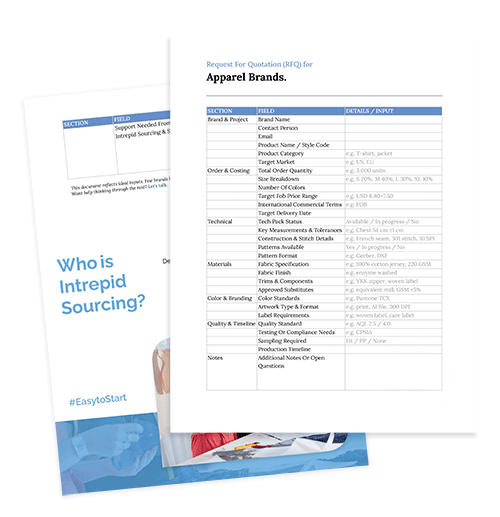
Include drawings, measurements, grading rules, fabric and trim specifications, construction details, colors, labels, packaging, and testing requirements. Mark the latest revision clearly. Our tech pack template provides a starting structure.
Develop and review samples
Check the sample against the written brief, not only against a reference photograph. Record changes in one consolidated set of comments. Conflicting feedback across messages makes revisions harder to control. Separate comments about appearance from comments about performance. A neckline may look right but stretch out during dressing; a printed motif may be correctly positioned but feel stiff against the fabric. Describe the problem and the desired result so the next sample answers a specific question.
Approve fit and the size range
Review movement, openings, proportions, and relevant sizes. Include wash results when confirming measurements. Resolve fit problems before treating the pattern as final.
Complete the agreed testing and production approvals
Arrange applicable testing using representative materials and pieces. Confirm what additional production-stage testing is required. Approve the pre-production sample, materials, labels, and packaging before releasing bulk work.
Monitor bulk production
Check construction and measurements during production, when problems can still be corrected. Document any approved changes. A replacement snap or different fabric finish should not enter the order without review.
Inspect and prepare shipment
Compare finished pieces with the agreed quality criteria, size breakdown, labels, and packing instructions. Resolve identified issues before shipment. Confirm the shipping method, responsibilities, and required documents, allowing time for freight and customs rather than treating the factory completion date as the retail launch date.
Keep the approved sample, final specifications, test reports, and inspection records together. They provide a reference for customer questions and repeat orders, and help distinguish an intentional update from an unintended production change.
Our step-by-step production guide explains the broader manufacturing sequence.
Wrapping Up
Successful children’s clothing manufacturing starts with a clear product brief and decisions made in the right order. Define the customer and sales market, develop the fit, select materials, and establish the compliance plan before committing to bulk production. Build the quantity and price model around a collection you can realistically sell.
At ISS, we confirm minimums after reviewing your tech pack and fabric. Bring your design references, intended size range, sales markets, and target quantities to the ISS children’s clothing manufacturing team to discuss what the collection needs before sampling begins.