
On this page
The de minimis rule used to let a shipment worth $800 or less enter the US free of duty. That route is now closed for commercial imports. Low-value shipments need a formal or informal customs entry, and the duties, taxes and fees that apply must be paid.
This guide explains what changed, which entry types apply now, the charges on a low-value import, and how brands should adjust their shipping model.
What the De Minimis Rule Allowed
Section 321 of the Tariff Act created an exemption for goods worth $800 or less, imported by one person on one day. Duty and import taxes were waived. Many brands used the de minimis rule to ship orders direct from Asia to US customers, one parcel at a time.
Two other exemptions in the same section are not affected. Bona fide gifts worth $100 or less still qualify. So do travelers’ personal articles worth $200 or less.
How the De Minimis Rule Was Suspended
The change came in stages:
29 August 2025
The suspension under Executive Order 14324 took effect.
20 February 2026
Executive Order 14388 continued the suspension.
24 June 2026
A US Customs and Border Protection interim final rule indefinitely suspended the exemption for goods arriving by all modes other than international mail.
24 June 2026
A concurrent CBP rule did the same for international mail, effective 24 July 2026. It also created a new postal informal entry process. Some of its provisions apply from 22 October 2026.
1 July 2027
The One Big Beautiful Bill Act ends the exemption by statute.
So the de minimis rule is gone in practice now. It ends in law from July 2027.
Informal vs Formal Entry
Every commercial shipment now needs a customs entry. The value decides which type.
| Entry type | Value | Key points |
|---|---|---|
| Informal entry | $2,500 or less | Entry Type 11 is the main route for former de minimis shipments. A bond is needed only in certain cases today. |
| Formal entry | Generally over $2,500 | Needs a customs bond and full entry summary data. Carries a higher processing fee. |
Entry Type 86, the low-value entry many couriers used, is suspended. Release from manifest is no longer available for these shipments. Importers must also give CBP more data than the old process required.
Mail shipments have their own route. The new postal informal entry covers mail worth $2,500 or less. The owner, the purchaser or a licensed customs broker files it, and the filer needs a customs bond.
On 8 October 2026, CBP published a proposed rule on low-value shipments. It would require a bond for every Type 11 entry. It would also create a new Entry Type 13 for eligible mail shipments. Comments close on 7 December 2026.
What Importers Pay Now
Duty
Duty is the rate for the product’s 10-digit HTSUS code, applied to its value. Additional duties, such as Section 301 or Section 232 duties, can apply on top. In February 2026, the US Supreme Court ruled in Learning Resources that IEEPA does not authorize the President to impose additional tariffs. Executive Order 14389 then terminated certain IEEPA-based additional duties.
Rates change often, so check the tariff on the day you file.
Merchandise Processing Fee
CBP charges a processing fee on each entry. The fiscal year 2027 rates apply from 1 October 2026:
- Formal entry: 0.3464% of value, with a minimum of $34.58 and a maximum of $670.86.
- Informal entry, automated, not prepared by CBP: $2.77.
- Informal entry, manual, not prepared by CBP: $8.30.
- Informal entry, manual, prepared by CBP: $12.45.
Broker and Courier Charges
Couriers and customs brokers charge for preparing each entry. The provider sets these charges, not CBP. On a low-value parcel, they can be large compared with the value of the goods.
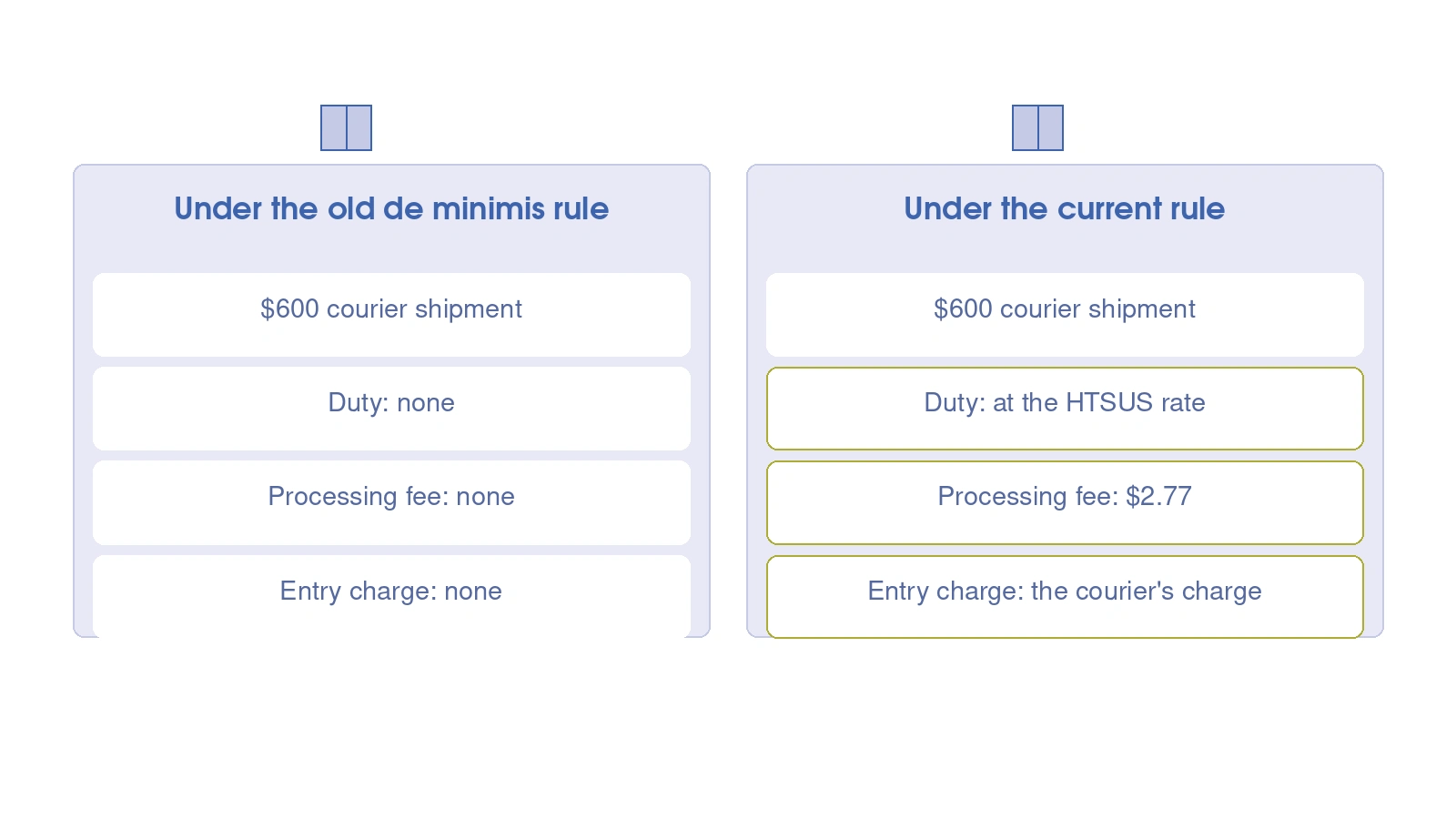
For example, a $600 courier shipment filed as an automated informal entry pays duty at its HTSUS rate, a $2.77 processing fee and the courier’s entry charge. Under the old de minimis rule, it paid none of these.
How Brands Should Adjust to the End of the De Minimis Rule
- Compare parcel and bulk models. One parcel per order now means one entry per parcel. Shipping stock in bulk under one formal entry and fulfilling from a US warehouse spreads entry costs over many units.
- Get classification right. Duty depends on the HTSUS code. A wrong code means wrong duty, and the importer of record carries that risk.
- Declare the real value. Undervaluing shipments to cut duty is a false declaration.
- Decide who pays at the door. If you sell delivered duty paid, you or your agent pay the duty and fees. If not, your customer pays on delivery, which can lead to refused parcels.
- Price the landed cost. Add duty, fees, broker charges and freight to the product cost before you set retail prices.
Our guides on reducing US import tariffs and building a cost estimate cover the next steps. For wider planning, see our overseas manufacturing tips.
Final Thoughts
The de minimis rule no longer shields low-value commercial shipments. Every shipment needs an entry, and duty, fees and broker charges all apply. Brands that ship direct from Asia should calculate costs for both parcel and bulk shipping before the next order.
Our product sourcing service researches suppliers and product costs, and checks factories before you commit to an order.
Enjoying this guide?
Practical manufacturing guidance for product brands. Factory selection, costs, quality and protecting your designs.