On this page
- How to Start a Clothing Line: What It Takes
- Define Your Product and Customer
- Choose Your Production Model
- Build a Tech Pack Before You Contact Factories
- Choose Fabric and Trims
- How to Find a Clothing Manufacturer
- Clothing Samples: What to Expect
- What It Costs to Start a Clothing Line
- Minimum Order Quantities for a First Run
- From Approved Sample to Shipment
- Pricing and Selling Your First Collection
- Starting a Line in a Specific Category
- Common Questions
- Wrapping Up
Learning how to start a clothing line begins with a narrow first product, a clear tech pack, and samples that prove the fit and construction. Choose a manufacturer whose material requirements, production methods, and costs fit your budget before you commit to inventory.
This guide is for founders developing their own products, not just putting a logo on existing stock. ISS is a clothing manufacturer. We produce in Asia for brands in the US, Europe, and other markets. Here, we explain the manufacturing decisions in depth and the business decisions that support them.
How to Start a Clothing Line: What It Takes
The practical answer to how to start a clothing line is to make decisions in an order that prevents expensive revisions. Decide what you will sell before choosing fabric. Define the product before requesting quotes. Approve a physical sample before releasing production.
- Choose the customer and first product.
- Select a production model and target selling price.
- Build the tech pack and specify materials.
- Compare manufacturers using the same brief.
- Develop samples and confirm costs and minimums.
- Approve production, inspect the order, and arrange delivery.
- Sell the collection and use actual demand to plan reorders.
Start with three to five related styles and a few colors, rather than a broad collection. Shared fabrics and trims reduce the number of separate decisions. Depth in a useful size range is worth more than many styles with little stock in each size. You can start with no manufacturing experience, but you still need a defined product and one person responsible for approvals.
Define Your Product and Customer
Name the person who will buy the product and the situation in which they will wear it. A work shirt for hot kitchens needs different fabric, fit, and wash performance than a shirt for occasional evening wear. Define the problem before choosing decorative details.
Set a price position and sales channel. Decide whether customers will buy directly from your website or through a retailer. Review comparable products for fit, fabric, construction, and recurring complaints. Our guide to entering the clothing industry helps frame that first product decision.
Keep the business plan brief but useful. Record your customer, offer, sales approach, and cash needs. The SBA business plan guide provides a structure. Then build a brand around a consistent promise, not just a name and logo.
Use a fashion mood board to set color and shape. Collect design references that explain specific features without copying another product. Before ordering branded labels, run a USPTO trademark search. A search is a starting check, not a guarantee that a name is available.
Choose Your Production Model
The production model sets how much you can change and which work you must manage. Compare the scope, not just the quoted sewing price.
| Model | Control over design | Upfront cost | Best for |
|---|---|---|---|
| Print on demand | Artwork on available products | Low inventory commitment | Testing graphics without a bulk order |
| Blanks plus decoration | Decoration and some branding | Stock and decoration costs | Simple branded products on existing fits |
| Private label | Existing styles with agreed changes | Development and inventory | Brands that can use an established base product |
| Cut and sew (CMT) | Custom design; you supply materials | Development, materials, and sewing | Brands with material and production expertise |
| Full package production (FPP) | Custom design; factory sources materials | Development and finished-product order | Brands that want one partner for materials and production |
Brands that need an original shape or fit generally move to custom cut and sew, under either CMT or full package terms. Read the cut and sew overview and compare CMT and FPP responsibilities. Cut and sew describes making pieces from fabric. CMT describes a particular division of work. They are not interchangeable labels.
If an existing pattern fits your concept, consider private label clothing. For a product built to your specifications, our cut and sew manufacturing service starts with the design requirements and production scope.
Build a Tech Pack Before You Contact Factories
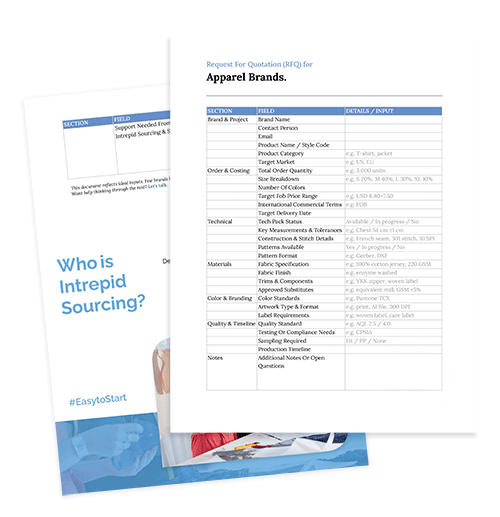
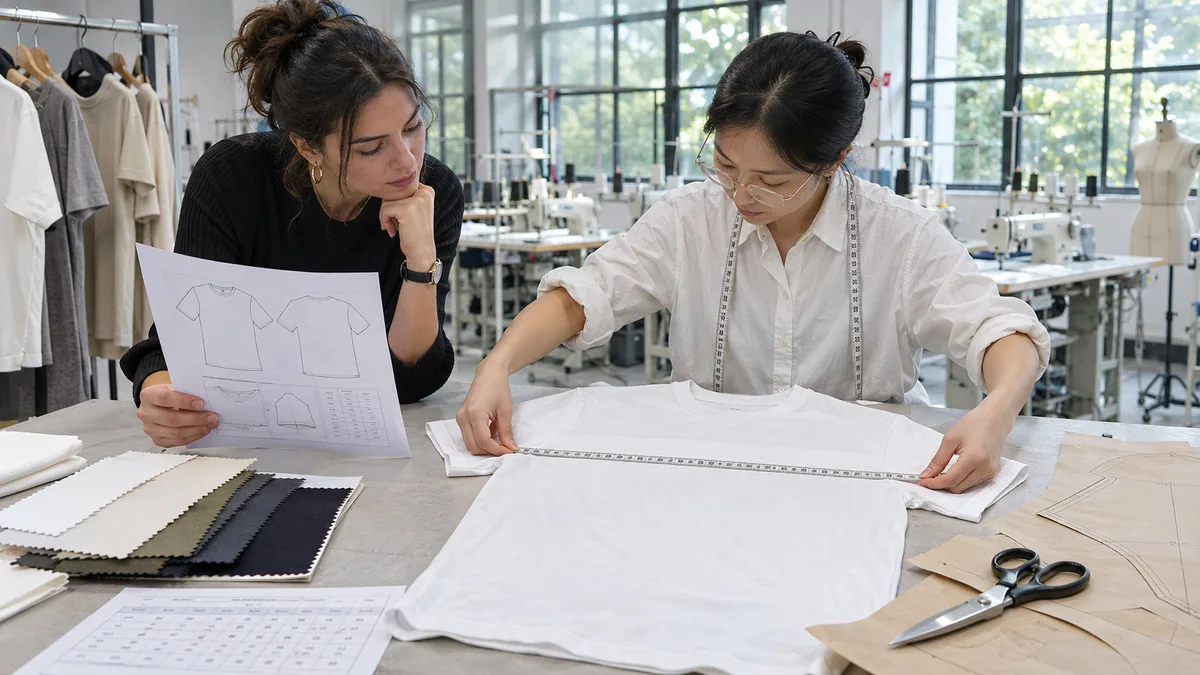
A tech pack turns your idea into instructions that can be quoted, sampled, and checked. A reference photograph alone leaves the factory guessing about dimensions, materials, and hidden construction. A complete brief removes those guesses and makes competing quotes easier to compare.
- Front and back flat sketches with detail views.
- Base-size measurements, tolerances, and grading across sizes.
- Fabric composition, construction, weight, and finish.
- Trim specifications, including zippers, elastic, and thread.
- Seams, stitching, reinforcement, and artwork placement.
- Color references, labels, folding, and packaging.
Start with a tech pack template and follow the guide to creating your first tech pack. Define where every measurement starts and ends. Clear measurement drawings stop two people from measuring the same piece differently.
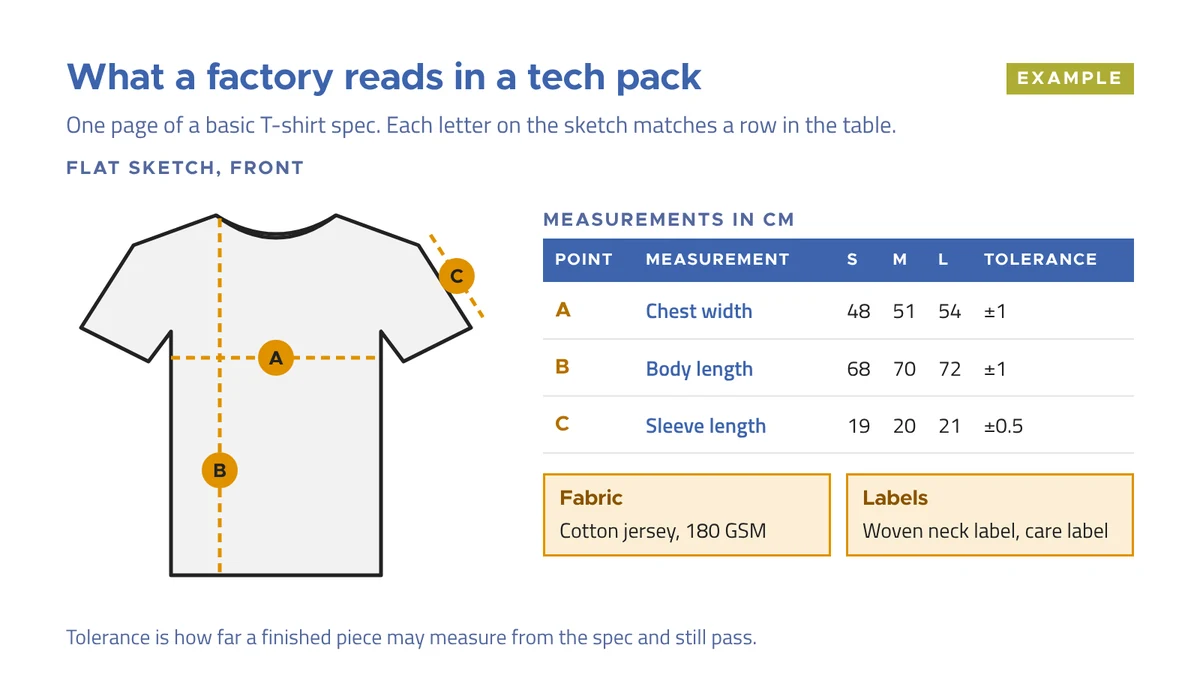
If you hire help, choose a designer who knows your product category. Ask what files, grading, and revisions are included. Our guide to hiring a tech pack designer explains the scope to agree. ISS also offers tech pack design.
Give each revision a date and version number. Keep one approved file rather than letting changes pile up across messages. If a fabric or construction detail is undecided, mark it as an open item instead of presenting a guess as a requirement.
For each approval, name who can authorize a change. Otherwise a founder, a designer, and a production contact can send conflicting instructions. Record the cost and timing impact before accepting a revision. Keep rejected versions separate so an old measurement chart cannot return to production by accident.
Choose Fabric and Trims
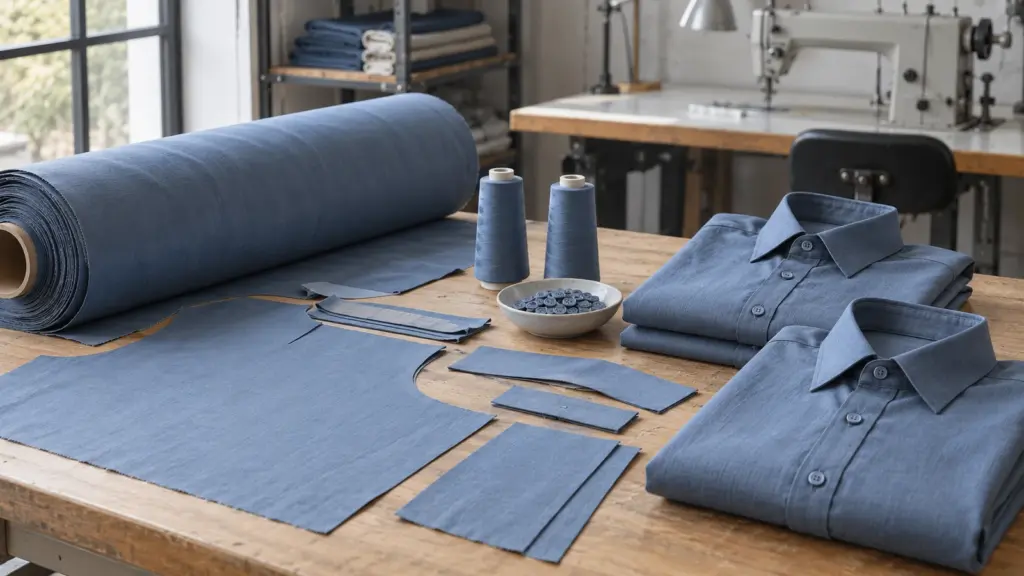
Describe fabric by composition, knit or weave construction, weight in GSM, finish, and color standard. Add the performance you need, such as stretch recovery or shrinkage limits. A fabric name or a photograph does not show how it feels, moves, or behaves after washing.
Compare physical swatches before approving yardage. Our guide to choosing production materials covers the decisions behind the specification. Check trims alongside the fabric. Heavy buttons can distort a light shirt, and the wrong elastic can change the fit after wear.
Stock fabric removes a custom development step, but availability and repeat supply still need confirmation. Custom dyeing gives more color control but adds approvals and dye-lot requirements. These material decisions often set the minimum order quantity before sewing capacity matters. Ask whether unused fabric remains yours and how it will be stored.
For cotton products sold in the US, keep records that trace the fiber to its source. Under the Uyghur Forced Labor Prevention Act, goods linked to Xinjiang are presumed barred from entry, and the importer must prove otherwise.
How to Find a Clothing Manufacturer
Compare domestic and overseas production against your actual needs. A nearby factory makes visits and sample exchanges easier. Overseas production offers a wider material base and a different cost structure, but freight, customs, and time zones add work. Neither option guarantees low minimums or fast delivery.
Country choice is only a first filter. China, Vietnam, Bangladesh, and Indonesia have different factory networks, and the right choice depends on the product, material source, order size, and destination. Large US brands are spreading their orders: in the 2025 USFIA benchmarking study, every surveyed company sourced from Vietnam, and 60% sourced less than 10% of their apparel from China. Use our apparel country comparison to frame questions, not to rank factories by nationality.
Good clothing manufacturers for startups offer a clear sampling process, itemized quotes, realistic material requirements, and an inspection plan. Ask for comparable products rather than a general catalog. Check who develops patterns, who buys materials, and whether any production will be subcontracted.
Our guide to choosing an overseas factory and our list of questions for manufacturers support your shortlist. Verify the business identity, request references, and consider an audit. For China, follow the steps in supplier verification. A paid sample tests whether a factory can read your brief, but it does not replace the other checks.
Send the same specification and quantity assumptions to each candidate. Learn what factories need before quoting. An incomplete brief is a common reason for unanswered supplier inquiries. When comparing an overseas clothing manufacturer, confirm payment stages, approval responsibilities, and what the price excludes.
Clothing Samples: What to Expect
The proto sample checks whether the design can be made as intended. A fit sample tests shape and measurements on the intended wearer. A size set checks the graded range. The pre-production sample confirms the agreed materials, construction, labels, and finish before the bulk run.
Plan for more than one round. A simple style may need a first sample and one correction round. A complex fit can need more. Ask which rounds are included in the price and what triggers another charge.
A basic sample starts from about $50 per round. Complex styles, custom fabric, and courier charges add to that. Confirm whether patterns, fabric, and revisions are included before you budget.
Review the sample process alongside the clothing design process. Send one consolidated feedback list with photographs, measured differences, and the correction you want. Separate fit changes from workmanship defects. Wash and wear the sample as intended before approving it, and keep an agreed reference sample.
What It Costs to Start a Clothing Line
Any useful estimate for how to start a clothing line separates development from production. A unit price does not tell you what it costs to reach an approved product or to bring the order into your warehouse. Ask for written costs at each stage.
The figures below are low-side starting points in US dollars for a simple product, such as a basic cotton T-shirt. They cover different units of work, so do not add them up as a launch total.
| Cost item | Starting cost | Notes |
|---|---|---|
| Tech pack | From $100 per style | Simple styles; complex styles and full design packages cost more. |
| Pattern and grading | From $100 per style | Confirm that all sizes are graded. |
| Samples | From $50 per round | Base size; fabric and courier may be extra. |
| Production | From $3 per piece | Basic T-shirt with standard labels and packing. |
| Ocean freight | From $0.60 per piece | Asia to a US port; air freight costs far more. |
| Import duty | Set by your HTS code | Customs value times your duty rate plus any additional tariffs. |
| Testing and inspection | From $150 | Basic fabric tests; a pre-shipment inspection visit is separate. |
| Branding and packaging | From $0.25 per piece | Basic labels and bags; custom components add setup costs. |
Landed cost is the product price plus freight, duty, inspection, and other delivery costs. Development, storage, selling costs, and returns also belong in the business budget. Check clothing labor costs without treating labor as the whole unit cost. Our guide to starting a small clothing company works through a first order line by line.
Duty depends on the classification of your product in chapters 61 or 62 of the Harmonized Tariff Schedule. At the time of writing (November 2026), most major apparel sources also carry new Section 301 tariffs of 10% to 12.5% on top of normal duty, including China, Vietnam, Bangladesh, and Cambodia. The $800 de minimis exemption is suspended, so small sample shipments pay duty too. Confirm your HTS code and rate with a customs broker before ordering and again before shipment. Our guide to reducing import tariffs covers the planning options.
Build a cash schedule as well as a cost sheet. Note when deposits, sample fees, production balances, and freight payments fall due. Sales receipts arrive much later. Reserve money for a correction round or a delayed delivery instead of spending the whole budget on the first purchase order.
Compare a simple base version of the style with optional upgrades. Ask the factory to show the cost of custom fabric, special washes, added pockets, and branded hardware separately. You can then remove a detail on purpose rather than cutting quality across the whole product to hit a price.
Minimum Order Quantities for a First Run
The sewing line is only one source of minimums. A mill may require a fabric order larger than your first collection needs. A dye house may set a separate quantity for each color. Custom zippers, printed packaging, and woven labels can add their own requirements.
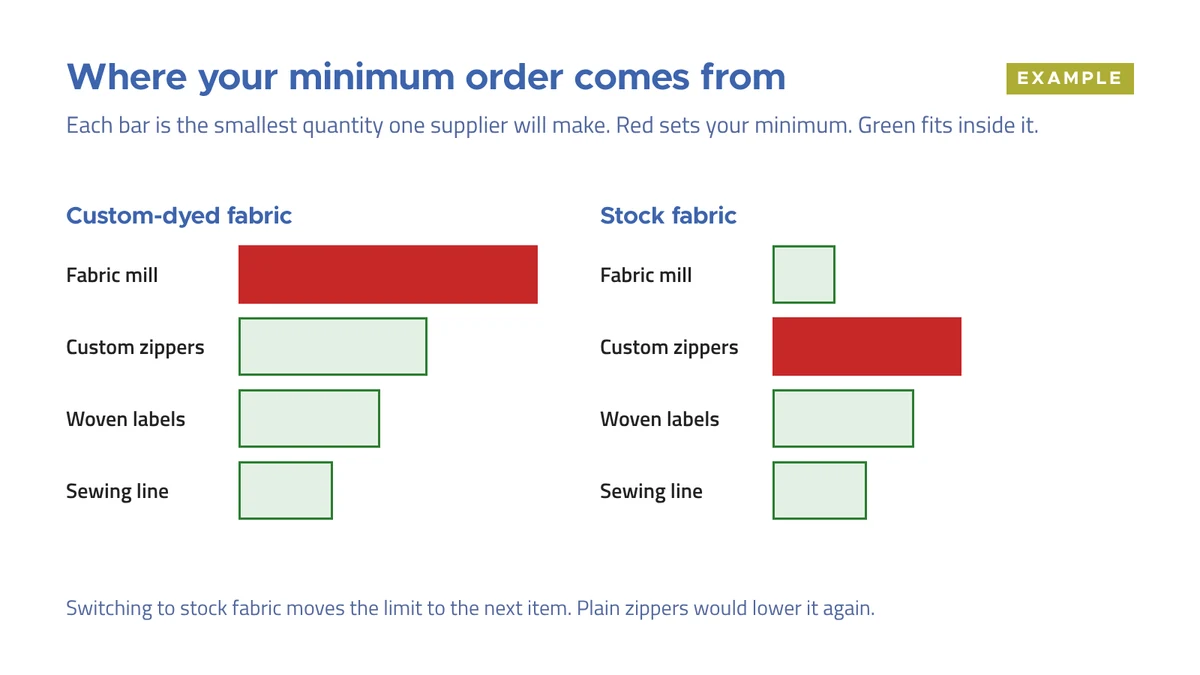
A low MOQ clothing manufacturer cannot always remove these upstream limits. Ask which material sets the minimum and whether it applies per style, per color, or per order. Ask how sizes share the quantity and whether extra material must be bought.
Stock fabrics, fewer colors, and branding through labels make a smaller first run more practical. Removing custom components often helps more than negotiating the sewing quantity. But lower minimums can cost more per piece, because setup and development are spread over fewer units.
At ISS, minimums depend on the fabric and style. We confirm yours after reviewing the tech pack. Compare that confirmed number with your cash budget and a realistic sales plan, rather than ordering extra pieces only to reach a lower unit price.
From Approved Sample to Shipment
The clothing manufacturing process needs clear release points. Each approval should record what is accepted and what remains open.
Approve the pre-production sample
Check the final fabric, measurements, construction, trims, and finish against the current tech pack. Record any approved variation in writing. Do not approve the sample on the assumption that the factory will make an undocumented change later.
Book materials
Confirm fabric availability, trim orders, and material delivery dates. Agree how shade differences or substitutions will be handled. Build Chinese New Year shutdowns into the schedule where Chinese factories or material suppliers are involved, and confirm the actual closure dates with each supplier.
Run bulk production
Production moves through cutting, sewing, and finishing to the approved specification. Ask for progress reports tied to completed stages, not vague percentages. Changes after cutting waste material and delay the whole order.
Inspect during production and before shipment
Check early output while corrections are still practical. Set a final inspection scope covering measurements, workmanship, quantities, and packing. Our quality assurance guide supports that planning. Agree the sampling method, defect definitions, and acceptance criteria before inspection. A sampled inspection does not mean every piece was checked.
Pack and label
Most clothing sold in the US must carry fiber content, country of origin, and the identity of the manufacturer or another responsible business under the FTC textile labeling rules. It also needs care instructions under the Care Labeling Rule. Confirm the requirements for your product and market before printing labels. Check carton counts, size breakdowns, and packing instructions against the order.
Arrange shipping and customs
Confirm the shipping terms, freight booking, importer responsibilities, and documents with your broker and forwarder. Match the commercial invoice and packing list to the actual goods. Keep a delivery allowance separate from production time, and do not set a launch date from the factory’s dispatch date alone.
Before shipment, agree what happens if inspection finds a problem. Record who approves rework, how corrected pieces are checked, and which documents release the shipment. These decisions are easier to settle before the goods are packed and freight is booked.
Pricing and Selling Your First Collection
Start pricing from the full cost of getting a sellable piece into stock. Then add payment fees, fulfillment, returns, marketing, and overhead. Wholesale leaves room for the retailer’s margin. Direct-to-consumer sales keep the retail revenue but make you responsible for finding and serving customers.
Track sales by style, color, and size. Base reorder decisions on remaining stock, material availability, and replacement lead time. Our guide to handling demand spikes explains why extra capacity cannot always appear at once. Avoid the common clothing line mistakes that turn a promising launch into slow-moving inventory.
Starting a Line in a Specific Category
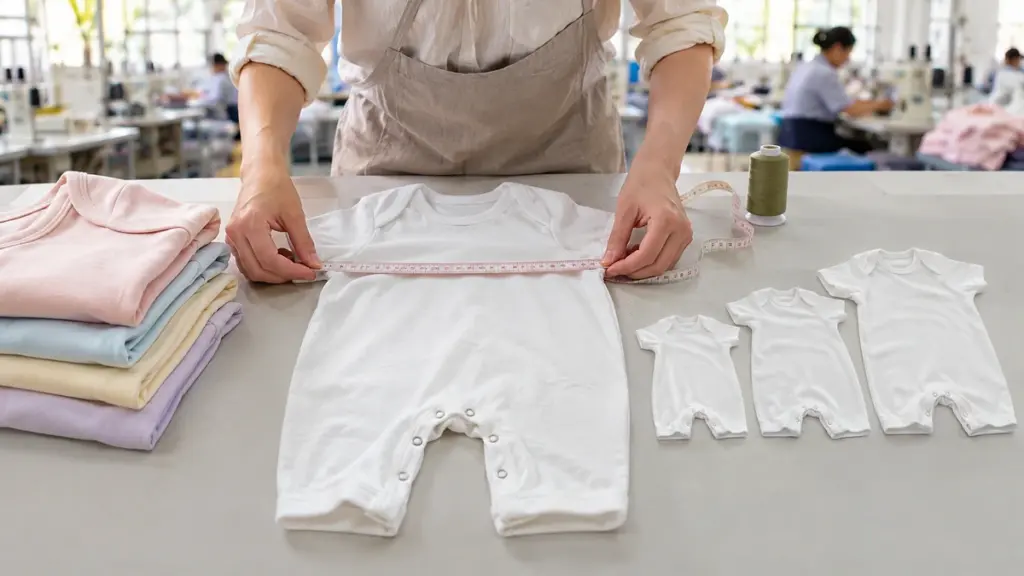
Each category needs its own fit, material, and testing decisions. Use our guides to children’s clothing manufacturing, starting an activewear business, building an underwear business, and modest clothing manufacturing to refine your brief before requesting a sample. A factory’s experience in one category does not prove it can make another.
Common Questions
How much does it cost to start a clothing line?
There is no single total without a product, a quantity, and a production model. Build separate budgets for development, inventory, delivery, and selling. For a simple style, development starts from a few hundred dollars per style, and production for a basic T-shirt starts from about $3 per piece before freight and duty.
How many pieces do I need for a first order?
It depends on the fabric, style, colors, and custom components. At ISS, we confirm minimums after reviewing the tech pack, including how the quantity is split across sizes.
How long does it take to start a clothing line?
For a simple style in stock fabric, allow about 12 to 16 weeks from a complete tech pack to warehouse delivery by sea. Custom fabric, extra sample rounds, and holiday shutdowns add time. Ask for a stage-by-stage schedule with approval deadlines.
Do I need a tech pack?
Yes, for an original product. The tech pack is the shared specification for quoting, sampling, and production. If you start from references, develop the missing measurements and construction details before approving bulk work.
Can I start a clothing line with no experience?
Yes. Assign technical work to people who know the product. Learn how to review samples, control revisions, and compare complete costs before you place the first production order.
Wrapping Up
The best way to approach how to start a clothing line is to remove uncertainty before buying stock. Define the customer, choose the production model, document the design, confirm materials, and prove the product through sampling. Then approve costs, quantities, and the production schedule.
Share your tech pack or design references with us to discuss the next step. As your clothing manufacturer, we review the fabric and style, point out missing information, and confirm the requirements before we produce.