
The case for offshore manufacturing when you start a small clothing company is usually made on price, and price is the least interesting part of it. The more useful argument is capability: the supply chain that makes small-batch clothing possible at all, at quantities a new brand can actually afford, sits in Asia rather than in the United States or Europe.
Why People Start a Small Clothing Company Offshore
Minimum quantities are workable. Chinese factories will take orders that domestic manufacturers will not, and a sourcing partner with existing relationships can often negotiate below published minimums. For a first order that difference decides whether the brand launches.
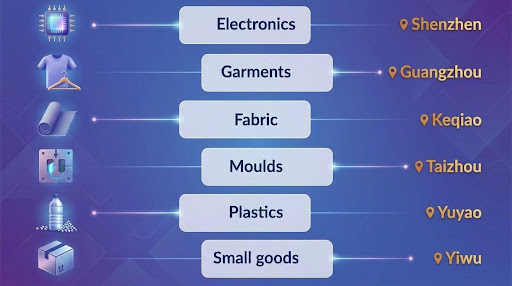
Fabric choice is wider. China produces the majority of the world’s textile fibre and fabric, so a garment made there is made from material hours away rather than imported. That means more options, shorter lead times, and the ability to change a specification without a lead-time penalty.
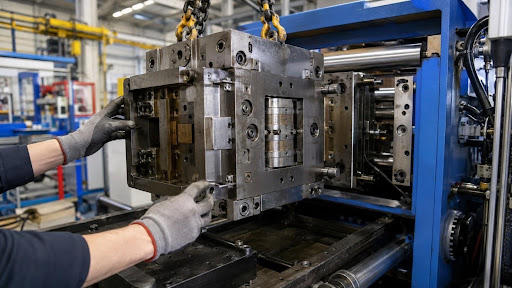
Capability spans the range. Technical sportswear, structured outerwear, and complex constructions are available at small volumes, which is rarely true domestically.
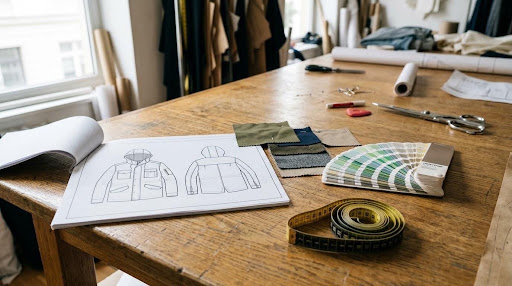
Sampling is faster and cheaper, which matters enormously when you start a small clothing company and every sample round is money you may not get back.
The Honest Counterweight
Offshore manufacturing is not automatically cheaper once everything is counted. Tariffs have become the largest single variable for US importers, and duties on Chinese apparel reached roughly 35% effective by late 2025. Freight, sampling, testing, and the cost of a delayed or defective shipment all belong in the calculation.
Domestic manufacturing has real advantages for some brands: much shorter lead times, easier communication, smaller minimums in some cases, and a “made in” claim that carries genuine value in certain segments. If your product is a small run of a simple garment sold on provenance, domestic may well win.
The point is that it is a calculation rather than a rule, and the answer differs by product, volume, and destination market.
What Decides Where to Start a Small Clothing Company
Product complexity. Technical or structured garments favour Asia, where the capability and fabric are. Simple garments in small runs may favour domestic.
Volume. Offshore economics improve with quantity. Below a few hundred pieces the advantage often disappears.
Destination. EU-bound clothing benefits from Bangladeshi and Vietnamese duty preferences; US-bound clothing faces tariffs on Chinese goods that can outweigh the labour gap.
Speed. If you need to replenish in three weeks, a container at sea will not do it.
If You Do Start a Small Clothing Company Offshore
Verify the factory before you trust it, use a bilingual contract governed by Chinese law with enforceable arbitration, register your trademark in China before disclosing the brand, and make the final payment conditional on passing inspection. Those four steps prevent most of what goes wrong.
The article on choosing an overseas clothing manufacturer covers the selection process, and the country comparison covers which country suits which product.
Wrapping Up
When you start a small clothing company, the manufacturing decision is a calculation about capability, volume, tariffs, and speed, not a rule about which country is cheaper. Working that out for a specific product and managing production wherever it lands is what our clothing manufacturing service does across China and Vietnam.