Fashion design inspiration is a working practice rather than a moment of insight, and designers who produce consistently have systems for finding it. This covers where to look and, more usefully, how to turn what you find into something a factory can actually make.
Where to Find Fashion Design Inspiration
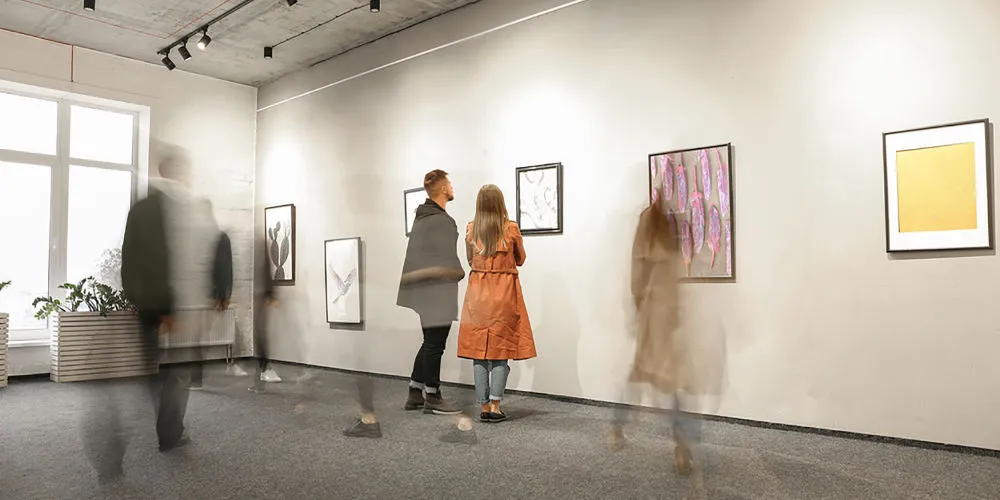
Art and museums. Colour relationships, proportion, and pattern from painting, sculpture, and textiles. Museum textile collections in particular are an underused source, since historical construction techniques are frequently reinvented as new.
Architecture. Structure, line, and volume translate directly into garment silhouette. Many designers work from architectural forms rather than from other clothing, which is why their work looks unlike everyone else’s.
Vintage and archive clothing. The most practical source, because you can handle the construction. Charity shops, vintage dealers, and archive sales let you take apart how something was made.
Street style and subculture. What people actually wear, as opposed to what is sold to them, and historically the origin of most durable trends.
Nature and materials. Colour palettes, texture, and structure.
Trend forecasting services. WGSN and similar publish colour and silhouette direction well ahead of season. Useful for commercial alignment, and a poor primary source of fashion design inspiration because everyone subscribing sees the same thing.
Turning Fashion Design Inspiration Into a Product
This is where most fashion design inspiration dies. An image on a moodboard is not a specification, and the gap between them is where new brands lose time and money.
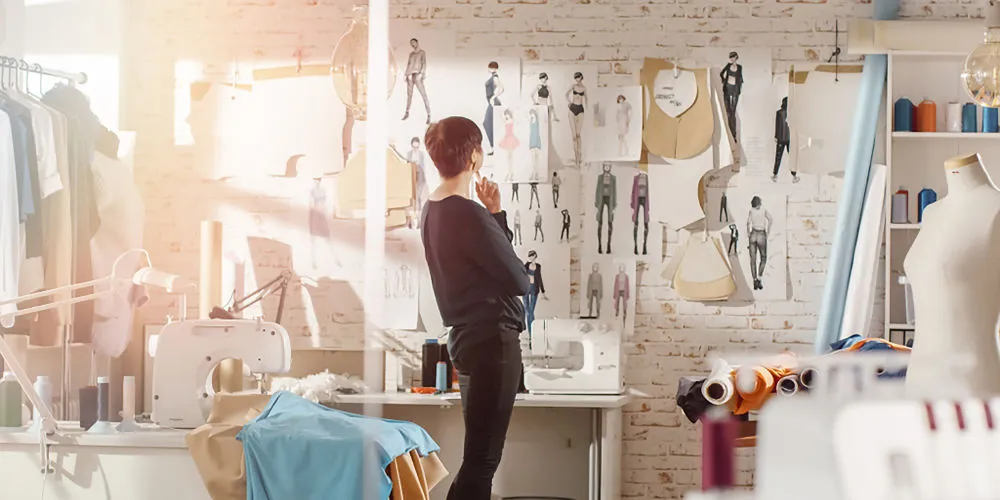
Build a moodboard with intent. Colour, silhouette, fabric, and detail, with a note on what each image is there for. A board that is only beautiful tells a factory nothing.
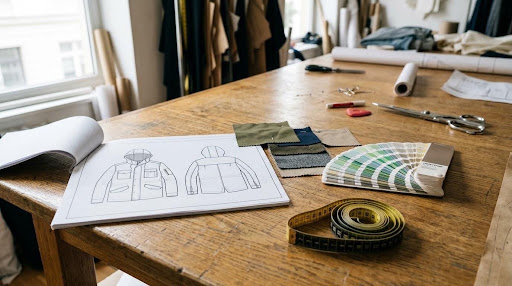
Translate into a tech pack. Sketches with measurements, fabric and trim specifications, construction details, and labelling. This is the document a factory quotes and produces from, and without it you get a quote for the factory’s interpretation of your idea.
Check it can be made. Some designs cannot be produced economically at any volume you can afford, and the time to find out is before sampling. Draft, seam placement, fabric behaviour, and trim availability all constrain what is possible.
Archiving Fashion Design Inspiration
Designers who work consistently keep an ongoing archive rather than searching for fashion design inspiration when a collection is due. Photographs, fabric swatches, tear sheets, and notes accumulate into something you can draw on under deadline, which is when inspiration is least likely to arrive unprompted.
One Practical Warning
Inspiration and copying are different, and the line matters commercially. A design too close to an existing product risks infringing registered design rights, and if you are producing in China, remember that the country operates first-to-file registration, so protecting your own designs means registering them there before disclosure.
Turning a design into a manufactured garment, from tech pack through sampling to production, is what our clothing manufacturing service does.