On this page
- The Criteria Behind a China vs Vietnam vs Bangladesh Apparel Decision
- China vs Vietnam vs Bangladesh Apparel at a Glance
- China: Depth of Fabric and Trim Supply
- Vietnam: Basics and an EU Agreement
- Bangladesh: Scale for Simpler Garments
- US Tariffs in the China vs Vietnam vs Bangladesh Apparel Choice
- Which Fits Your Brand: China vs Vietnam vs Bangladesh Apparel Scenarios
- How ISS Handles the Choice
- Final Thoughts
The China vs Vietnam vs Bangladesh apparel decision comes down to garment complexity, order size, fabric source and where you sell. China usually suits technical and structured garments with complex trims. Vietnam usually suits basics and mid-complexity styles, with an EU trade agreement behind it. Bangladesh usually suits larger runs of simpler garments, especially for EU buyers.
This China vs Vietnam vs Bangladesh apparel guide sets out the criteria, compares the three countries in one table, and explains which scenario fits each option. It also covers the current US tariff position, which changed in July 2026.
The Criteria Behind a China vs Vietnam vs Bangladesh Apparel Decision
Start with five questions. Your answers point to one country more than the others.
- Garment complexity. How many components, trims, panels and construction steps does each style have?
- Order size. How many pieces per style and color will you order, and how often?
- Fabric source. Will the factory buy fabric locally, or will it be imported?
- Destination market. Are you selling mainly in the US, the EU or the UK?
- Development needs. How many sample rounds and fit changes do you expect?
China vs Vietnam vs Bangladesh Apparel at a Glance
The table compares the three countries on best fit, supply base, EU access and US duty.
| Factor | China | Vietnam | Bangladesh |
|---|---|---|---|
| Best fit | Technical and structured garments | Basics and mid-complexity styles | Larger runs of simpler garments |
| Supply base | Deep domestic textile base | EU preference tied to fabric origin | Garments are about 81% of exports |
| EU access | Standard EU duty | EVFTA preference if origin rules are met | Everything But Arms, duty-free if origin rules are met |
| US Section 301 forced labor duty | 12.5%, plus earlier China Section 301 duties where they apply | 12.5% | 10% |
China: Depth of Fabric and Trim Supply
China’s strength is the size of its textile base. In 2025, China exported 1,082.2 billion yuan of clothing and accessories and 1,020.5 billion yuan of yarn, fabric and textile products. Those figures come from the National Bureau of Statistics 2025 communiqué. Clothing exports fell 4.4% that year, while textile exports rose 1.0%.
That fabric depth matters for technical outerwear, tailored pieces and styles with many trims. Sampling is often easier when fabric and trims sit close to the factory. The trade-off is US duty, which is higher for Chinese garments than for the other two countries.
Vietnam: Basics and an EU Agreement
Vietnam suits basics and mid-complexity styles. The EU-Vietnam Free Trade Agreement (EVFTA) took effect on August 1, 2020, according to Vietnam’s Ministry of Industry and Trade.
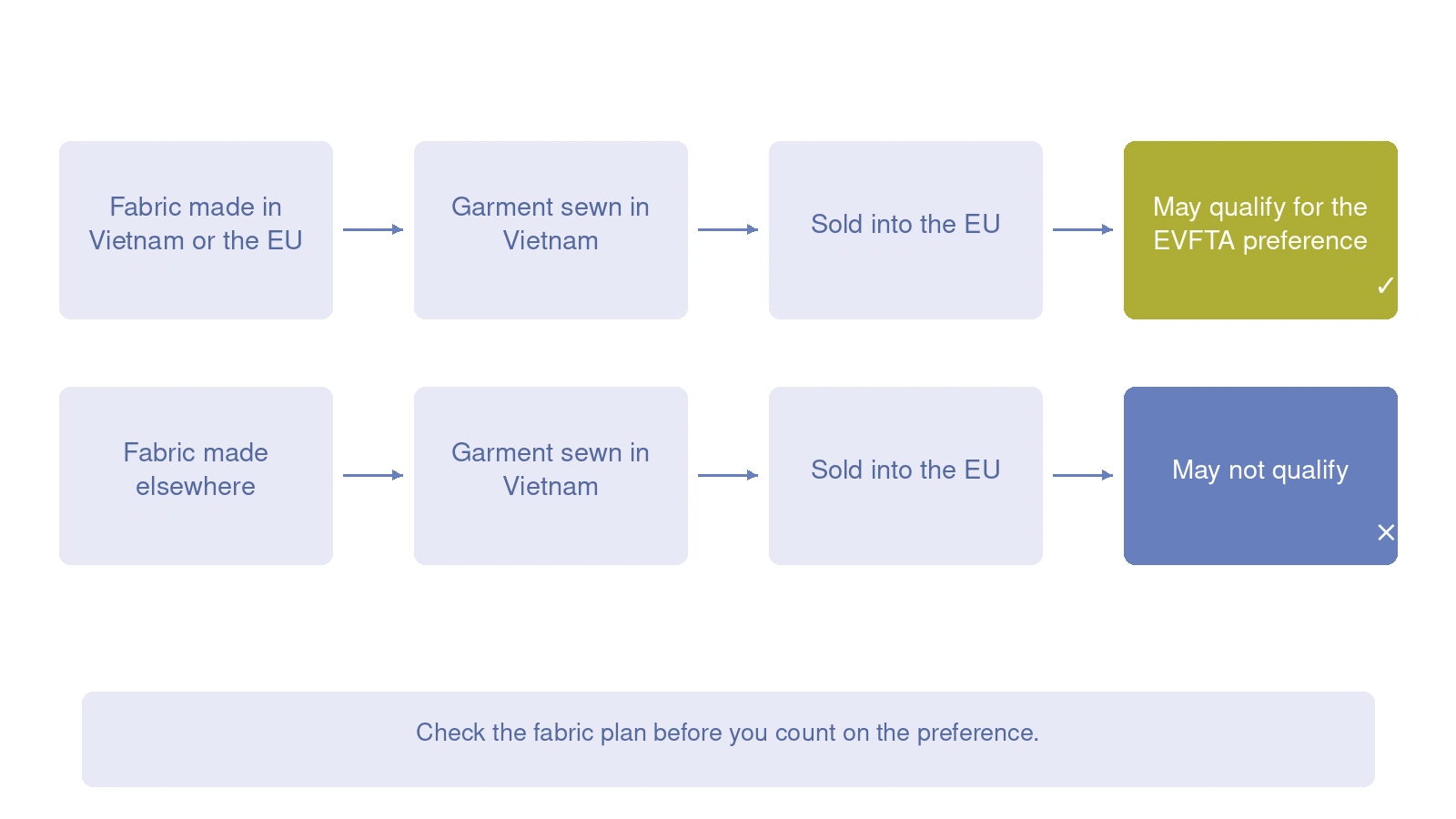
The catch is fabric origin. For garments, the EVFTA preference generally requires fabric made in Vietnam or the EU, as the VCCI WTO Center explains. Garments sewn from fabric made elsewhere may not qualify. Check the fabric plan before you count on the preference.
Bangladesh: Scale for Simpler Garments
Garments are the core of Bangladesh’s export economy. In fiscal year 2025-26, ready-made garments earned US$38.70 billion. That was 80.62% of the country’s US$48.00 billion in exports, according to Export Promotion Bureau data published by BGMEA.
For EU buyers, Bangladesh is listed as an Everything But Arms beneficiary. The EU scheme removes tariffs and quotas on all goods except arms and ammunition, for products that meet its origin rules. Bangladesh suits large runs of simpler garments more than small runs of complex styles.
US Tariffs in the China vs Vietnam vs Bangladesh Apparel Choice
Since July 24, 2026, the US has applied new Section 301 duties on products of 60 economies. The Federal Register notice sets 12.5% for China and Vietnam and 10% for Bangladesh. Exemption lists apply, and the notice provides for a later tariff-rate quota for Bangladesh.
Tariffs can tip a China vs Vietnam vs Bangladesh apparel comparison for US sellers. Chinese goods also remain subject to the earlier Section 301 duties from the China technology transfer investigation. US rules change often, so confirm the duty on your exact HTS code before you place an order.
Which Fits Your Brand: China vs Vietnam vs Bangladesh Apparel Scenarios
| Scenario | Country | Why |
|---|---|---|
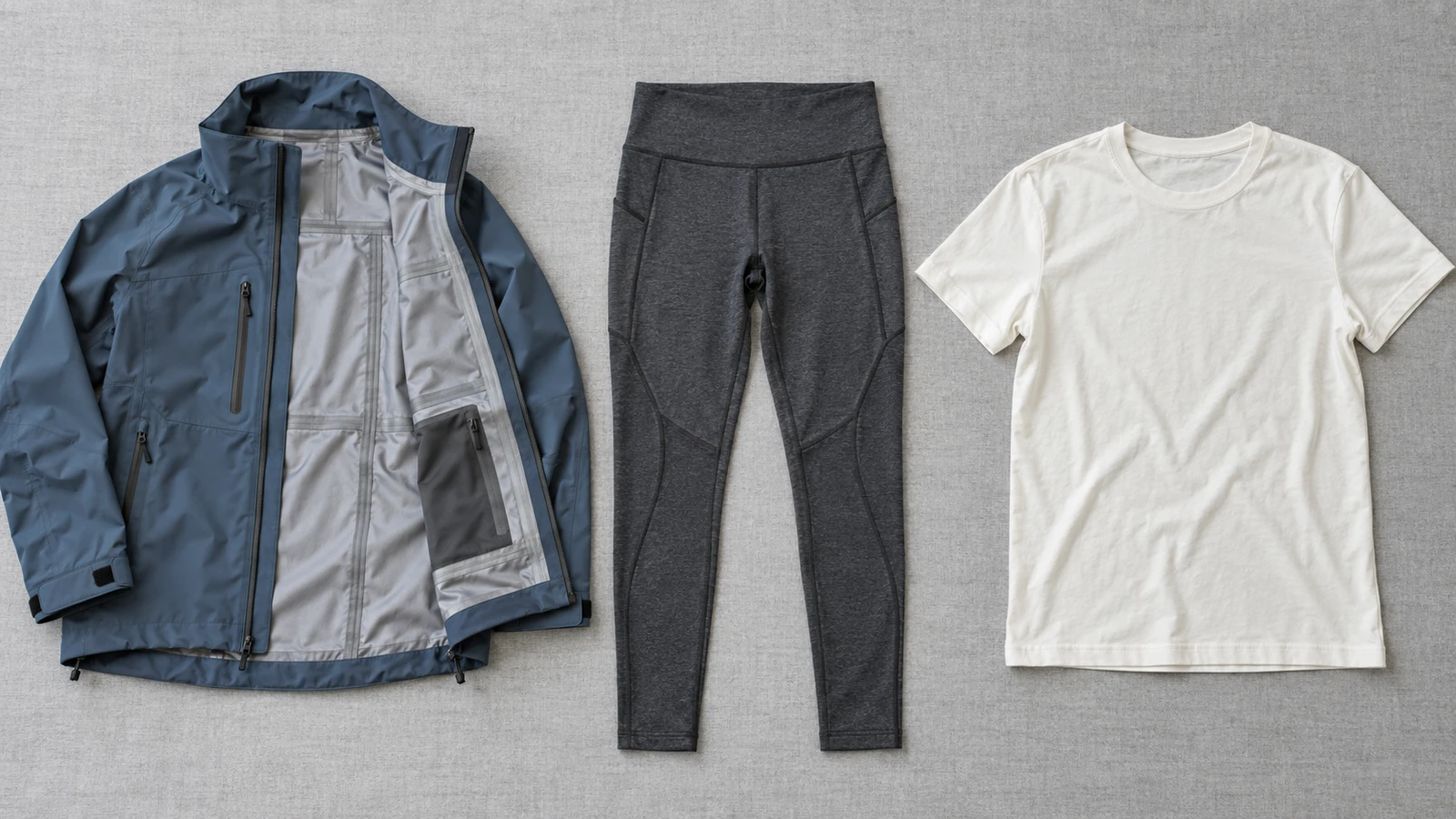
| Technical jackets, tailoring or many trims | China | Fabric and trim access usually outweigh the higher US duty. |
| Activewear and knit basics for the EU | Vietnam | If the fabric plan meets EVFTA origin rules. |
| High-volume basics for the EU | Bangladesh | Everything But Arms access for qualifying goods. |
| US-focused basics | Vietnam or Bangladesh | Compare them on landed cost, since China carries more US duty. |
| A first collection with frequent changes | Where sampling is easiest for your fabric | Start there, then move volume later. |
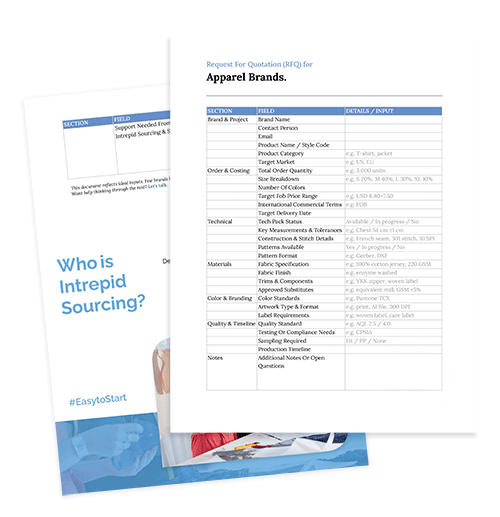
Some brands use more than one country. They develop styles in China and move repeat volume elsewhere. A clear tech pack makes that move far easier.
How ISS Handles the Choice
For ISS, the China vs Vietnam vs Bangladesh apparel question starts with the garment. Our clothing production runs in China, Vietnam, Indonesia and Bangladesh. We recommend the country for each style based on its materials, speed and price point. Our minimum is 1,000 pieces per style and color.
For more on each country, read our guides to Vietnamese apparel manufacturing and Bangladesh apparel manufacturers.
Final Thoughts
There is no single winner in the China vs Vietnam vs Bangladesh apparel comparison. Match the country to the garment, the fabric plan and the market. Then check the current duty for your product before you commit.
Our clothing manufacturing service runs sampling, production oversight and quality control across China, Vietnam, Indonesia and Bangladesh.
Enjoying this guide?
Practical manufacturing guidance for product brands. Factory selection, costs, quality and protecting your designs.