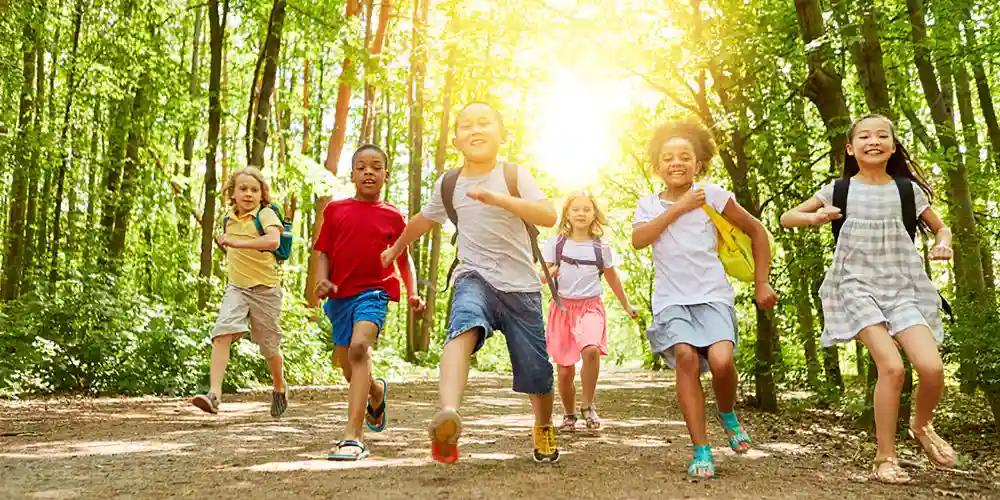
Choosing fabric for children’s summer apparel matters more than it does for adults, because children overheat faster, sweat more relative to body size, and have thinner, more permeable skin. A fabric that traps heat or irritates will be rejected by the child regardless of how the garment looks. These are the five that work, and why.
Five Fabrics for Children’s Summer Apparel
1. Lawn Cotton
A fine, lightweight plain-weave cotton with a smooth, crisp finish. It is breathable, soft, and light enough for hot weather while remaining opaque, which is why it is a staple for children’s summer dresses and shirts. It creases readily, which is the main trade-off.
2. Linen
The most breathable common fabric and excellent at moving moisture away from skin, which is what makes it feel cool. Durable and gets softer with washing. It creases heavily and costs more than cotton, and linen-cotton blends are a sensible compromise for children’s summer apparel where a completely crumpled garment is not wanted.
3. Cotton Voile and Muslin
Very lightweight open-weave cottons, soft and highly breathable, often used doubled for opacity. Muslin in particular is the standard for baby and toddler summer garments because it is soft from the first wash and gets softer.
4. Tencel and Lyocell
Made from wood pulp in a closed-loop process, Tencel is smoother than cotton, manages moisture better, and has a natural drape. It is more expensive and needs gentler washing, but for children with sensitive skin it is among the best options available, and its sustainability credentials are genuine rather than marketed.
5. Bamboo Viscose
Very soft, good moisture management, and naturally antibacterial claims that should be treated with some caution. Worth knowing that bamboo viscose is chemically processed from bamboo pulp rather than a natural fibre in the way cotton is, so “bamboo” on a label is not the same as organic. It performs well and is comfortable, which is the practical point.
Choosing Fabrics for Children’s Summer Apparel
Weight. Lighter fabrics breathe better. For summer, look for lower GSM figures, and remember that a very light fabric may need lining for opacity.
Colour. Lighter colours reflect heat. Darker ones absorb it, and also fade faster with the frequent washing children’s clothing receives.
Breathability over softness alone. A soft fabric that does not breathe, such as most polyester jersey, will be uncomfortable in heat regardless of how it feels in the hand.
UV protection. Tightly woven fabrics block more UV. For clothing intended for outdoor play, a rated UPF fabric is worth specifying.
Testing Children’s Summer Apparel
For anyone producing children’s summer apparel, testing matters beyond the usual. Colourfastness to perspiration and light, shrinkage after repeated washing, and chemical compliance under CPSIA and REACH, including azo dyes and formaldehyde, which appear disproportionately in brightly coloured lightweight fabrics.
Sourcing the right fabric and testing it properly is part of what our children’s clothing manufacturing service covers.