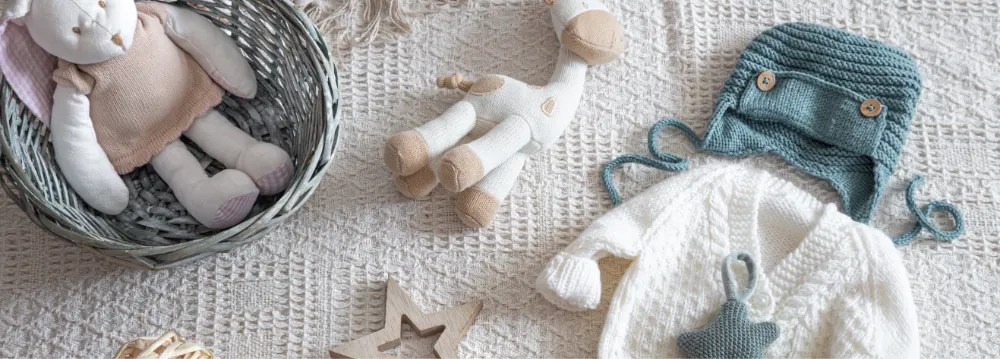
Choosing baby clothes for boys comes down to three things: comfort against very sensitive skin, ease of dressing and changing, and safety. Style matters to the person buying, but a garment that irritates, that has to be pulled over a baby’s head, or that carries a choking hazard will not be worn twice. This guide covers the core garments and what makes each one good or bad.
Core Baby Clothes for Boys
Onesies and bodysuits. The foundation of a baby’s wardrobe, worn alone in warm weather and as a base layer in cold. Look for envelope shoulders, the overlapping design that lets the garment be pulled down over the body rather than up over the head, which matters more than it sounds during a nappy change.
Rompers. One-piece garments covering body and legs, easy to put on and hard to lose. Poppers along the inside leg are what make them practical.
Kimono tops. Side-fastening tops that avoid the head entirely, which is why they are the standard for newborns and particularly useful before the umbilical stump heals.
Bloomers and shorts. Loose covers worn over a nappy in warm weather, comfortable and easy to change.
Hats. Babies lose heat through the head, and infant skin burns quickly, so a hat is functional in both directions. Soft cotton for warmth, brimmed for sun.
Socks and booties. The item most often lost. Elasticated cuffs that stay on without marking the leg are the whole design problem.
Leggings. Layer under a onesie or wear alone, with a soft waistband rather than tight elastic.
What Actually Matters When Buying Baby Clothes for Boys
Fabric. Soft, breathable natural fibres: cotton, organic cotton, bamboo-derived viscose. Newborn skin is thinner and more permeable than adult skin, which is why fabric choice matters more here than in any other category of clothing.
Fastenings. Poppers over buttons, every time. Faster during changes and no small parts to come loose.
Seams. Flat seams, and ideally external seams, which several brands now use specifically for newborn ranges.
Size up. Babies grow through sizes in weeks. Buying to fit exactly today means buying again in a fortnight.
Wash before wearing. New fabric carries processing residues and dyes.
Safety Requirements
Baby clothes for boys sold in the US and EU are regulated more tightly than any other apparel. No drawstrings at the neck or hood, which are banned in the US and restricted in the EU under EN 14682. No small detachable parts. Restricted chemical limits on lead, cadmium, phthalates, azo dyes, and formaldehyde, with CPSIA requiring third-party testing and permanent tracking labels. Sleepwear must be snug-fitting or flame-resistant.
These are not guidelines. A garment failing them cannot legally be sold, which is why a brand producing baby clothes for boys needs a factory with genuine children’s wear experience rather than one that also makes adult clothing.
Wrapping Up
Good baby clothes for boys are soft, easy to get on and off, free of anything that can come loose, and bought a size ahead. For anyone producing them, the compliance requirements are the difference between a saleable product and a recall, and they have to be designed in rather than tested for afterwards.
Producing children’s clothing with factories experienced in the category and the testing that goes with it is what our children’s clothing manufacturing service covers.