
An economy cannot grow far beyond its infrastructure. Sewage, water, electricity, telecommunications, roads, and rail have to be in place before sustained growth is possible, and export infrastructure, ports and harbours above all, decides whether what a country makes can reach a market. China infrastructure is the clearest case in modern economic history of a country building ahead of demand rather than behind it, and it is a large part of why manufacturing concentrated there rather than in countries with comparable labour costs.
Most fast-growing economies experience the opposite: growth arrives first and infrastructure spends decades catching up, constraining what the economy can do. China avoided that by treating infrastructure as the precondition rather than the consequence. Compared with the other large developing economies, China infrastructure now rates highest across roads, railways, ports, air transport, and electricity, and the gap is wide.
The development of China’s logistics sector followed directly. China was a trading nation for two thousand years, from the Silk Road onward, but only a few decades ago its infrastructure was well behind developed-country standards. That is no longer true in the coastal provinces and the major cities, and it is increasingly untrue inland.

The Silk Road connected China with the West. Its modern equivalents are rail corridors and container ports.
Current China Infrastructure Investment and Development
China infrastructure has absorbed a share of GDP for two decades that no other major economy approaches, several times the rate of the United States or Europe and roughly double India’s. Absolute spending has been the largest in the world for most of that period. The priorities have been road, rail, electricity, telecommunications, and ports, and the results are visible in the figures.
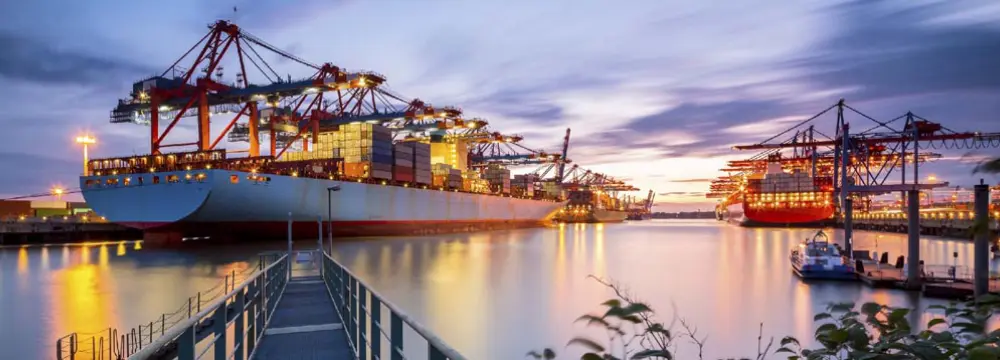
China’s high-speed rail network, the Gaotie, exceeded 48,000 kilometres by 2025, more than the rest of the world combined and more than four times the 11,000 kilometres it had reached when this article was first written. The expressway network is the world’s largest at over 180,000 kilometres. Seven of the world’s ten busiest container ports are Chinese, with Shanghai and Ningbo-Zhoushan the two largest. China has more than 5G base stations than the rest of the world combined, and near-universal electricity access with generating capacity larger than the United States and EU together.
China infrastructure projects serve more than one purpose. Infrastructure spending sustains employment, stimulates demand directly, and delivers the physical capacity manufacturing needs, which is why it has been the government’s standard response to every economic slowdown since 2008. The political dimension is explicit.
The Belt and Road Initiative, launched in 2013, extended the same logic beyond China’s borders: ports, railways, and roads across Asia, Africa, Europe, and Latin America, financed largely by Chinese lenders and built largely by Chinese contractors. Trade with Belt and Road partner countries passed half of China’s total trade in 2025, at US$3.39 trillion. The China–Europe rail freight corridors that run through Central Asia and Russia are the most visible commercial result, offering a transit time between China and Europe roughly half that of sea freight at a fraction of air freight cost, though volumes have been affected by the routing complications since 2022.

China’s high-speed rail network is now longer than the rest of the world’s combined.
The Future for China Infrastructure Investment
Two things have changed since China infrastructure investment was purely a growth story. The first is that the returns have fallen. After two decades of building, the highest-value projects are done, and the marginal expressway or rail line in a low-density province earns less than the first ones did. Local government debt, much of it incurred for infrastructure through financing vehicles, has become a recognised macroeconomic problem, and the pace of new conventional construction has slowed accordingly.
The second is that investment has shifted toward what the government calls new infrastructure: 5G and data centres, ultra-high-voltage power transmission, electric vehicle charging networks, industrial internet, and the grid upgrades that renewable generation requires. China now installs more solar and wind capacity each year than the rest of the world combined, and the transmission and storage infrastructure to use it is the current priority.
The remaining China infrastructure gap is regional. Coastal infrastructure is world class; the interior and rural areas lag, and closing that gap is both an equity objective and the reason manufacturing has been able to move inland, where wages are 20% to 40% lower, without losing access to ports.
What China Infrastructure Means for a Buyer
China infrastructure is the reason a Chinese factory can quote a shorter, more reliable lead time than a factory in a lower-wage country. Components move between suppliers in hours; finished goods reach a major container port in a day; and the port handles them without the congestion that adds weeks elsewhere. Several Asian countries have lower labour costs than China. None matches its logistics performance, and for a buyer that difference often outweighs the wage gap entirely.
It also means inland factories are now viable. A supplier in Chengdu, Chongqing, or Xi’an that would have been impractical fifteen years ago can now ship to a coastal port by rail on a predictable schedule, which is why sourcing searches increasingly include the interior, where costs are lower. Weighing a supplier’s location against lead time, freight cost, and reliability is part of what our product sourcing service does, and it is one of the places where local knowledge pays for itself.