Wholesale clothing in China has been the default route for brands and retailers worldwide for three decades, and it remains the cheapest way to put a clothing range into the market for most product types. As domestic production costs rise in the West, the case for overseas manufacturing strengthens, and China has answered that demand more completely than any other country: its factories produce private label clothing for brands on every continent.
The picture has become more complicated since 2018, and this article covers both halves of it: why wholesale clothing in China is still the cheapest route for most products, and where that is no longer true.
Wholesale Clothing in China: An Evolved Supply Chain
Chinese suppliers have invested heavily to keep the business they won. A brand sourcing wholesale clothing in China deals with factories that have upgraded equipment, adopted digital order management, and learned to communicate with foreign buyers, because the ones that did not have lost work to those that did. That competition among suppliers is a direct benefit to buyers: it means a wider choice of capable factories than any other country offers.
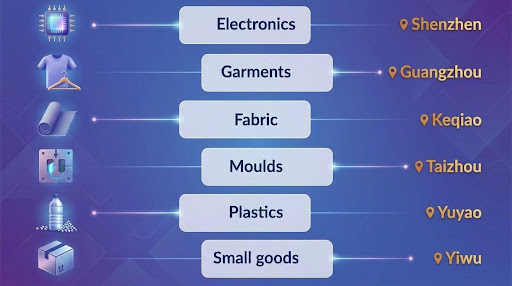
The deeper advantage is fabric. China produces the majority of the world’s textile fibre and fabric, so a garment made in China is made from material a few hours away, while a garment made in Vietnam or Bangladesh is usually made from fabric imported from China. That gives Chinese factories shorter lead times, far more fabric choice, and the ability to change a specification without a lead-time penalty.
A Large and Growing Domestic Economy
China’s growth over the past two decades built the industrial base that wholesale clothing in China depends on: the mills, the dye houses, the trim and hardware suppliers, the printers, and the logistics around them. Growth has slowed to around 5% a year, but the base is built, and China’s own clothing market is now among the largest in the world, which keeps factories busy and capable even as export volumes to the West decline.
Short Production Times
Speed is where wholesale clothing in China is hardest to beat. Sampling turns around in one to three weeks, production in four to eight for most garments, and the whole supply chain sits close enough together that a fabric problem can be solved by driving an hour rather than waiting for an import. For fashion, where a season missed is a season lost, that speed is worth more than a small saving on unit price.
An Extending Market
Chinese factories no longer serve only foreign wholesale buyers. Many now sell direct to consumers worldwide through their own channels, and the rise of Shein and Temu is that model at scale. For a brand buying wholesale clothing in China, this cuts two ways: factories are more commercially sophisticated and better at small runs than they were, and they may also be selling something similar to your customers themselves.
Labour and Skills
Chinese labour is no longer cheap by regional standards. Manufacturing wages average around US$15,800 a year (National Bureau of Statistics, 2025), roughly twice Vietnam’s and several times Bangladesh’s. What China has instead is skill and management: pattern makers, production managers, and quality staff who run a factory efficiently, a layer that is thin almost everywhere else. For simple garments, that premium is not worth paying. For anything technical, structured, or complex, it is.
Location and Logistics
China’s clothing clusters sit close to the world’s busiest container ports, and its customs, freight-forwarding, and inland transport are the best in the region. Freight is a meaningful share of clothing’s landed cost, and reliability matters more than the raw shipping rate when a delivery window is fixed.
Technology
Chinese garment factories have automated what can be automated: computer-controlled cutting, automated spreading, digital printing, and, increasingly, automated sewing for simple seams. China installed 295,000 industrial robots in 2024, more than half the world’s total (IFR). That investment is why Chinese clothing prices have risen far less than Chinese wages have.
Depth of Knowledge in Wholesale Clothing in China
The last advantage is accumulated experience. Chinese factories have made nearly every kind of garment for nearly every kind of buyer, and that shows in how they read a tech pack, anticipate a problem, and propose a fix. A factory that has made your product before will make it better than one learning on your order, and China has more such factories than anywhere else.
Where Wholesale Clothing in China Is No Longer Cheapest
Being straight about this matters more than the marketing case. Since 2025, US tariffs have pushed the effective rate on Chinese apparel to roughly 35%, against about 20% on Vietnamese goods, which for US-bound basic garments can outweigh every advantage listed above. Bangladesh and Cambodia are cheaper still on labour for simple, high-volume items. China’s share of world clothing exports has fallen to 29.6%, its lowest since 2010, and it keeps falling for exactly these reasons.
The categories where wholesale clothing in China remains clearly the best value are technical and performance garments, structured outerwear, anything with complex construction or many components, small and medium runs where flexibility matters more than labour rate, and any product where fabric choice or speed is the deciding factor. The categories where it is worth quoting Vietnam or Bangladesh alongside are basic knitwear, simple woven garments, and high-volume programmes for the US market.
Conclusion
Wholesale clothing in China is still the cheapest route for most brands most of the time, not because labour is cheap but because fabric, skill, speed, and supply-chain depth are all in one place. The honest answer for a specific product, though, depends on what it is and where it is going, and for some products the answer is now Vietnam. Working that out product by product, and managing production wherever it lands, is what our clothing manufacturing service does, across factories in both countries.