
Starting a consumer electronics business appeals to more people than ever, because consumer electronics went from a specialist interest to something everyone buys. Smartphones, once a marker of being early to technology, are now near-universal, and the same has happened to wireless earbuds, smartwatches, and connected home devices. That breadth is why the category rewards preparation more than enthusiasm.
There are two quite different kinds of consumer electronics business under the same name, and confusing them is the first mistake. One is retail: selling and servicing other companies’ products, competing on range, price, and service. The other is developing your own product: designing or specifying a device, having it manufactured, and selling it under your brand. This article covers both, because the steps diverge early.
Profit in a consumer electronics business depends on size, demand, the number of units sold, whether you sell direct or through intermediaries, and your cost price. The global consumer electronics market is worth around US$1.03 trillion in 2026 (Statista), so the market is not the constraint; execution is.
Research the Market for Your Consumer Electronics Business
If you are opening a store, you serve a local market first, and you will be competing with national chains and with online retailers on price. Work out what you can offer that they cannot: repair and service, specialist categories, installation, or genuine expertise. If you are developing a product, the research is different: who else sells something similar, at what price, with what features, and what customers complain about in their reviews. Reviews of competing products are the cheapest and best product research available.
Partnerships and Suppliers for a Consumer Electronics Business
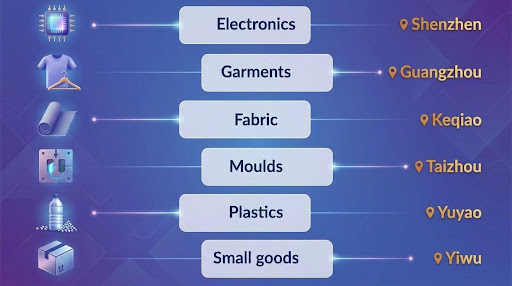
A retail business needs distributor and brand relationships, and those take time to build because established retailers already have them. A product business needs a manufacturer, and the choice of manufacturer is the single most consequential decision you will make. The consumer electronics industry report on this site covers how that supply base works; the short version is that China’s electronics ecosystem, concentrated around Shenzhen, can take a product from concept to production faster and cheaper than anywhere else, and that finding a factory that has built something like your product before is worth more than finding the cheapest quote.
Write a Consumer Electronics Business Plan
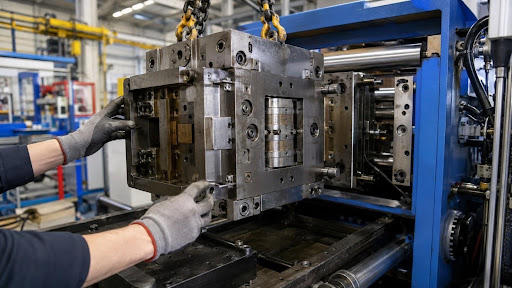
The plan is where a consumer electronics business either becomes real or stays an idea. For a product business it has to include the things founders routinely underestimate: tooling costs, which for an injection-moulded housing run into thousands or tens of thousands; certification, which is mandatory and takes months; minimum order quantities, which mean your first order is larger than you would like; and the working capital to pay for inventory months before it sells. For a retail business, the equivalents are inventory investment, shrinkage, and the margin structure of a category where online competitors operate on very thin margins.
Licences, Certification, and Compliance
Retail requires the ordinary business registrations, plus whatever your jurisdiction requires for electrical goods and, if you repair devices, for handling batteries and electronic waste.
A product business faces more, and this is where new entrants most often lose time. Any device with a radio, Wi-Fi, Bluetooth, or cellular, needs FCC certification for the United States and CE marking with radio equipment conformity for the EU. Electrical safety requires UL or ETL listing in the US and the relevant IEC standards in Europe.
Anything with a lithium battery needs UN38.3 testing before it can be shipped by air or sea, and IEC 62133 for the cell. RoHS and REACH restrict substances in the EU, and WEEE obliges you to fund recycling. These are not optional, they cost thousands, and they take months, so they belong in the schedule and the budget from the start rather than being discovered at launch.
Where a Consumer Electronics Business Sells
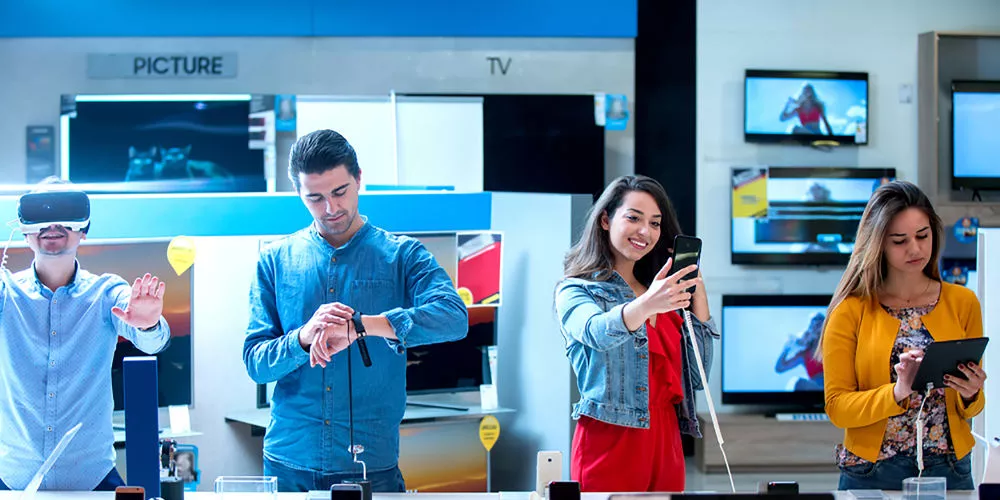
Physical retail in consumer electronics is a hard business: margins are thin, inventory depreciates as models are replaced, and online competitors have structurally lower costs. If you open a store, location and specialisation both matter, and service is usually the defensible part.
For a product business, the realistic channels are your own online store, marketplaces such as Amazon, and, once volume justifies it, distributors and retailers. Most consumer electronics brands founded in the past decade started direct-to-consumer, proved demand, and moved into retail afterwards, which is a lower-risk sequence than the reverse.
Marketing a Consumer Electronics Business
Consumer electronics is a considered purchase, which means reviews, comparisons, and content drive sales more than advertising does. For a product business, getting units into the hands of reviewers and building a body of independent coverage is usually more effective than paid acquisition, and warranty and support quality feed directly back into reviews. For a retailer, local search, service reputation, and specialisation in a category the chains handle badly are the levers that work.
Starting a Product-Based Consumer Electronics Business
If your consumer electronics business is a product rather than a store, the sequence is: define the product against a real gap in the market, get the electronics and enclosure designed, prototype and test, certify, tool, produce, and ship. Each stage has failure modes that cost money, and the expensive ones cluster around design decisions made without regard for manufacturing and certification requirements discovered too late.
That sequence is what Intrepid Sourcing runs for clients: PCB and product design, prototype development, certification, and production with factories that have built comparable devices. For a first product, that is usually the difference between launching and learning an expensive lesson about tooling.