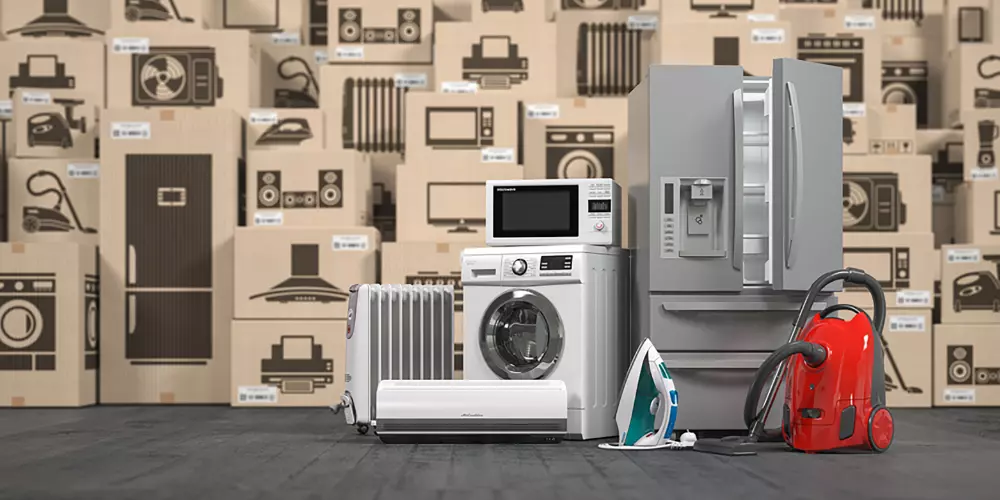
Consumer electronics are electronic devices bought for personal, household, or entertainment use rather than for industrial or professional purposes. The category began with the radio and the television and now covers everything from smartphones and laptops to smartwatches, wireless earbuds, game consoles, and connected home appliances. The line between consumer and professional equipment has blurred: a phone or tablet is now a business tool as much as a personal one, and each year’s consumer products match the capabilities of the previous decade’s professional gear. What defines the category is the buyer, not the technology.
Examples
The main product groups within consumer electronics today are smartphones and tablets; computers and laptops; televisions and home audio; game consoles; speakers, headphones, and earbuds; wearables such as smartwatches and fitness trackers; digital and action cameras; smart home devices such as speakers, thermostats, cameras, and lighting; and VR and AR headsets. Personal care devices with electronics inside, from electric toothbrushes to hair tools, are increasingly counted in the category as well.
The Consumer Electronics Industry
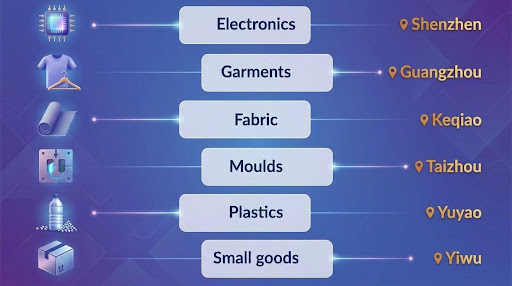
The global consumer electronics market has grown through most of the past two decades, with demand led by China, India, and the United States. Growth comes from two sources: new categories, such as wearables and smart home devices, and replacement cycles, as consumers upgrade phones for 5G, televisions for larger and higher-resolution panels, and appliances for connectivity. Every one of those cycles creates work for electronics manufacturing companies, and the manufacturing base that serves them is concentrated in East Asia.
The market has proven resilient through supply shocks. The 2020 retail closures pushed spending toward home entertainment, home office equipment, and smart home devices, and the category held up better than most. Since then the pattern has returned to steady growth driven by product cycles rather than one-off events.
Where the Market Is
The largest consumer electronics markets by revenue are China and the United States, followed by Japan, India, Germany, the United Kingdom, South Korea, and Brazil. China is both the largest single market and the largest producer; the United States is the largest per-capita spender.
- Global consumer electronics revenue is US$1.03 trillion in 2026, with telephony the largest segment at US$521 billion (Statista Market Insights, 2026).
- The market is projected to grow at 2.8% a year from 2026 to 2030, reaching 8.58 billion units by 2030 (Statista, 2026).
- China is the largest single market, generating US$221 billion in 2026, more than any other country (Statista, 2026).
- The United States is the largest per-capita market: the Consumer Technology Association forecasts US consumer technology industry revenue of US$565 billion in 2026, up 3.7% year on year, of which nearly US$194 billion is software and services (CTA, January 2026).
The market periodically looks saturated, with smartphone and television ownership near its ceiling in developed countries. What keeps it growing is new product design: each new category, and each meaningful improvement to an existing one, restarts the replacement cycle.

Smartphones Lead the Category
Smartphones are the largest segment of the consumer electronics market by a wide margin, in both units and revenue, and they anchor an ecosystem of accessories, wearables, and services around them. Telephony alone accounts for roughly half of global consumer electronics revenue, at US$521 billion in 2026 (Statista). For a brand entering consumer electronics, the smartphone’s dominance matters in two ways: it sets consumer expectations for design and build quality across every other category, and it means the component supply chain, from batteries to displays to sensors, is deep, mature, and available to smaller products.
The Major Brands
The industry is led by Apple, Samsung, Sony, and a group of Chinese brands including Xiaomi, Huawei, and Lenovo, each with a range that runs from personal audio to home automation. Apple has been among the world’s most valuable brands for over a decade. Below the giants sits a much larger tier of specialist and challenger brands that design their products and have them manufactured by contract electronics manufacturers in China and Southeast Asia. That is the model most new consumer electronics brands follow, and it is the model Intrepid Sourcing supports through prototype development and production.