Smart home devices have moved from early-adopter gadgets to standard household equipment in about a decade. Worldwide shipments reached 892.3 million units in 2024 and are forecast at 931.1 million for 2025 (IDC Worldwide Quarterly Smart Home Device Tracker), and smart home devices are now in over 82% of households in some markets, with global penetration projected to pass that level in 2026. The category now covers security cameras and door locks, thermostats and climate control, lighting, speakers and displays, robot vacuums, connected appliances, and increasingly health monitoring for people ageing at home.
Estimates of what the smart home devices market is worth vary enormously — from around US$100 billion to over US$230 billion for 2025 — because research firms disagree about whether to count devices only, or devices plus installation, services, and subscriptions. Unit shipments are the more reliable measure, and they show a market that is widening its installed base steadily rather than exploding. Growth forecasts range from roughly 5% to over 20% a year depending on the same scope question, so treat any single figure with caution and look at what it includes.
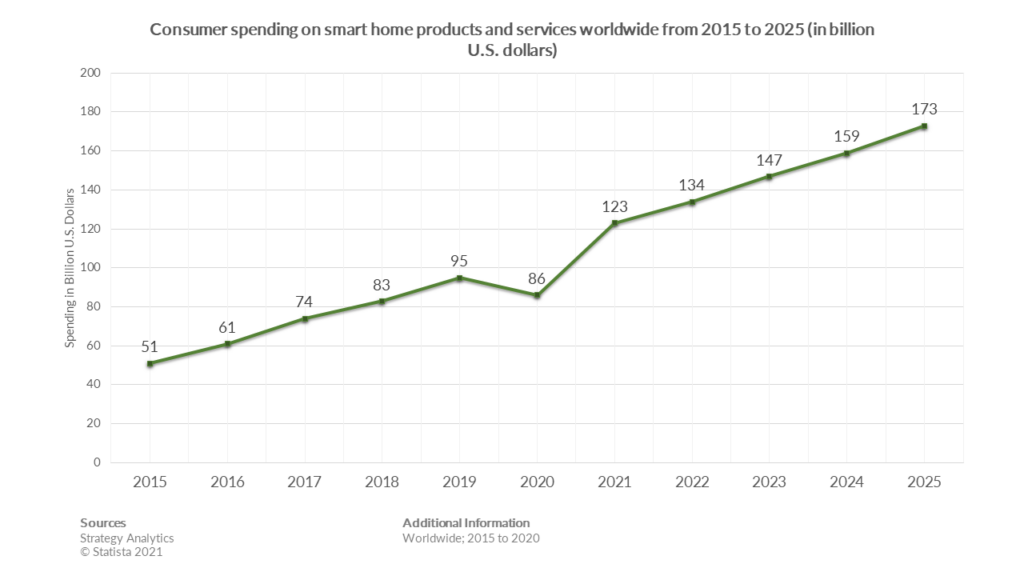
Worldwide spending on smart home devices and related services.
Why Smart Home Devices Keep Growing
Security is the largest category. Security and access control holds the biggest share of the market in most estimates, above 30%. Cameras, video doorbells, and smart locks are the products people buy first, because the benefit is immediate and easy to explain.
Energy management has become a real driver rather than a marketing point. Rising energy costs and tightening efficiency regulations in Europe have pushed smart thermostats, connected heating controls, and energy monitoring from optional to mainstream, and they are among the few smart home devices with a measurable payback period.
Ageing in place is the fastest-growing segment. Home healthcare within smart home is forecast to grow faster than any other application, driven by demographics: fall detection, remote health monitoring, medication reminders, and emergency alerts let people stay in their homes longer. This is the same demographic pressure driving medical robots, and it is structural rather than cyclical.
Component costs have fallen. Sensors, wireless modules, and microcontrollers cost a fraction of what they did a decade ago, which is what allows a connected device to sell at a price a mass-market household will pay.
Matter Changed the Smart Home Devices Manufacturing Question
For most of the category’s history, the biggest obstacle to smart home devices was interoperability: a product had to pick an ecosystem, and picking wrong meant losing half the market. Matter, the connectivity standard backed by Amazon, Apple, Google, Samsung, and the Connectivity Standards Alliance, was created to solve that, and it has moved quickly — version 1.5 arrived in November 2025 and 1.6 in June 2026, each broadening the device types covered.
For anyone manufacturing a smart home device, Matter is now a specification decision with commercial consequences. A Matter-certified product works with every major ecosystem out of the box; a proprietary one has to earn its place in each. Certification costs money and adds development time, and it should be budgeted from the start rather than discovered late. The same applies to Thread, the low-power mesh network many Matter devices use, which affects radio selection and therefore the whole hardware design.
Where Smart Home Devices Are Made
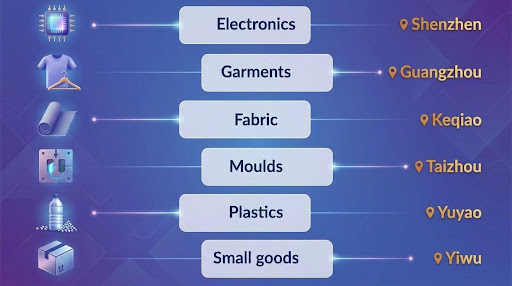
Nearly all smart home devices are manufactured in China, for the same reason as the rest of consumer electronics: the sensors, radios, microcontrollers, batteries, displays, and enclosures are all available within a few hours of each other, and the factories have built comparable products before. The consumer electronics industry report covers that supply chain in detail.
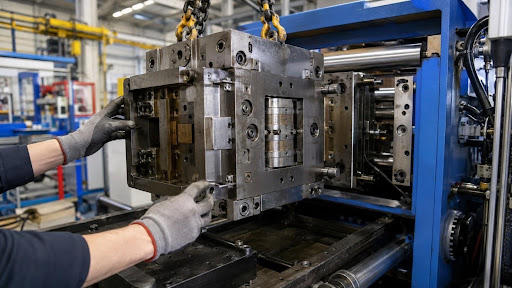
The practical consequence for a brand is that the barrier to launching a smart home device is lower than the technology suggests. The hardware platform — enclosure, PCB, radio module, sensors, power — is something a contract manufacturer builds routinely. What a brand owns is the product concept, the app, the cloud service, and the customer relationship.
What Makes Smart Home Devices Hard to Get Right
The difficulties in smart home devices are specific, and they are where first products usually fail.
Certification is substantial. Any device with a radio needs FCC certification for the United States and CE with radio equipment conformity for the EU. Anything with a lithium battery needs UN38.3 to ship and IEC 62133 for the cell. Electrical safety requires UL or ETL listing in the US and the relevant IEC standards elsewhere. Matter certification sits on top of all of that. Together this is months of schedule and thousands of dollars, and it is the item new entrants most often leave out of the plan.
Security is now a regulated requirement. The EU’s Cyber Resilience Act and the UK’s PSTI regime impose obligations on connected consumer products: no default passwords, a disclosed support period, and a vulnerability reporting process. A smart home device sold in those markets has to meet them, and the security architecture has to be designed in rather than added.
The product does not end at the hardware. A connected device needs firmware updates, a cloud service, and an app, for years. That is an ongoing cost most hardware-first brands underestimate, and a device whose cloud service is switched off becomes worthless, which customers increasingly know and factor into what they will buy.
Reliability matters more than in an unconnected product. A camera that drops off the network or a lock that fails generates support cost, returns, and reviews that are hard to recover from.
Wrapping Up
Smart home devices are a large, growing, and genuinely accessible category: the component supply chain is mature, the manufacturing base is deep, and Matter has removed the ecosystem gamble that used to make product decisions risky. What it demands in return is that certification, security compliance, and the software lifecycle are planned before the design is fixed, because all three are expensive to retrofit.
Developing a connected product from concept through certification to production is what Intrepid Sourcing’s electronics production package covers, with PCB and product design and prototype development ahead of it.