
The U.S. consumer electronics industry is the largest single national market for consumer technology and one of the most closely watched indicators of household spending. The Consumer Technology Association put US retail revenue at around US$565 billion for 2026, and the category now spans smartphones, computing, televisions and audio, wearables, smart home devices, and the fast-growing health and automotive technology segments.

A Decade of Change in the U.S. Consumer Electronics Industry
Two shifts define the past decade in the U.S. consumer electronics industry. The first is that hardware categories matured: smartphone and television replacement cycles lengthened as the products got good enough to keep longer, and unit growth slowed accordingly. The second is that new categories absorbed the slack, wearables, smart home, and connected health among them, and services attached to hardware became a substantial share of the industry’s value.
The result is an industry growing steadily rather than explosively, with the growth concentrated in newer categories and premium tiers rather than across the board.
What the U.S. Consumer Electronics Industry Runs On
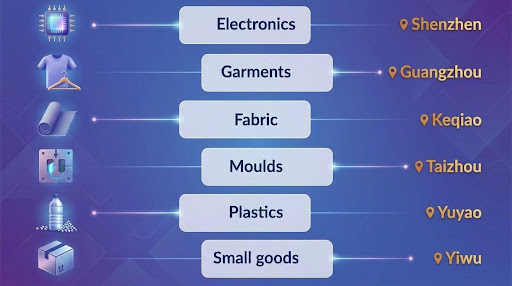
Almost nothing sold in the category is made domestically. Assembly is concentrated in China, with Vietnam, India, and Mexico taking a growing share since 2018 as brands diversified against tariffs. Components are more distributed: advanced semiconductors from Taiwan and South Korea, displays and batteries largely from China and Korea, and passive components and assembly from China.
That structure is why tariffs and export controls have become central to the U.S. consumer electronics industry rather than peripheral. Duties on Chinese-origin goods, restrictions on advanced chips flowing to China, and China’s own export controls on materials such as rare earths all land on the same supply chain. The article on reducing US import tariffs covers what that means for landed cost.
Where the Growth Is
Health and wellness technology is the strongest growth area, driven by demographics and by regulatory approval of consumer devices for clinical functions. Automotive technology is the second, as vehicles become the largest consumer electronics product most people own. Smart home continues to grow, helped by the Matter standard removing the ecosystem gamble that used to deter buyers. Traditional categories, televisions, laptops, and smartphones, grow with replacement rather than with new adoption.
U.S. Consumer Electronics Industry Revenue by Category
Within the U.S. consumer electronics industry, smartphones remain the largest category by revenue, though unit growth has flattened as replacement cycles lengthened and buyers moved to higher-priced devices.
Computing, laptops and tablets, saw demand pulled forward in 2020 and 2021 and has grown modestly since.
Televisions and audio grow through premiumisation rather than units: larger screens and higher specifications rather than more sets.
Wearables continue to grow, with smartwatches and fitness devices increasingly overlapping with health monitoring.
Smart home is among the faster-growing categories, helped by the Matter standard removing the ecosystem incompatibility that used to deter buyers.
Automotive and health technology are the strongest growth areas, and both are relatively new as consumer categories.
Where U.S. Consumer Electronics Industry Growth Comes From
Growth in the U.S. consumer electronics industry now comes from three places rather than from broad unit expansion. Higher average selling prices, as buyers replace less often but buy better. New categories, particularly health, automotive, and smart home. And services attached to hardware, which have become a substantial share of the industry’s value.
Leaders of the U.S. Consumer Electronics Industry
Apple, Samsung, Sony, LG, HP, and Dell dominate the U.S. consumer electronics industry categories the categories they compete in, and competing head-on with any of them on specification is not a viable strategy for a new brand. What has worked instead is specificity: a product for a defined use case that the large brands treat as a niche, sold direct to consumer, manufactured by a contract manufacturer that already builds comparable products.
That route is more accessible than it was, because the component supply chain the U.S. consumer electronics industry depends on is available to anyone. The barrier is not the hardware; it is certification, software, and the ongoing support obligations that a connected product now carries under regimes such as the EU Cyber Resilience Act.
Wrapping Up
The U.S. consumer electronics industry is large, mature, and growing in newer categories rather than across the board, and it is supplied almost entirely from Asia. For a brand entering it, the practical requirements are a product with a reason to exist beyond specification, a certification and compliance budget that reflects reality, and a manufacturing partner that has built the product type before. Developing a consumer electronics product from design through certification to production is what our electronics production package covers, and the consumer electronics industry report covers the manufacturing side in detail.