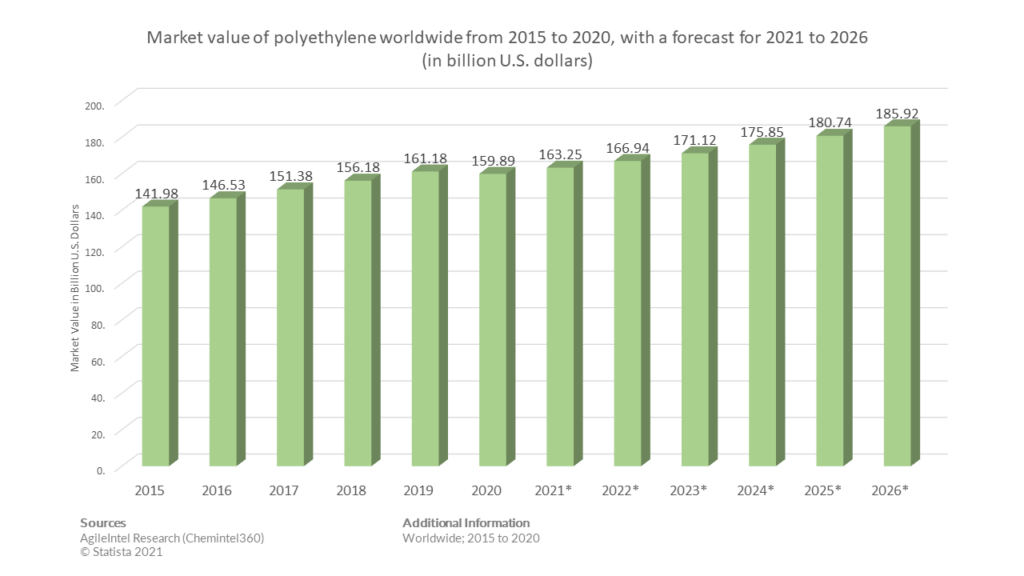
The polyethylene market is the largest single resin market in the world. Polyethylene, PE, is the most produced plastic on earth, used in packaging film, bottles, containers, pipe, cable insulation, and a very long list of moulded goods. The global polyethylene market was valued at roughly US$142 billion in 2015 and has grown substantially since, tracking demand for packaging and infrastructure.
The Polyethylene Market Is Three Markets
The polyethylene market is really three markets, and knowing which is which matters when specifying a product.
HDPE, high-density, is rigid, strong, and chemically resistant. Bottles, jerrycans, drums, crates, and pressure pipe.
LDPE, low-density, is soft and flexible with good clarity. Squeeze bottles, flexible film, and cable insulation.
LLDPE, linear low-density, is tougher than LDPE at the same thickness, which is why it dominates stretch film and heavy-duty sacks.
What Drives the Polyethylene Market
Packaging is the largest end use by a wide margin, and e-commerce has expanded it further: films, sacks, bottles, and caps.
Pipe and infrastructure is the most reliable growth area. PE pipe has replaced metal in gas and water distribution across most developed markets because it does not corrode and can be welded into continuous runs, and replacing ageing networks is a multi-decade programme.
Consumer and industrial goods take a substantial share in crates, bins, tanks, and housewares.
Recycling has become a driver rather than only a constraint. PE is among the most readily recycled plastics, recycled HDPE is available at scale, and recycled-content requirements in the EU and several US states push demand toward it.
Feedstock Decides Polyethylene Market Prices
Polyethylene market pricing starts with ethylene, and where the ethylene comes from decides the price. The United States and the Middle East crack cheap ethane from natural gas; Europe and much of Asia crack naphtha from oil; China has added coal-to-olefins capacity that no other major producer uses at scale.
That cost gap has widened since 2022 and it explains the trade flows: gas-advantaged regions export, oil-based regions import. It also means polyethylene market prices move with oil and gas, so a quote given at one resin price is not valid at another.
Where Production Sits
Asia produced 57.2% of the world’s plastics in 2024 and China alone 34.5% (Plastics Europe). Chinese petrochemical capacity built since 2015 has turned the country from a large net importer of polyethylene into a much smaller one, with further capacity still arriving.
What It Means for a Product
For a brand having PE parts made, three practical points. Specify the grade rather than just “polyethylene”, because HDPE, LDPE, and LLDPE behave completely differently and melt flow index varies within each. Consider recycled grades deliberately, since they are available and increasingly required. And treat resin quotes as time-limited, because feedstock prices move.
Selecting the right polyethylene grade and process for a product is what our plastics production package covers, with blow molding for containers and injection molding for solid parts.