Before covering PCB applications, it helps to know what a printed circuit board is. A PCB is a board that mechanically supports electronic components and electrically connects them. It is built from a non-conductive substrate, usually fibreglass-reinforced epoxy, with conductive pathways etched from copper sheets laminated onto it, plus pads, vias, and a solder mask. Components are soldered to the pads, and the copper traces carry the signals and power between them. PCB applications in everyday items are so widespread that almost anything with a power source contains at least one.
PCBs come in several forms: single-sided, double-sided, and multilayer, with anywhere from one to dozens of copper layers; rigid, flexible, and rigid-flex; and specialised types such as aluminium-backed boards for heat dissipation and high-frequency boards for radio applications. The printed circuit board types article covers the differences. Which type a product uses depends on what it has to do, how much space there is, and what it can cost.
Applications of PCBs
Because so many industries use them, PCB applications run from tiny wearables to industrial machinery. Here are the areas where printed circuit boards do the most work in daily life.
Consumer Electronics
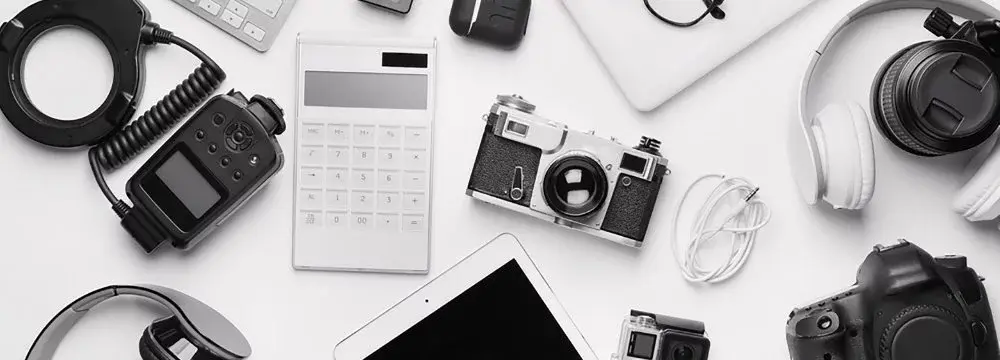
Consumer electronics is the largest area of PCB applications by volume. Phones, tablets, laptops, televisions, headphones, smartwatches, game consoles, and smart home devices all run on PCBs, and the requirements differ by product: a phone needs a dense, thin multilayer board with fine trace widths, while a Bluetooth speaker may need only a simple double-sided one. The trend across the category is toward smaller, denser boards with more layers, which is why HDI (high-density interconnect) boards and rigid-flex construction have moved from premium products into mainstream ones.
Automotive
Modern vehicles contain dozens to hundreds of PCBs, where a car of the 1980s had a handful. PCB applications in vehicles include engine and transmission control units, navigation and GPS, infotainment and media systems, instrument clusters, sensors for parking and driver assistance, lighting control, and, in electric vehicles, battery management systems and power electronics.
Automotive PCBs face conditions consumer boards do not, heat, vibration, and moisture, so they are built to stricter standards, often on high-temperature substrates, and qualified to automotive reliability requirements. Electrification has multiplied automotive PCB demand: an EV contains far more electronics than an internal-combustion car.
LED Lighting
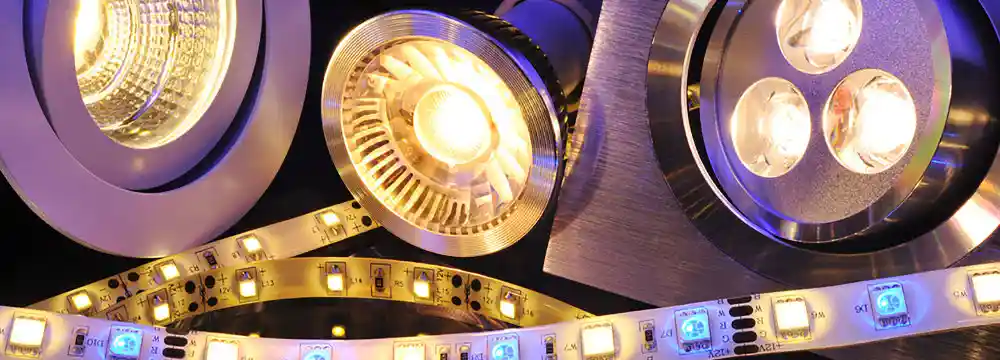
LED lighting depends on PCBs both to carry power to the diodes and to conduct heat away from them, because LEDs lose brightness and life when they run hot. Aluminium-backed or metal-core PCBs are used for exactly this reason: the metal substrate spreads heat far better than standard fibreglass. PCB applications in lighting run from domestic bulbs and strips to automotive headlights, street lighting, and commercial fixtures.
Medical Devices
Medical equipment is one of the fastest-growing areas of PCB applications: monitoring equipment, imaging systems, infusion pumps, hearing aids, and implantable and wearable devices. Medical PCBs are often very small and use flexible or rigid-flex construction to fit inside a device that has to be comfortable or implantable, and they are made to tighter reliability and traceability standards than consumer boards, with materials that must be biocompatible where they contact the body.
Industrial Equipment
Industrial PCB applications include motor controls, power supplies, measuring and test equipment, robotics, and factory automation. These boards handle higher currents and voltages than consumer electronics, so they use thicker copper and larger clearances, and they are built to survive years of continuous operation in electrically noisy environments.
Security and Safety Systems
Security systems, cameras, access control, alarms, smoke and gas detectors, and door entry systems, all run on PCBs, and they combine sensing, processing, and increasingly wireless connectivity on a single board. The growth of connected home security has made this one of the larger consumer PCB applications outside of personal devices.
Aerospace and Defence
Aerospace PCB applications involve the harshest requirements of any sector: vibration, extreme temperature range, and radiation, with failure not an option. Boards use high-reliability materials and construction, are tested far more extensively than commercial boards, and are qualified against military and aerospace standards. Firearms and defence equipment with electronic sighting, control, or communication functions fall into the same category.
What PCB Applications Mean for Product Development
For a brand developing an electronic product, the PCB is where the design becomes real, and the choices made about it decide cost, size, reliability, and how easy the product is to manufacture. The main decisions are layer count, since more layers cost more but allow denser routing; board type, rigid, flex, or rigid-flex; substrate material, standard FR-4 for most products, metal-core for heat, high-frequency laminates for radio; and component selection, which determines both the board’s cost and its supply risk.
Getting those decisions right early avoids the most expensive kind of rework, which is a board revision after tooling and assembly have been set up. Intrepid Sourcing’s PCB design service handles schematic and layout with manufacturability in mind, our prototype development proves the board before volume commitment, and our PCB assembly service covers production.