image: source
Yes. If you’re sending designs, tech packs, tooling drawings or samples to a Chinese factory, you need an NNN agreement, and the NDA your lawyer wrote at home won’t do the job.
An NDA stops a factory from telling other people about your product. It doesn’t stop the factory making your product itself, and it doesn’t stop it from selling to your customers directly. Those are the two things that actually happen.
That’s what the three N’s are for: non-disclosure, non-use, non-circumvention. Non-disclosure is the part everyone already has. Non-use and non-circumvention are the ones that matter, and they’re the ones a standard NDA leaves out.
| NDA | NNN | |
| Stops them telling others | Yes | Yes |
| Stops them using your design | No | Yes |
| Stops them selling to your customers | No | Yes |
| Governing law | Usually yours | Chinese law |
| Enforceable against a China-domiciled factory | Rarely, in practice | Yes, in a PRC court |
What makes an NNN agreement enforceable in China?
An NNN agreement is enforceable when it’s governed by Chinese law, written in Chinese, filed in a Chinese court, and names the factory’s exact registered Chinese-character name. Get any one of those wrong and you’re holding a document, not a remedy.
Start with jurisdiction, because it’s where most agreements quietly fail. China has no bilateral judgment-enforcement treaty with either the United States or the United Kingdom.
Recognition of a foreign judgment rests on reciprocity, which Chinese courts now assess case by case, with several grounds for refusal available — including public policy (Clyde & Co, January 2025).
Winning in a court back home and then trying to collect in China is the slow route, and it isn’t guaranteed to arrive.
A judgment from a Chinese court against a Chinese factory needs no cross-border enforcement step at all. That court can freeze and seize assets. It’s the practical option, not the timid one.
Then the details that get missed:
- Chinese is the controlling language. Bilingualism is fine; the Chinese version has to govern.
- The factory’s exact registered Chinese-character name — not the trading name on the Alibaba listing, not the English name on the business card. If the entity you named doesn’t exist, you’ve contracted with nobody.
- A real damages figure, which brings us to the number everyone gets wrong.
How much can you claim? The 30% rule, stated properly.
Chinese courts can reduce agreed damages that are “excessively higher” than actual loss, and the Supreme People’s Court treats “more than 30% above the loss” as the point where that scrutiny generally begins.
It’s not a cap, it is not automatic, and a factory that breached in bad faith generally doesn’t get the reduction at all.
That last part is the bit almost nobody writes down. SPC Interpretation Fa Shi [2023] No. 13, Article 65 — in force since 5 December 2023 — sets out the 30% presumption, but its third paragraph says that where the breaching party acted in bad faith (恶意违约), a request to reduce the damages will generally not be supported.
Deliberately copying a customer’s design and selling it is not an accident. So the common advice to keep NNN damages timid, in case a court strikes them out, has the logic backwards.
What you need is a figure you can justify against a real commercial loss — tooling investment, lost margin, the cost of re-sourcing — not a token one and not a fantasy one.
What changed in Chinese law in 2025 and 2026.
Chinese law moved four times between October 2025 and January 2027, and most NNN guidance online still predates all of it. Here’s what’s actually in force.
| Change | Effective | Why it matters for your NNN |
| Amended Anti-Unfair Competition Law | 15 Oct 2025 | Trade secret burden of proof shifts to the alleged infringer — now Article 39, renumbered from 32 |
| Revised Arbitration Law | 1 Mar 2026 | Seat of arbitration is now statutory; ad hoc arbitration is still not available for an ordinary manufacturing dispute |
| SAMR Trade Secret Provisions (Order 126) | 1 Jun 2026 | Names signing confidentiality agreements as a qualifying confidentiality measure |
| Trademark Law, fifth revision | 1 Jan 2027 | First-to-file moves from Art. 31 to Art. 35; the bad-faith filing test becomes objective |
The connection worth understanding is between the first and third rows.
Enjoying this guide?
Practical manufacturing guidance for product brands. Factory selection, costs, quality and protecting your designs.
Under the amended Anti-Unfair Competition Law, once you show that you took reasonable confidentiality measures and give prima facie evidence of infringement, the burden of proving the information wasn’t a trade secret falls on the factory.
That’s a significant shift, and it’s conditional: you have to have taken the measures.
SAMR’s Order 126, effective 1 June 2026, lists what counts. Signing confidentiality agreements and including confidentiality clauses is explicitly on that list, alongside access controls, encryption and recovering materials when staff leave.
So an NNN agreement isn’t only a contract you sue on. It’s evidence that you did the thing that shifts the burden of proof onto the other side. That’s a second, quieter reason to have one signed before anything sensitive leaves your office.
However, these trade secret rules don’t replace an NNN. Trade secret law only reaches information that is genuinely non-public.
It says nothing about a factory using a design you openly shared with it, disclosing it inside its own subcontractor network, or going around you to your customers (Harris Sliwoski, April 2026).
Those are contract problems, and the contract has to cover them.
When should you send an NNN agreement?
Before the first technical disclosure — not after the quote comes back. By the time you’ve received a price, you’ve usually already handed over everything worth protecting.
In practice:
- Send it to every factory you shortlist, not just the one you pick. An RFQ round means three or four factories see your drawings. All of them need to have signed.
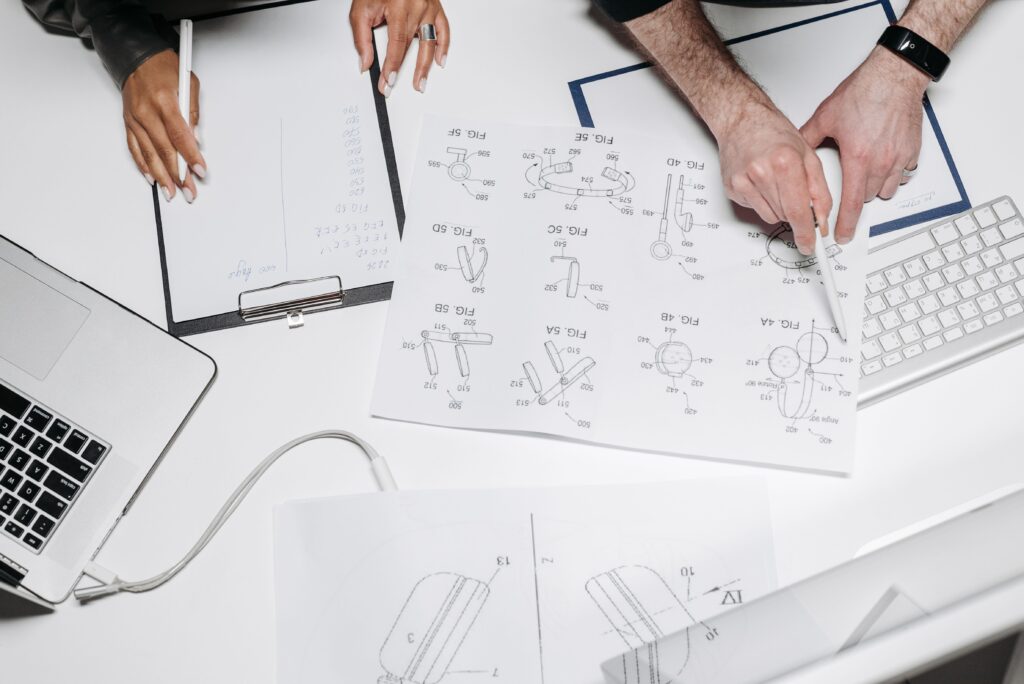
- Never send CAD files, tech packs, BOMs or tooling drawings to an unsigned factory. Photographs and a written spec are usually enough to get an indicative price. Detail can wait for signature.
- Register your trademark in China first. China is first-to-file, and it’s your supplier or its agent who is best placed to register your brand before you do. An NNN won’t fix a mark that’s already registered to somebody else.
- Don’t ask an NNN to do a manufacturing agreement’s job. Tooling ownership, exclusivity, quality standards, inspection rights and payment terms belong in a separate contract. The NNN protects the information; the manufacturing agreement governs the work.
None of that is complicated. It’s mostly a matter of doing it in the right order, which is exactly the discipline that slips when a factory is quoting fast and you want to keep momentum.
Our production readiness checklist below covers what else should be in place before you request quotes, and what manufacturers look for before quoting explains why a well-prepared brief gets you better pricing anyway.
Final Thoughts
Get the NNN signed before the drawings go out, register your trademark in China early, and keep the manufacturing agreement as a separate document. Three straightforward habits that, between them, prevent most of what goes wrong.
If you’d rather not manage that yourself, talk to us about your product — vetting factories and getting the paperwork right before disclosure is part of how we work, from simple sourcing to full contract manufacturing solutions.
This is general information, not legal advice. Have any agreement drafted or reviewed by a lawyer qualified in Chinese law.
Frequently Asked Questions
What is an NNN agreement in China?
A contract in which a Chinese manufacturer agrees not to disclose your confidential information, not to use it for its own products, and not to circumvent you by selling to your customers directly. It’s governed by Chinese law and enforced in Chinese courts, which is what separates it from a Western NDA.
Is an NDA enough for a Chinese manufacturer?
No. An NDA addresses disclosure only, and it’s typically written under foreign law with a foreign court named.
Both problems matter: it leaves out the two risks that actually materialise, and it points enforcement at a court whose judgment you’d then have to get recognised in China.
Can I just use a free NNN agreement template?
A template is a reasonable starting point for understanding the structure, but it isn’t a finished agreement.
The counterparty’s exact registered Chinese name, the governing law, the named court and the damages figure all have to be right for your specific deal — and those are precisely the fields a template leaves blank or fills with something generic.
Have a China-qualified lawyer review it before you send it.
A contract in which a Chinese manufacturer agrees not to disclose your confidential information, not to use it for its own products, and not to circumvent you by selling to your customers directly. It’s governed by Chinese law and enforced in Chinese courts, which is what separates it from a Western NDA.
No. An NDA addresses disclosure only, and it’s typically written under foreign law with a foreign court named.
Both problems matter: it leaves out the two risks that actually materialise, and it points enforcement at a court whose judgment you’d then have to get recognised in China.
A template is a reasonable starting point for understanding the structure, but it isn’t a finished agreement.
The counterparty’s exact registered Chinese name, the governing law, the named court and the damages figure all have to be right for your specific deal — and those are precisely the fields a template leaves blank or fills with something generic.
Have a China-qualified lawyer review it before you send it.