The jewelry industry in China and its neighbours is underrated. Jewellery and watches are not products the region is known for, yet the jewelry industry there produces more of both than anywhere else on earth, and a growing share of what it produces is not low-end. If you are developing a jewellery or watch product, this report covers the market, the reasons China remains the production base, and the problems specific to this category that you will meet setting up production without help.
Jewelry & Watches Industry Overview & Key Statistics
a. Jewelry & watches industry description
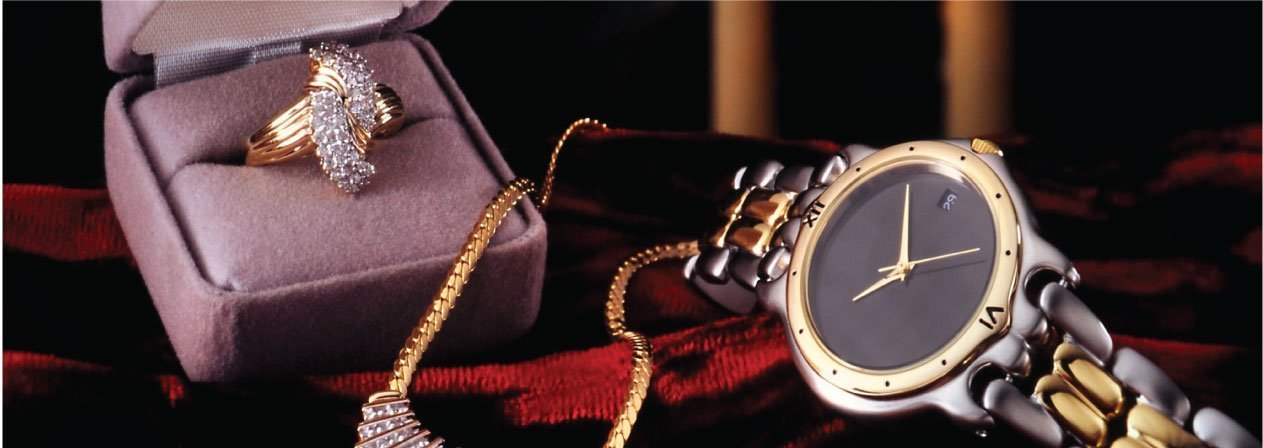
The jewelry industry covers necklaces, rings, earrings, bracelets, brooches, and the components and findings they are assembled from, in materials from precious metals and stones down to base-metal alloys. High-end jewellery uses gold, silver, platinum, diamonds, and precious and semi-precious stones. The low and mid-range uses stainless steel, brass, zinc alloy, and plated metals, where an inexpensive base metal is coated with a thin layer of gold, rhodium, or silver. Plated and stainless jewellery is the fastest-growing part of the market and the overwhelming majority of it is made in China.
Two developments have changed the jewelry industry since the 2010s. Lab-grown diamonds, now chemically identical to mined stones at a fraction of the price, have gone from a niche to a mainstream category, and China’s Henan province produces the majority of the world’s supply. And stainless-steel jewellery, once a budget material, has become the standard for the direct-to-consumer brands that dominate online jewellery sales, because it does not tarnish, takes plating well, and can be produced at scale.
China’s jewelry industry is a major exporter by value and by far the largest by quantity. Jewellery exports from China reached US$12.7 billion in 2025, up 8.5% on the year (International Trade Centre), and that figure understates China’s role, because a large share of jewellery made in Shenzhen and Guangzhou is exported through Hong Kong or sold to brands that finish and ship from elsewhere. Shenzhen’s Shuibei district alone processes the majority of China’s gold jewellery and is the largest jewellery manufacturing and trading cluster in the world.
The watch industry has moved beyond timekeeping. Watches today are fashion items, brand statements, and, increasingly, wearable computers. The main categories are dress and business watches, casual and fashion watches, sports watches, and smartwatches, which are now the largest category by units. China produces the largest number of watches in the world, most of them in the low and middle price range, and it dominates smartwatch manufacturing outright. By value the picture reverses: Swiss watch exports run at around CHF 26 billion a year (Federation of the Swiss Watch Industry) from a tiny fraction of global unit output, while China accounts for the great majority of units and a small share of value.
b. Global jewelry & watches production: China vs. other regions of the world
In the jewelry industry, India is China’s main rival in exports, with a long-established gold and diamond industry centred on Mumbai and Surat, where most of the world’s diamonds are cut. Italy leads in high-end gold jewellery design and production, Thailand in silver and coloured stones, and Hong Kong remains a major trading and export hub for jewellery made across the region. China’s position is in volume manufacturing: plated, stainless, and fashion jewellery, jewellery components, and lab-grown stones.
In watches, Switzerland dominates by value and China by volume, with Hong Kong as the main re-export hub for both. Japan holds the middle ground in mechanical and quartz movements. For smartwatches, China’s position is the same as in consumer electronics generally: nearly all of the world’s smartwatches are assembled there, for Chinese brands and foreign ones alike.
c. Commonly produced jewelry & watches in China
- Stainless steel and plated fashion jewellery: rings, necklaces, bracelets, earrings
- Gold and silver jewellery, from Shenzhen’s Shuibei cluster
- Lab-grown diamonds and moissanite, and jewellery set with them
- Jewellery findings and components: chains, clasps, settings, charms
- Quartz analogue watches and fashion watches
- Smartwatches and fitness bands
- Watch components: cases, straps, dials, quartz movements
- Jewellery packaging and display: boxes, pouches, stands
d. Year-on-year jewelry & watches industry growth
The growth in the jewelry industry is in three places: lab-grown diamonds, which have taken a large share of the engagement and fine jewellery market in the US and are still expanding; stainless and plated jewellery sold direct to consumer through social media and marketplaces, which is the model most new jewellery brands follow; and smartwatches, which have grown every year since 2015 while traditional quartz watch units have declined. Traditional gold jewellery demand in China itself remains enormous and rises with the gold price, which has been at record highs since 2024.
Why China is the Right Choice for the Jewelry Industry and Watch Production
a. Jewelry & watches production capacity
Guangdong province holds the world’s densest concentration of the jewelry industry. Shenzhen’s Shuibei district, Panyu in Guangzhou, and the surrounding towns contain thousands of factories and workshops covering every process: casting, stamping, stone setting, plating, polishing, and assembly. Yiwu supplies fashion jewellery at the lowest price points. That density means every stage of a jewellery product, from a CAD design to a plated, packaged piece, can be done within a few kilometres, and a factory can move from sample to production in weeks.
Beside the jewelry industry, watch manufacturing is concentrated in Shenzhen and Dongguan, which produce the majority of the world’s quartz watches and nearly all its smartwatches. Case makers, strap makers, dial and movement suppliers, and assembly plants sit side by side, which is what allows a small brand to develop a custom watch from existing components rather than from scratch.
b. Technological advantages in the jewelry & watches industry
China’s jewelry industry has adopted CAD design, 3D-printed casting patterns, and automated plating lines faster than most Western producers, which is why a Chinese factory can offer custom designs at fashion-jewellery prices. Lab-grown diamond production, an industrial process rather than a craft, is a Chinese technological lead: the high-pressure and chemical-vapour-deposition capacity built in Henan and elsewhere has made China the dominant producer. In watches, China’s electronics supply chain is what makes the smartwatch possible at scale, and the same factories that make displays, batteries, and sensors for phones supply them for wearables.
c. Modern logistics infrastructure
Jewelry industry products are high-value and low-weight, which makes them cheap to ship by air and makes logistics a smaller share of landed cost than for almost any other category. Shenzhen and Hong Kong airports are among the busiest cargo hubs in the world, and the region’s express-freight and bonded-warehouse infrastructure is built for exactly this kind of shipment. Hong Kong’s role as a duty-free trading hub, with a large jewellery trade of its own, gives brands a convenient consolidation and export point.
Potential Problems in China’s Jewelry Industry and Watch Sector
a. Time problems in the jewelry and watches industry
The jewelry industry is a fashion category and timing is everything: a collection that misses its season has lost most of its value. Lead times stretch when a design needs multiple sample rounds, when plating or stone-setting capacity is booked, and around the Chinese New Year shutdown, which takes a month out of the production calendar every year. Without a presence in China, a brand cannot see whether a factory is on schedule until the deadline has passed.
b. Quality problems in the jewelry and watches industry
Quality problems in the jewelry industry are subtle and expensive. Plating thickness is the most common: a piece plated to 0.5 microns instead of the 2 or 3 microns specified looks identical at delivery and tarnishes in weeks, and the buyer finds out from customer reviews. Nickel content in base metals, cadmium and lead in solders and alloys, and stone-setting security are the others, and all have regulatory consequences: nickel release limits in the EU under REACH, lead and cadmium limits in the US and EU, and mandatory testing for children’s jewellery. Watches add movement accuracy, water resistance, and battery life. None of these can be checked by looking at a sample; they require testing.
c. Cost problems in the jewelry and watches industry
Jewelry industry pricing is dominated by material cost, and material cost moves. Gold has more than doubled in price since 2019; silver and copper have risen sharply too. A quote given at one metal price is not valid at another, and factories will either re-quote or, worse, quietly reduce plating thickness or metal purity to hold the price. Buyers who do not understand the material cost in their product cannot tell a fair quote from an unfair one, and cannot tell when a supplier has cut corners to meet one.
d. Planning problems in the jewelry and watches industry
A jewelry industry collection has many SKUs, each with its own tooling, stones, and finish, and the planning burden is proportionally larger than for a single product. Sampling is where designs fail: a piece that looks right in CAD may be too heavy, too fragile, or too costly to produce once cast. Watches have the additional planning problem of certification, since any smartwatch needs FCC, CE, and battery certification, and any watch that claims water resistance needs testing to support the claim.
e. Risks in the jewelry and watches industry
Design theft is the specific risk of the jewelry industry. A jewellery design is easy to copy and hard to protect, and a factory that makes your collection can make it for someone else, or sell it on Temu, within weeks. Design registration in China, a proper contract, and a supplier relationship built on more than one order are the practical defences. The general risks of contracting with a Chinese supplier without local presence, lack of transparency, no means of enforcement, and exposure to a supplier who cannot deliver, apply here as everywhere.
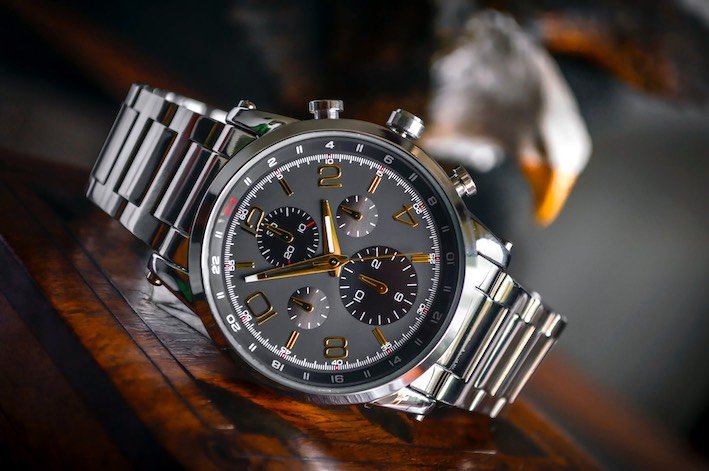
Jewellery and watches are high-value products where small quality failures carry a large cost.
Our Recommendations for China’s Jewelry and Watches Industry
a. For reducing time required in the jewelry and watches industry
Intrepid Sourcing knows the jewelry industry calendar and runs the process from design to delivery with the production calendar, including the Chinese New Year shutdown, planned from the start. We work directly with jewellery and watch factories in Guangdong that have the capacity for your order size and the finishing capability your designs need, and we manage sampling so that the sample round is the last time a design changes.
b. For ensuring quality in the jewelry and watches industry
We specify plating thickness, metal composition, and stone-setting standards in writing, and we test for them: plating thickness by X-ray fluorescence, nickel and heavy-metal content by laboratory test, water resistance and movement accuracy for watches. Our quality assurance covers in-line inspection and pre-shipment testing so that what ships matches what was approved.
c. For reducing cost in the jewelry and watches industry
We quote jewelry industry work with the material cost broken out, so you can see what the metal, the stones, the plating, and the labour each cost and judge a re-quote when metal prices move. With current knowledge of Guangdong factory pricing we help you compare suppliers on the full specification rather than the headline price, which is how plating-thickness shortcuts get caught before they ship.
d. For planning in the jewelry and watches industry
We manage the collection as a whole: tooling and sampling across all SKUs, stone sourcing, plating and finishing schedules, and packaging. For watches we plan certification from the outset, so FCC, CE, and battery testing run alongside development rather than after it.
e. For minimizing risk in the jewelry and watches industry
We register designs in China where it is warranted, contract with suppliers under Chinese law with terms that address copying and exclusivity, and place your work with factories we have worked with before. That is what turns a jewelry industry idea into a product that ships on time, to specification, and stays yours. If you are developing one, the place to start is our private label package for products built on existing components, or our product sourcing service for a custom design.