Plastic is so much a part of daily life that we rarely think about the material at all. It is the housing on every electronic device, the packaging on most food, the interior of every car, and the body of most medical devices. Global plastics production reached 430.9 million tonnes in 2024 (Plastics Europe), around a third of it made in China, and a large share of it is used once and discarded. But how are plastic parts actually made?
The plastics manufacturing process runs from crude oil or natural gas through refining, cracking, and polymerisation to a resin, and then through one of a dozen fabrication processes to a finished part. For any product designer or engineer, knowing the plastics manufacturing process end to end, and the fabrication options available today, is what makes it possible to design a part that can be made well and at the right cost.
This guide covers the whole plastics manufacturing process: what plastics are made of, how raw materials become resin, the main fabrication methods for turning resin into parts, how to choose among them, and what happens after molding. It is written from the point of view of a brand having a product made rather than a chemist, and it links to the more detailed articles on this site where they exist.
What Are Plastics Made Of?
Most plastics are made from hydrocarbons, molecules of carbon and hydrogen, derived from fossil fuels: the buried and transformed remains of ancient plants and marine organisms. Three feedstocks matter for the plastics manufacturing process.
Crude oil
Crude oil, or petroleum, is found in underground reservoirs and in the pores of sedimentary rock, and is extracted by drilling on land or at sea. Refining separates it into fractions, and the naphtha fraction is the main plastics feedstock in Europe and much of Asia. Plastics production uses around 6% of the world’s oil and gas output.
Natural gas
Natural gas, mainly methane, is found in permeable rock and in oil reservoirs, and its associated liquids, ethane and propane, are the preferred plastics feedstock in the United States and the Middle East, where gas is cheap. Conventional gas is extracted by ordinary drilling; unconventional gas from shale requires hydraulic fracturing, which is what turned the United States into a low-cost producer of polyethylene and polypropylene after 2010.
Coal
Coal, a carbon-rich rock mined underground or from the surface, is rarely used for plastics in the West. China uses it at scale: coal-to-olefins and methanol-to-olefins plants convert coal into the same ethylene and propylene that crackers make from oil and gas, which gives China a feedstock route no other major producer has.
Bio-based and recycled feedstocks in the plastics manufacturing process
A growing share of the plastics manufacturing process starts from something other than fossil fuels. Bio-based plastics use plant sugars, starches, or oils; some, like bio-polyethylene, are chemically identical to fossil versions, while others, like PLA, are new materials. Recycled feedstocks come from mechanical recycling, which re-melts sorted waste into pellets, or chemical recycling, which breaks waste plastic back into monomers or oil. Circular plastics passed 10% of global production in 2024 and are the fastest-growing part of the industry.
The Plastics Manufacturing Process: From Raw Material to Resin
The first half of the plastics manufacturing process turns a feedstock into a resin, the pellets that a factory melts and shapes. It has four stages.
1. Extraction of raw materials
The overwhelming majority of plastic is made from fossil fuels, so extracting oil, gas, or coal is the first step. Where and how it is extracted sets the regional cost of resin: gas-based production in the United States and the Gulf is cheaper than naphtha-based production in Europe and Northeast Asia, which is one reason European plastics production has shrunk to 12% of the world total.
2. Refinement
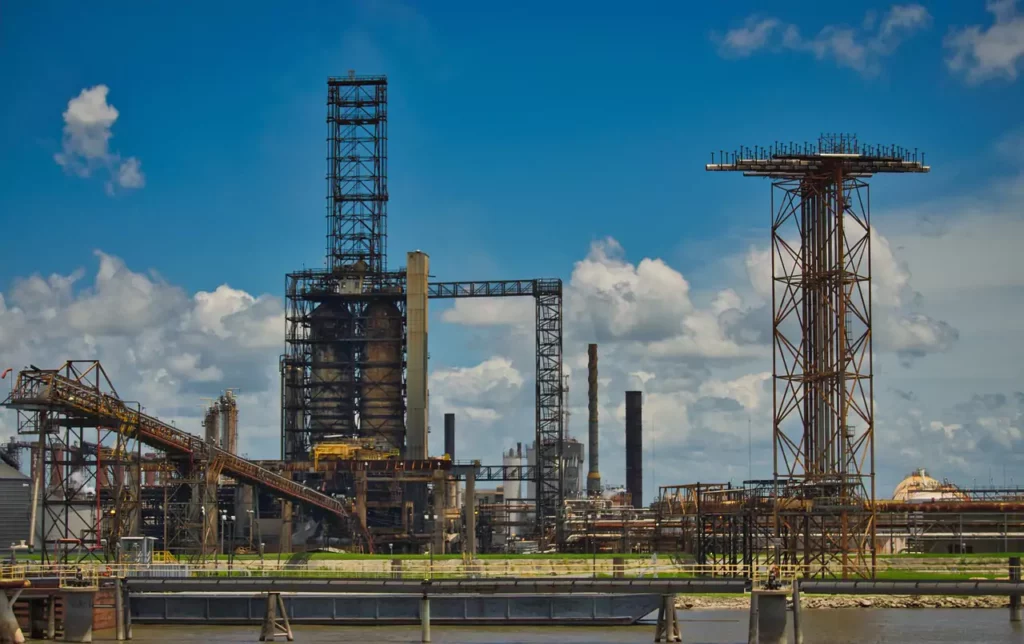
Crude oil goes to a refinery, where it is heated, vaporised, and separated in a fractional distillation tower. The tower has a temperature gradient, hotter at the bottom, cooler at the top, and the fractions separate by boiling point: light gases and gasoline rise to the top, heavy fuel oil stays at the bottom, and naphtha, the plastics feedstock, sits in between. Natural gas is processed separately to separate ethane and propane from methane. Naphtha, ethane, and propane are the feedstocks the rest of the plastics manufacturing process is built on.
3. Cracking
Cracking breaks the long hydrocarbon molecules in naphtha, ethane, and propane into short ones, above all ethylene and propylene, the monomers that most plastics are built from. Steam cracking, the main method, mixes the feedstock with steam and heats it to around 800 to 900°C in a tubular furnace for a fraction of a second at low pressure, so that the molecules break apart before they can form carbon deposits.
Catalytic cracking uses a catalyst to achieve a similar result at lower temperatures, around 500°C, with the product mix controlled by temperature, residence time, and the catalyst chosen. Steam crackers are among the largest and most energy-intensive facilities in the chemical industry, and their location determines where the plastics manufacturing process is cheapest.
4. Polymerisation
Polymerisation links monomers into the long chains that make a polymer. In addition polymerisation, monomers join end to end with every atom retained, which is how polyethylene, polypropylene, PVC, and polystyrene are made. In condensation polymerisation, the reaction releases a small molecule, usually water, as a by-product, which is how nylon, PET, and polycarbonate are made. The polymer is then compounded with additives, stabilisers, colourants, fillers, and flame retardants, and extruded and cut into pellets. Pellets are the form in which resin is shipped and sold, and the point at which the plastics manufacturing process hands over from the chemical industry to the factory. Our guide to raw materials for plastic covers the polymer families in more detail.
The Plastics Manufacturing Process: Fabrication
Fabrication is the second half of the plastics manufacturing process, in which resin pellets become parts. A dozen processes are in common use, each suited to particular geometries, materials, and volumes, and choosing among them is one of the first decisions in developing a plastic product. The main ones follow.
Injection molding
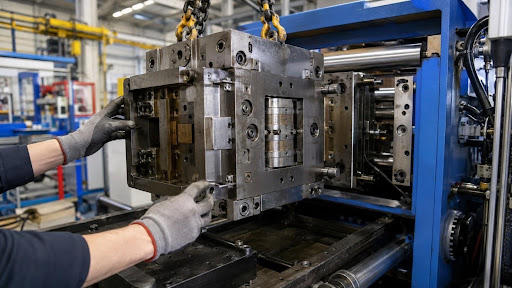
Injection molding is the most widely used plastics manufacturing process for solid parts. Resin pellets are melted in a heated barrel and forced under high pressure into a steel or aluminium mold, where the plastic cools and solidifies; the mold opens, the part is ejected, and the cycle repeats, typically in seconds. It produces parts with fine detail, tight tolerances, and excellent surface finish, from tiny connectors to car bumpers, in almost any thermoplastic.
Its economics are defined by the mold: tooling costs run from a few thousand dollars for a simple aluminium mold to hundreds of thousands for a complex multi-cavity steel one, and that cost is amortised over the production run, which makes injection molding cheap at volume and expensive for small quantities. Variants include overmolding, which molds a second material onto a first part, insert molding, which molds around a metal insert, and gas-assist molding for hollow sections. The injection molding service page and the article on resins for injection molding cover it in depth.
Blow molding
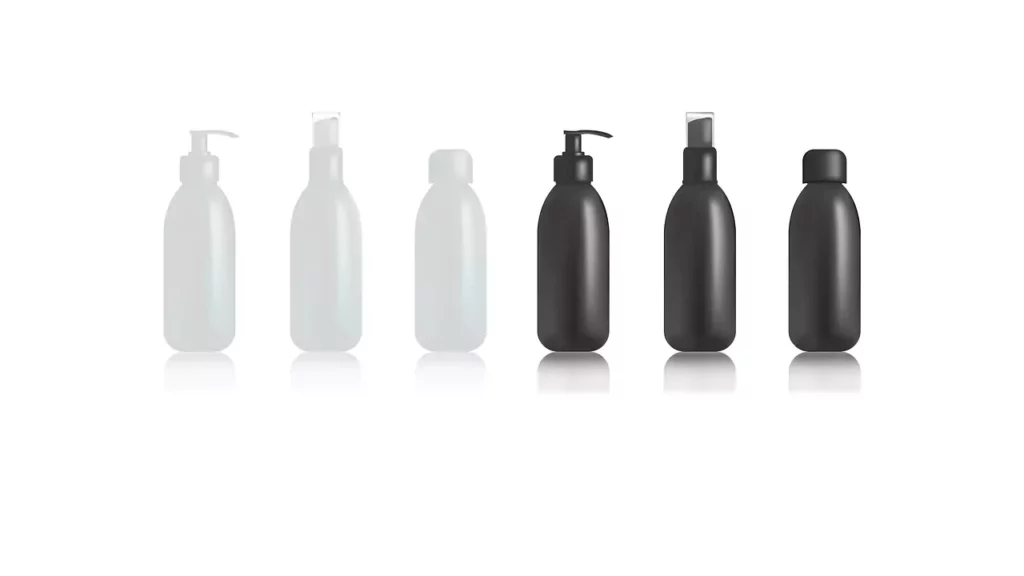
Blow molding makes hollow parts. In extrusion blow molding, a tube of molten plastic, the parison, is extruded, clamped in a mold, and inflated with air until it takes the mold’s shape; in injection blow molding and stretch blow molding, a preform is injection-molded first and then blown, which is how PET bottles are made. Blow molding is the plastics manufacturing process for bottles, containers, tanks, and hollow toys, at very high speed and low unit cost, in HDPE, PET, PP, and PVC. Tooling is cheaper than injection molds of comparable size, but wall thickness is less controllable and the parts are limited to hollow shapes. The blow molding service page covers it.
Extrusion
Extrusion forces molten plastic through a die to make a continuous profile: pipe, tubing, sheet, film, window profiles, cable insulation, and the pellets that every other process starts from. It is continuous rather than cyclic, which makes it the lowest-cost plastics manufacturing process per kilogram, and the die is far cheaper than a mold. It makes only constant-cross-section shapes, which are then cut to length or further processed.
Thermoforming
Thermoforming heats a plastic sheet until pliable and forms it over or into a mold using vacuum, pressure, or both. Vacuum forming is the simple version; pressure forming gives finer detail. It is the plastics manufacturing process for trays, clamshell packaging, cups, lids, and large thin-walled parts such as vehicle liners and equipment housings. Tooling is cheap and fast, which makes thermoforming suitable for low and medium volumes and large parts, at the cost of limited detail, no undercuts, and uneven wall thickness where the sheet stretches most.
Rotational molding
Rotational molding places powdered resin in a hollow mold that is heated while rotating on two axes, so the plastic coats the inside evenly and forms a seamless hollow part. It makes large hollow items, tanks, kayaks, coolers, playground equipment, and bins, with uniform wall thickness and no weld lines, from cheap tooling. Cycle times are long, measured in minutes to hours, and the process is limited to a few materials, chiefly polyethylene.
Compression molding
Compression molding places a measured charge of material in a heated mold, which closes under pressure to form the part. It is the main plastics manufacturing process for thermosets, phenolics, epoxies, silicone, and rubber, and for fibre-reinforced composites, and it is used for electrical housings, appliance parts, automotive panels, and large flat parts. Tooling is cheaper than injection molds and the process handles thick sections and high-strength materials, at slower cycle times and with more manual handling.
3D printing
Additive manufacturing builds parts layer by layer directly from a digital file, with no tooling. Fused deposition modelling (FDM) extrudes thermoplastic filament; stereolithography (SLA) cures liquid resin with a laser; selective laser sintering (SLS) fuses powdered nylon; and newer processes print in production-grade materials at production speeds. 3D printing is the plastics manufacturing process for prototypes, where a design can be printed, tested, and revised in days, and increasingly for low-volume production of complex parts. It cannot match molded parts on unit cost at volume, on material range, or on surface finish, but it has changed product development: the 3D printing and prototyping service is where most plastic products now begin.
CNC machining
The last plastics manufacturing process to mention is machining, which cuts a part from a solid block of plastic using computer-controlled tools. It produces the most accurate and best-finished plastic parts of any process, in any machinable material, with no tooling, and it is used for prototypes, jigs, low-volume parts, and parts that need tolerances molding cannot hold. It is slow and wasteful of material, so it is not a volume process.
Choosing the Right Plastics Manufacturing Process
The choice of plastics manufacturing process is decided by four questions, usually in this order.
What volume? Below a few hundred parts, 3D printing or machining avoids tooling cost entirely. From hundreds to a few thousand, thermoforming, rotational molding, or low-cost aluminium injection tooling make sense. Above that, injection molding for solid parts and blow molding for hollow ones win on unit cost, and the more parts the run, the more the tooling investment pays back.
What geometry? Hollow parts point to blow or rotational molding; constant profiles to extrusion; thin-walled trays and shells to thermoforming; detailed, complex, or tight-tolerance parts to injection molding. The geometry also has to suit the process: injection-molded parts need draft angles, uniform wall thickness, and a design that releases from the mold, and a part designed without those in mind will be redesigned before it is tooled. The article on designing plastic parts covers the rules.
What material? Each process handles a range of materials, and the material the part needs narrows the options. Thermosets require compression or transfer molding; PET bottles require stretch blow molding; large polyethylene tanks require rotational molding. Within injection molding, resin selection decides strength, finish, cost, and compliance, and it interacts with the mold design.
What does the part have to cost? Unit cost is tooling amortisation plus material plus cycle time plus finishing, and the cheapest process at one volume is not the cheapest at another. A part that costs US$8 by 3D printing might cost US$0.40 injection-molded once a US$15,000 mold is paid for; at 1,000 parts the printed version is cheaper, at 50,000 the molded one is.
In practice most products pass through several processes: 3D-printed prototypes to prove the design, machined or soft-tooled samples to test it, and injection or blow molding for production. Planning that sequence is part of the plastics manufacturing process itself.
After Molding: Finishing, Assembly, and Quality Control
The plastics manufacturing process does not end when a part leaves the mold. Most parts are trimmed of gates and flash, and many are finished: painted, plated, printed by pad or screen printing, laser-etched, or given a soft-touch coating. Parts are joined by ultrasonic welding, adhesives, snap fits, or fasteners into assemblies, and molded parts are often combined with metal inserts, electronics, or textiles in the final product.
Quality control runs through every stage. First-article inspection checks the first parts off a new mold against the drawing, dimensionally and visually. In-process inspection catches short shots, sink marks, warping, flash, and colour drift as production runs. Pre-shipment inspection samples the finished goods to an agreed AQL. For products sold in regulated markets, material certification, food-contact, toy-safety, RoHS, REACH, is documented alongside. The quality assurance service covers each of these steps for the products we manage.
Where the Plastics Manufacturing Process Happens
China produces 34.5% of the world’s plastics and a larger share of its plastic products, and for most plastic parts it is where the plastics manufacturing process happens in practice: the resin, the mold makers, the molding factories, and the finishing and assembly suppliers are all within a few hours of each other in Guangdong, Zhejiang, and Jiangsu, and that concentration is why a Chinese factory can quote a mold in days and deliver parts in weeks. Vietnam, Thailand, India, and Mexico are alternatives for simpler parts and for products headed to markets where tariffs on Chinese goods bite; for complex tooling, engineering resins, and short lead times, China remains the default.
For a brand, the practical path through the plastics manufacturing process is to start with a design, prove it with prototypes, choose the process and material on the four questions above, have the mold built by a toolmaker who will guarantee it, and put production with a factory that has made similar parts before and will accept inspection. That sequence, from CAD design through prototyping, tooling, production, and quality control, is what Intrepid Sourcing’s plastics production package manages end to end, and it is the difference between a plastic product that ships on time at the quoted cost and one that spends a year in redesign.