On this page
Shipping lithium batteries should be agreed with the forwarder’s dangerous goods team before the factory books collection. Confirm the battery model, shipping configuration and route, then approve the packing instructions against those details. A finished product is not ready to leave if its battery paperwork describes something else.
Shipping lithium batteries starts with the configuration
Ask the factory whether the battery is installed, packed beside the equipment or shipped alone. Those are different configurations, even when the cell model is identical. Record the chemistry, watt-hour rating and quantity as well.
- UN3480: Lithium-ion batteries shipped alone.
- UN3481: Lithium-ion batteries packed with or contained in equipment.
- UN3090: Lithium-metal batteries shipped alone.
- UN3091: Lithium-metal batteries packed with or contained in equipment.
Some products, including certain battery-powered vehicles, use other entries. We ask the forwarder to confirm the classification for the actual shipment rather than copy a number from a previous booking.
Keep the air-shipping charge limits separate
Air shipments follow ICAO requirements, national rules and carrier conditions, with most prepared using the IATA Dangerous Goods Regulations. The FAA’s 2026 shipping guide explains the main categories. The airline can impose stricter acceptance conditions.
Batteries shipped alone
UN3480 and UN3090 shipments travel on cargo aircraft only. Lithium-ion batteries under UN3480 generally must not exceed 30% state of charge unless the required authorities approve otherwise.
Batteries packed with equipment
From January 1, 2026, PI 966 applies a 30% charge limit to Section I shipments. That limit also applies to Section II cells and batteries above 2.7 Wh, with exceptions requiring the relevant approvals.
Batteries contained in equipment
For PI 967, IATA’s 2026 battery guidance recommends 30% state of charge or 25% indicated capacity. This is a recommendation, not the same mandatory limit described above.
Cells up to 20 Wh and batteries up to 100 Wh may qualify for small-battery provisions, subject to the packing instruction. Some instructions require non-UN-specification packages to pass a three-meter stack test.
We ask how our factories will measure and record charge after product testing. Testing can leave a battery charged above the shipping limit. A written packing instruction is more useful than an informal promise to discharge it later.
Sea freight still needs acceptance
Sea shipments fall under the IMDG Code. Special Provision 188 can apply to eligible small cells and batteries when all conditions are met. It is not limited to installed batteries.
Send the carrier accurate battery details even when the shipment may qualify for an exception. We obtain booking acceptance before sending cargo to the port. A transport exception should never be treated as permission to omit the battery from the booking information.
Accept evidence that matches the production battery
The UN 38.3 test summary should identify the cell or battery design being shipped. Compare it with the specification and model information from the factory, using PHMSA’s test-summary guidance as a reference. A supplier change should trigger another document check.
Fully regulated air shipments need a Shipper’s Declaration and fully regulated sea shipments need dangerous goods transport documentation. Forwarders may also request a safety data sheet, specification and documents required for departure from China.
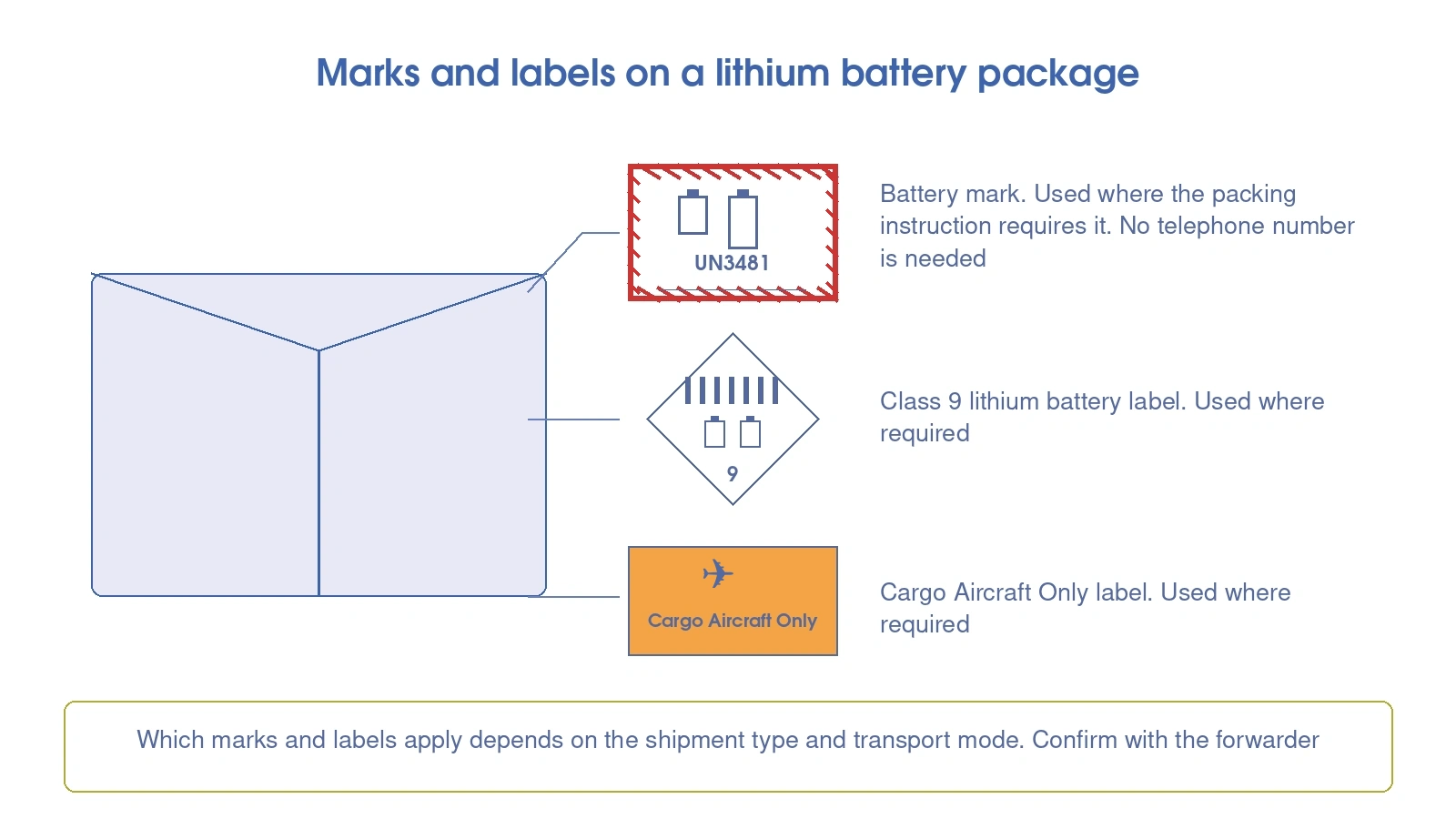
Protect terminals, prevent movement and prevent accidental activation. Agree the marks and hazard labels with the dangerous goods team. Under the US transition described in PHMSA’s marking update, older battery marks with telephone numbers may be used until December 31, 2026.
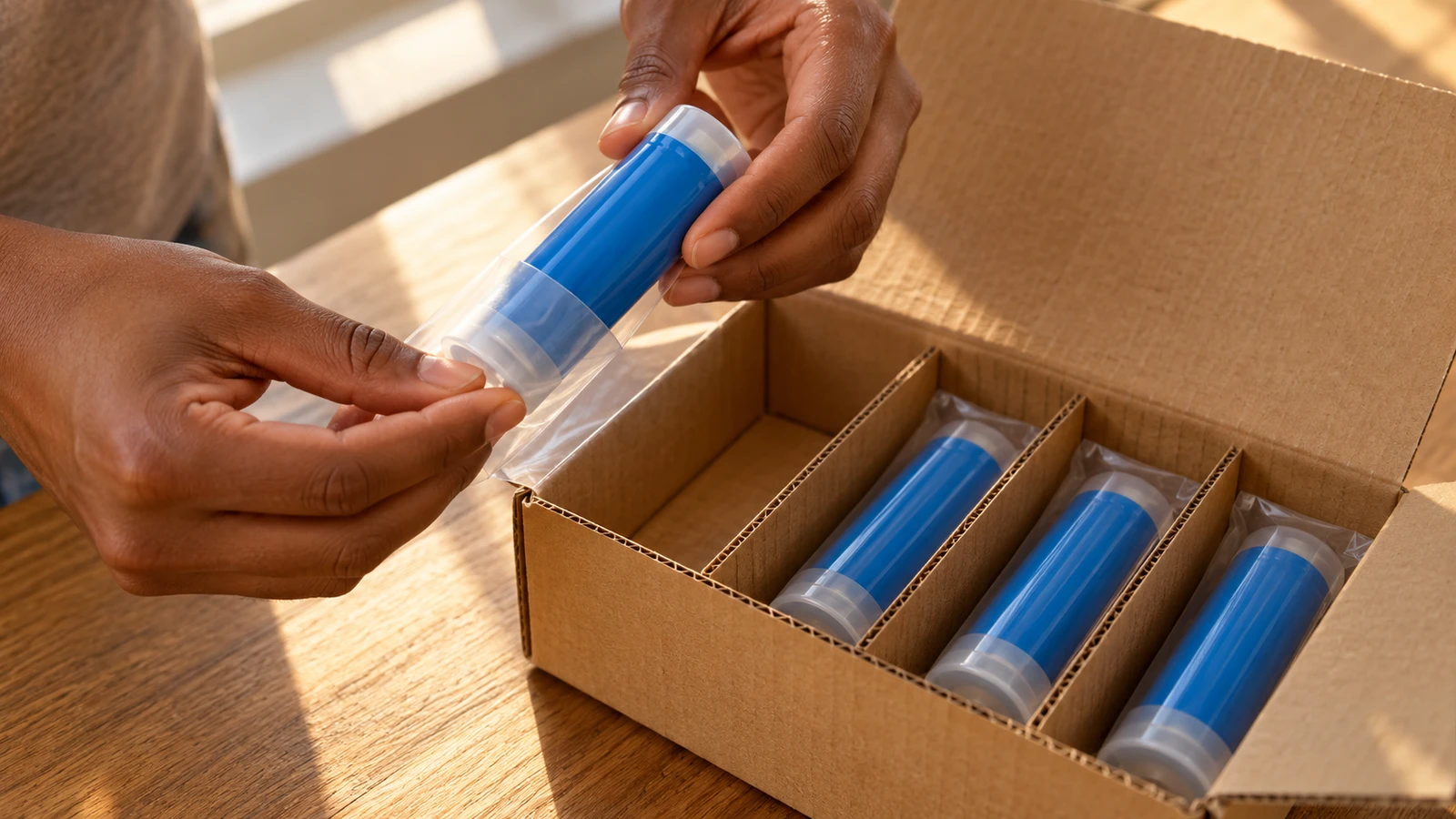
Ask the factory for photographs of the packed shipment before release, showing the inner protection and outer marks. Photos help identify a mismatch but do not replace the required test evidence or trained review. We have the responsible shipping team resolve discrepancies before the cartons are sealed for collection.
Keep the approved instruction with the booking record and identify who is authorized to change it. If the quantity, packing configuration or carrier changes, ask whether the previous acceptance still applies.
Stop collection when the evidence does not match
The failure points worth checking are specific. We hold collection when any of these remains unresolved:
- The batteries remain above the permitted charge after product tests.
- The test summary identifies a different model or an earlier battery design.
- The booking omits batteries or claims an unsupported exception.
- Samples are assigned to a courier account that cannot accept them.
- The factory changed battery suppliers without updating the evidence.
Use the shipment review alongside the quality control process, not after loading. Our electronics manufacturing process places those checks within the wider project. Our electronics production package coordinates battery sourcing, test documents and shipping preparation with our factories.