
On this page
- Why Garment Manufacturing in China Feels Hard at First
- 1. Finding the Right Factory
- 2. Communication and Specifications
- 3. Minimum Order Quantities
- 4. Keeping Bulk Quality Equal to the Sample
- 5. Shipping and Landed Cost
- 6. The Production Calendar
- Is Garment Manufacturing in China Still Worth It?
- Final Thoughts
Garment manufacturing in China is difficult for six main reasons. They are factory selection, communication, minimums, bulk quality, landed cost and the production calendar. None of them is a reason to avoid China. Each one has a known fix.
This guide explains each difficulty, why it happens, and what experienced brands do about it. Plan for all six before you place a deposit and most of them never become problems.
Why Garment Manufacturing in China Feels Hard at First
China still has the deepest apparel supply chain in the world. Fabric mills, trim suppliers, sewing factories and ports sit close together. That depth is the reason brands keep producing there.
The difficulty is that the system was built for experienced buyers. A first-time brand meets the same factories, the same rules and the same calendar, without the habits that make them work. The six problems below are where that gap shows.
1. Finding the Right Factory
Finding a factory is easy. In garment manufacturing in China, finding one that suits your product, quantity and quality level is the hard part.
Apparel factories specialise. A knitwear factory is not a denim factory. A factory set up for long runs of basics may not want a fashion style with six trims. Many suppliers that look like factories online are trading companies.
How to handle it: start with the right region. Our map of China manufacturing cities by product shows where garments and fabric are made. Then check the business licence, ask to see comparable garments, and visit or audit the site where the sewing happens.
2. Communication and Specifications
Most problems in garment manufacturing in China start as a misunderstanding. A factory reads your instructions literally. If a detail is not written down, the factory will decide it for you.
Language is part of it. The bigger issue is missing information. A sketch and a reference photo leave too many questions open.
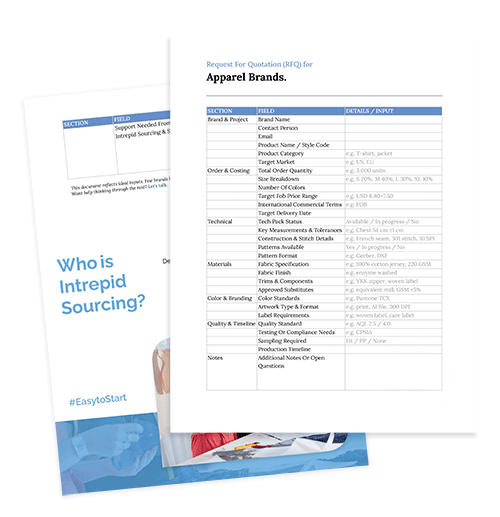
How to handle it: send a complete tech pack with measurements, fabric, trims, stitching and labels. Our guide on how to create a clothing tech pack covers each section. Confirm every change in writing, and keep one current version.
3. Minimum Order Quantities
Many brands find the minimums higher than expected. The minimum rarely comes from the sewing. It comes from the fabric mill, which sells by the roll or by a minimum dye lot per colour, and from line setup time.
How to handle it: ask whose minimum it is. A fabric minimum can sometimes be solved with a stock fabric. A setup minimum usually cannot. Plan the range so the quantity is spread across sizes. Our article on why chasing the lowest MOQ can cost you more explains the trade-off.
4. Keeping Bulk Quality Equal to the Sample
In garment manufacturing in China, a perfect sample does not guarantee a perfect production run. Samples are often made by the best operators in the sample room. Bulk is made on the main line, sometimes with a different fabric lot.
How to handle it: sign off a sealed approval sample and keep one copy yourself. Check the first pieces off the line. Book an inspection before the final payment, not after shipment. Our quality assurance guide sets out what to check and when.
Ask for a current social audit as well, such as SMETA. It covers labour standards and health and safety, which your retail customers may ask about.
5. Shipping and Landed Cost
The factory price is only part of the cost of garment manufacturing in China. Freight, insurance, duty, customs clearance and inland delivery are added on top. Each small shipment repeats many of those charges.
How to handle it: agree the Incoterm in the contract so both sides know who pays for what. Compare quotes on a landed cost basis, not on the factory price alone. Fewer, larger shipments usually cost less per piece than many small ones.
6. The Production Calendar
Garment manufacturing in China follows a calendar that new brands often miss. Factories close for Chinese New Year, and the closure runs well beyond the public holiday. Workers travel home and some do not return. Capacity also tightens before peak retail seasons.
How to handle it: place orders for spring early, and finish sampling before the holiday. Build buffer time into any launch date that depends on a delivery in the first quarter.
Is Garment Manufacturing in China Still Worth It?
For most brands, yes. The difficulties are real, but they are process problems. A clear tech pack, a verified factory, a realistic quantity and a planned inspection solve most of them.
China is not the only option. Some products suit Vietnamese apparel manufacturing or Bangladesh better, depending on the product and the market you sell into.
Final Thoughts
Garment manufacturing in China rewards preparation. Most problems trace back to a step that was skipped before the order, not to the factory itself.
Our clothing production starts at 1,000 pieces per style and colour, and sizes share that quantity. We work with established partner factories in China, Vietnam, Indonesia and Bangladesh, and run sampling and inspection before you pay the balance.
See how our clothing manufacturing service runs from tech pack to delivery.
Enjoying this guide?
Practical manufacturing guidance for product brands. Factory selection, costs, quality and protecting your designs.