On this page
Extended producer responsibility for packaging belongs in your packaging brief before you approve the order. Your factory needs to supply reliable material information, while your business needs to establish who has registration, reporting and payment duties in each market. A recyclable-looking box does not settle either question.
We separate the factory’s evidence from the brand’s legal responsibilities. Our factories can identify what goes into the pack and document approved changes. They cannot determine your obligations from the shipping destination alone.
Make Extended Producer Responsibility for Packaging Part of the Brief
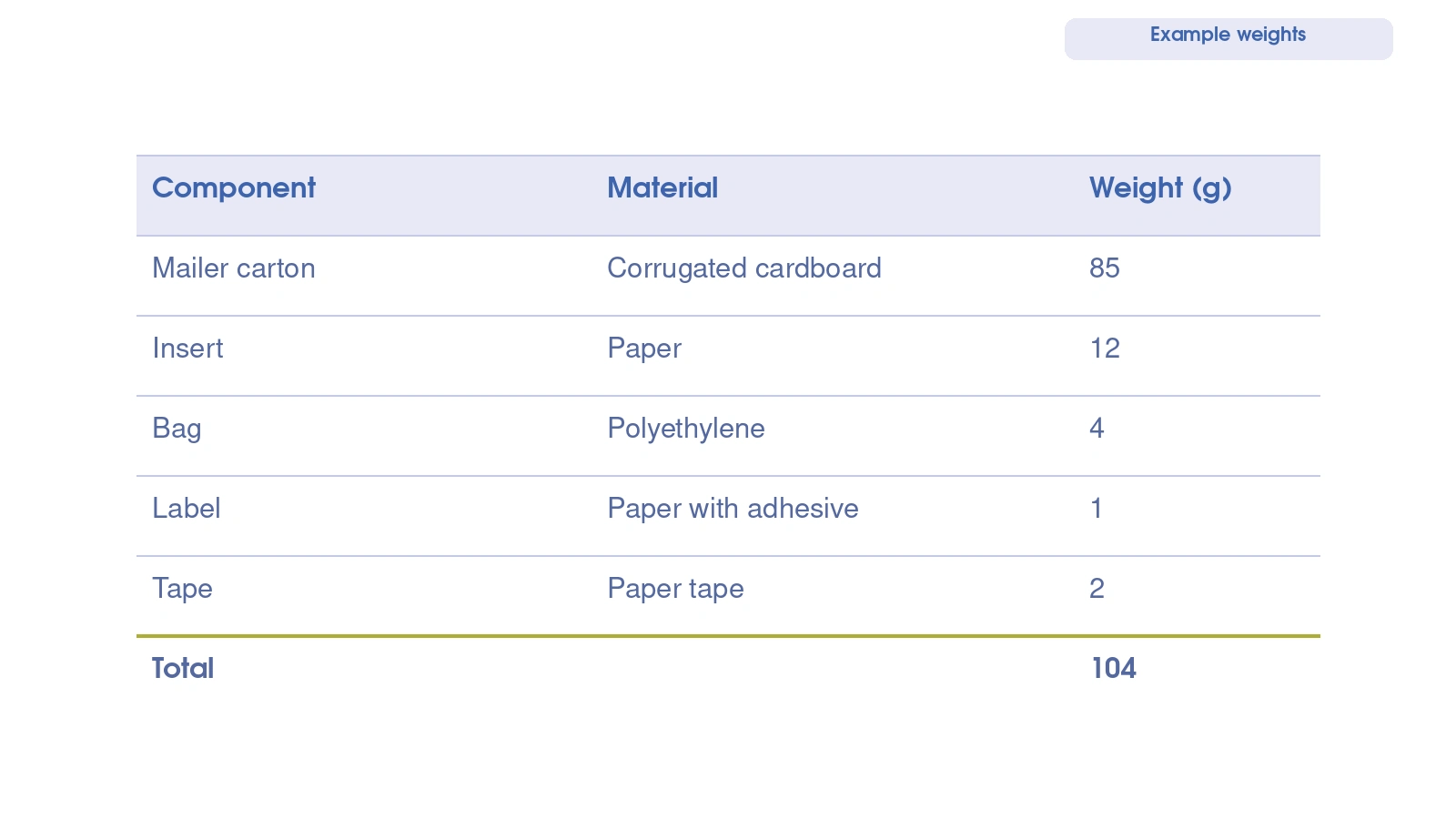
Start with every component supplied with the product, including the outer shipping pack. Ask for material descriptions and component weights rather than one gross packed weight. A carton containing products, inserts and bags needs a breakdown that can be checked against the reporting categories for the market.
We request a packaging bill of materials linked to the product revision. It identifies the box, protective inserts, bags, labels and other components. If one pack serves several products, record which version and quantities each product uses.
Check Who Has the Obligation
UK guidance considers establishment, packaging activities and size. Its general threshold test includes annual turnover of at least £1 million and more than 25 tonnes of packaging in the previous calendar year. Those figures alone are not a complete assessment of whether a business is obligated. Small producers (£1 million to £2 million turnover and over 25 tonnes, or over £1 million and 25 to 50 tonnes) collect and report data. Large producers (over £2 million and over 50 tonnes) also pay waste disposal fees and meet recycling obligations.
Importing packaged goods and supplying packaging under your own brand can be relevant activities. Use the current guidance to determine the applicable producer category and duties. We ask the buyer to name the person responsible for that assessment before the first shipment.
The EU Packaging and Packaging Waste Regulation generally applies from August 12, 2026, with individual requirements taking effect on different schedules. Do not assume one registration or one pack design settles every market requirement. Identify the member states where the product is supplied and confirm the applicable arrangements.
Seven US states have enacted packaging EPR laws: Maine, Oregon, Colorado, California, Minnesota, Maryland and Washington. For US sales, check the state program that covers the packaging and the business role. Avoid applying a threshold or exemption from one jurisdiction to another. The same factory data may support several assessments, but each assessment needs its own documented conclusion.
Ask for Data You Can Reconcile
A useful material file connects specifications to actual production. We compare the following records instead of accepting an unsupported spreadsheet total.
| Record | What the factory supplies | What the buyer checks |
|---|---|---|
| Component specification | Material and construction of each pack component | Matches the approved artwork and physical sample |
| Weight record | Component weights and the method used | Units and material categories are consistent |
| Order breakdown | Quantity of each packaging version supplied | Matches the products and markets reported |
| Change record | Revised material, weight and effective batch | The reporting file uses the correct version |
A weight measured on an early sample may change after the board grade or insert design changes. We ask for production-representative evidence before treating it as final. Keep the measurement basis so another person can repeat the check.
Extended producer responsibility for packaging also needs a clear handover after production. The shipment file should identify the packaging version actually used. Do not let a substituted bag disappear inside a generic description such as protective packaging.
Review Construction Before Printing
Assess coatings, laminates and attached components while design changes are still practical. Ask what each layer does and whether the protection can be achieved with a simpler construction. A material change that damages the product during transport is not an improvement. In the UK, PackUK now charges more for packaging rated red for recyclability. The red multiplier is 1.2 for 2026 to 2027, rising to 1.6 and then 2.0.
We compare proposed changes with the pack’s required protection and presentation. Review the complete pack, including adhesive and labels, rather than approving the main board in isolation. Keep recyclability assessments separate from unqualified marketing claims.
Our ESG guidance places these decisions within wider supplier and product controls. For an individual order, the immediate task is narrower. Get an accurate specification and agree who can authorize a substitution.
Put Reporting Work Into the Quote
Ask whether the quote includes component measurements, material declarations and a final packaging breakdown. Define the requested file format and the person who will receive it. Otherwise the factory may deliver the boxes without the evidence the reporting team needs.
Add applicable compliance costs to your cost estimate. Do not use a generic fee from another brand as your budget assumption. The business role, reporting category and actual packaging can change the calculation.
Minimums depend on the product and are confirmed in the quote. A revised packaging specification may also change material purchasing commitments. Ask for that effect before approving the environmental or commercial benefit of a redesign.
Approve the Pack and Its Evidence Together
Hold approval if the physical sample and material breakdown disagree. Assign an owner for the market assessment and another for keeping production data current. A complete file should survive a change of staff without requiring someone to reconstruct the pack from photographs.
Our custom product packaging service develops the pack and its production specifications together.
Enjoying this guide?
Practical manufacturing guidance for product brands. Factory selection, costs, quality and protecting your designs.