On this page
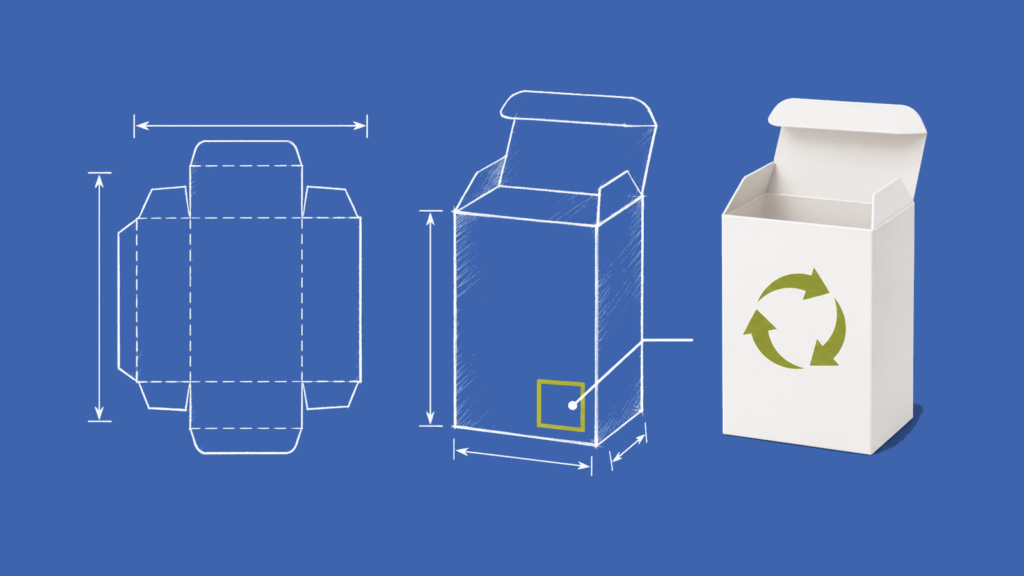
Packaging compliance depends on the markets where each version will be sold, so check your artwork before printing. A box approved for one country may need different business details, languages or warnings elsewhere. We settle those requirements before buying printed stock that cannot be corrected economically.
Check packaging compliance against the actual product
Start with the product category, destination and responsible businesses. A general checklist cannot settle the rules for food, cosmetics, toys or electronics. Ask the person approving compliance to identify which requirements apply to that specific product.
We give our factories a market-by-market artwork brief with the approved wording and placement instructions. The brief should identify who supplied the legal requirements and which version was approved. Factory experience with another customer’s box is useful background, not evidence that your artwork complies.
Keep marketplace and retailer requirements on a separate checklist. They can affect what gets accepted commercially, but they do not replace legal requirements. A legal review and a retailer acceptance check answer different questions.
What affects the next US print run
For covered household consumer commodities, the FTC’s Fair Packaging and Labeling Act rules require product identity, the responsible business’s name and place of business and net quantity. Applicable net quantities are expressed in metric and inch-pound units. FDA administers the Act for categories including food, drugs and cosmetics.
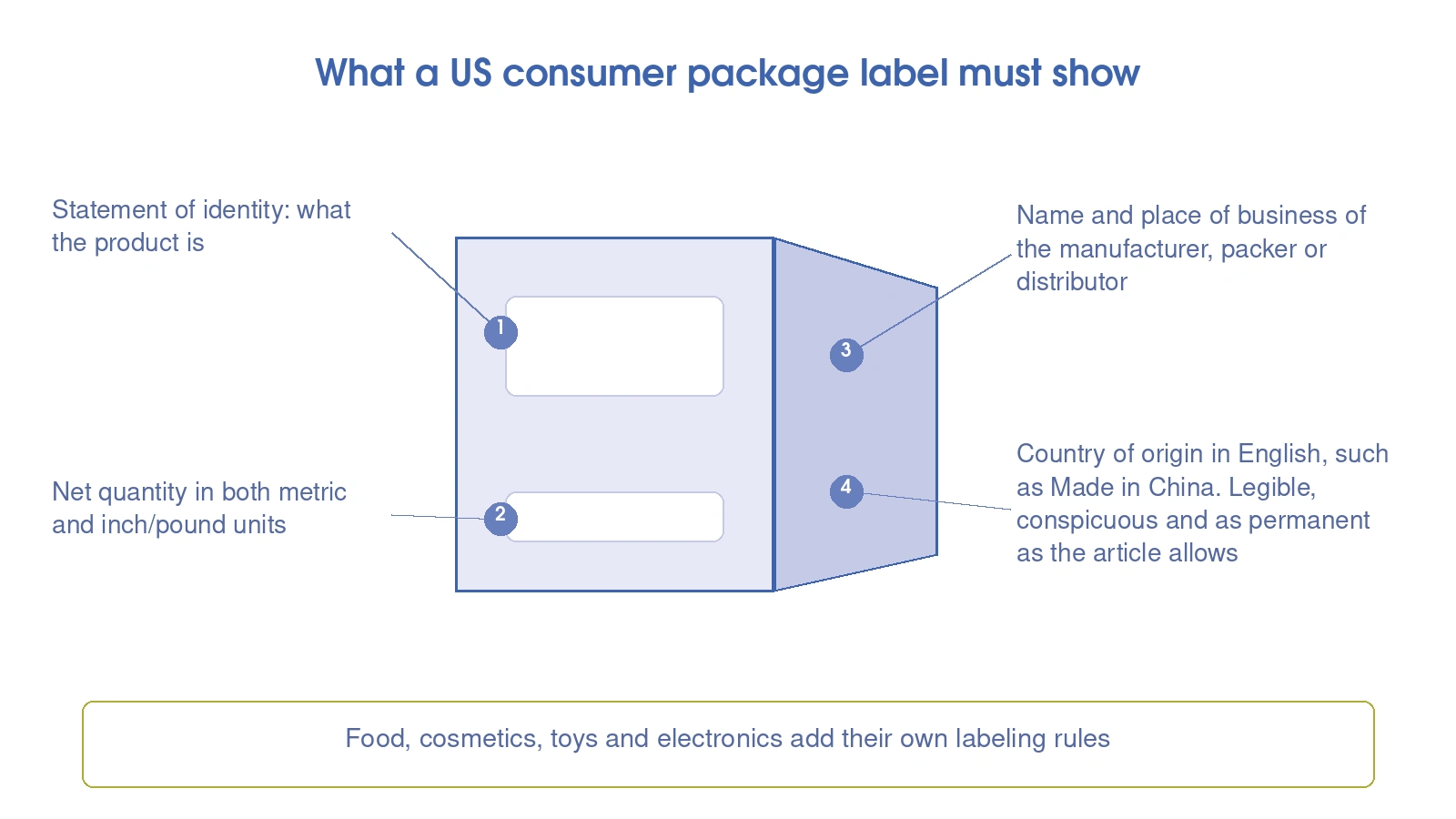
Imported articles generally need country-of-origin marking, subject to exceptions and rules governing container marking. 19 CFR 134.11 addresses legibility, visibility and permanence.
State requirements also matter. The Toxics in Packaging Clearinghouse describes restrictions on specified heavy metals, including a combined incidental limit of 100 ppm under the model framework. California Proposition 65 can require warnings for relevant exposures, while packaging producer-responsibility programs create separate obligations.
What affects the next EU print run
The Packaging and Packaging Waste Regulation began applying in phases on August 12, 2026. Do not assume every requirement started on that date. Use the European Commission’s packaging guidance to identify which provisions apply now.
For food-contact packaging, the regulation specifies PFAS limits of 25 ppb for individual targeted substances, 250 ppb for the sum of targeted substances and 50 ppm for total PFAS including polymers. Ask for evidence covering the actual material, coating and construction.
The General Product Safety Regulation also affects identification and contact details for products within its scope. Its Article 9 addresses manufacturer information and product identification, while Article 16 addresses an EU-based economic operator.
We do not approve a generic declaration that names only “plastic packaging.” Request documents that identify the material supplied and the packaging version. If a coating, ink or adhesive changes, ask whether the existing evidence still covers it.
Treat Great Britain and Northern Ireland separately
Great Britain follows the General Product Safety Regulations 2005 for relevant consumer products, while Northern Ireland follows the EU GPSR. GOV.UK guidance explains the GB identification requirements.
The UK Plastic Packaging Tax concerns components with less than 30% recycled plastic, with registration potentially required at 10 tonnes over 12 months. The stated rate is £228.82 per tonne from April 1, 2026.
Packaging EPR can also create reporting or payment duties. Turnover of £1 million and more than 25 tonnes are the stated entry thresholds, but obligations vary with producer size and activity.
Reserve space for later requirements
EU harmonized sorting labels are scheduled from August 12, 2028 or 24 months after the relevant implementing acts enter into force, whichever is later. That is separate from requirements already affecting materials and identification.
We review future labeling needs before committing to a large stock of printed boxes. That does not mean printing an unapproved future symbol. It means keeping artwork editable and recording when the next review is due.
Ask the factory how approved files are controlled when several market versions run together. We require each version to have a clear identifier and keep an approved proof against it. A correct master file does not prevent the wrong version being printed or packed with the product.
If one version changes, confirm whether the change affects only the artwork or also the packaging material. That distinction determines which evidence needs another review.
Approve the evidence and the printed sample together
Check the final proof against the approved market brief, then inspect a printed sample for legibility and placement. If addresses, claims or material evidence remain unresolved, delay print approval. Our quality assurance guide covers document checks and our food-grade plastics article provides material background.
Our custom product packaging service coordinates artwork, samples and production checks with our factories.
Enjoying this guide?
Practical manufacturing guidance for product brands. Factory selection, costs, quality and protecting your designs.