The environmental impact of plastic manufacturing runs from oil well to landfill, and it is worth understanding accurately rather than emotionally, because the accurate version is what tells a product company which decisions actually matter. Global plastics production reached 430.9 million tonnes in 2024 (Plastics Europe), the great majority of it from fossil feedstocks, and around 6% of world oil and gas output goes into making it.
Air: Where Most of the Carbon Sits
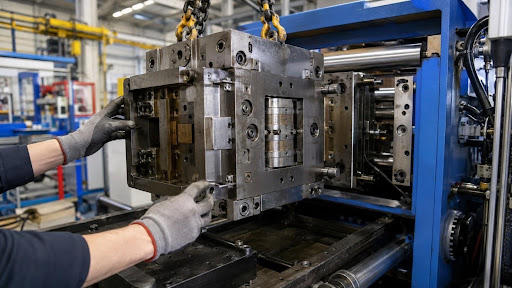
The largest part of the environmental impact of plastic manufacturing is not visible waste but energy. Steam crackers, which break naphtha or ethane into the monomers plastics are built from, run at 800 to 900°C and are among the most energy-intensive facilities in the chemical industry. Production and processing together account for the bulk of plastic’s carbon footprint, well before a product is used or discarded.
Volatile organic compounds and particulates are released at refining and processing stages, and incineration at end of life releases both CO2 and, where combustion is incomplete, more harmful compounds.
Water and Marine Impact of Plastic Manufacturing
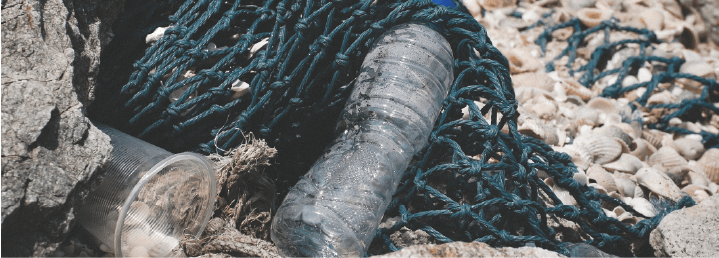
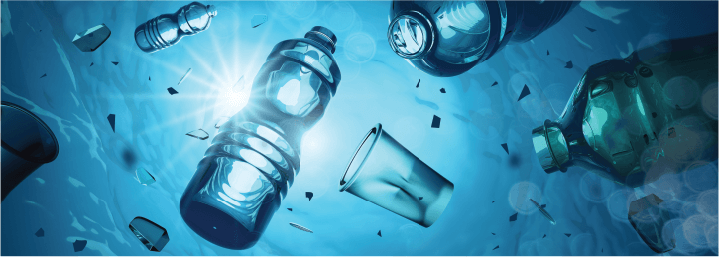
Manufacturing uses water for cooling and processing, and discharges can carry additives and residues where treatment is inadequate. The more significant marine issue is downstream: plastic that escapes waste systems, and microplastics shed from synthetic textiles during washing and from tyres in use.
Pellet loss during transport and handling, sometimes called nurdle spill, is a specific and preventable part of the environmental impact of plastic manufacturing that has attracted regulatory attention, since lost pellets are directly ingested by marine life.
Land and Waste: The Visible Environmental Impact of Plastic Manufacturing
Most plastic ever made still exists in some form. Global recycling rates remain low, and circular plastics, from recycled and bio-based sources, passed 10% of global production for the first time in 2024 at around 43.9 million tonnes. That is genuine progress and a small share of the total.
The recyclability problem is largely a design problem. Mixed-material products, multi-layer packaging, coloured resins, and incompatible labels and closures all make a product harder or impossible to recycle economically, regardless of whether the base polymer is recyclable in principle.
What Actually Reduces the Environmental Impact of Plastic Manufacturing
For a product company, four decisions do most of the work, and they are all made before tooling.
Design for a single material. A part made from one resin recycles; the same part bonded from three does not. This is the highest-leverage decision available and it is free at the design stage.
Specify recycled content. Recycled grades exist for most commodity resins, and in the EU minimum recycled content is now mandated in several packaging categories. Demand created by regulation has pushed food-grade recycled PET above virgin on price in Europe.
Reduce material rather than substitute it. Lightweighting a part cuts feedstock, energy, and freight simultaneously. Replacing plastic with a heavier material often increases total footprint through transport.
Design for durability where the product allows. A part that lasts five times as long has a fifth of the per-year impact, which usually beats any material substitution.
The article on bioplastics covers where bio-based materials genuinely help and where they do not, and it is worth reading before assuming they are the answer.
Wrapping Up
The environmental impact of plastic manufacturing is concentrated in energy at the production stage and in design decisions that determine what happens at the end of life. Regulation in the EU and elsewhere has turned several of these from preferences into requirements, which means material choice is now a market-access question as well as an environmental one.
Selecting materials and designing parts that meet those requirements is part of what our plastics production package and plastic design service cover.